The Carousell founders were working late. James Tan noticed because they shared a workspace at Singapore’s Block 71. In an August 2026 interview, he recalled a team with complementary engineering and business skills, and an appetite for work that other people in the building could see. Before there was a famous marketplace, there were neighbours paying attention.
The story in three points
- Capital comes with connections. Quest backs early startups and helps them reach other investors and markets.
- The geography is unusual. Its work links Southeast Asia with Central Asia, including Kazakhstan.
- Scale needs substance. Its impact programmes expect business readiness alongside a social purpose.
That small scene explains something about Quest Ventures. Venture capital is usually presented as a contest of forecasts: who spotted the enormous market first? Here, the information arrived down the corridor. The firm’s subsequent work asks a related question: can you create more corridors between people who would otherwise never meet?
A neighbour before an investor
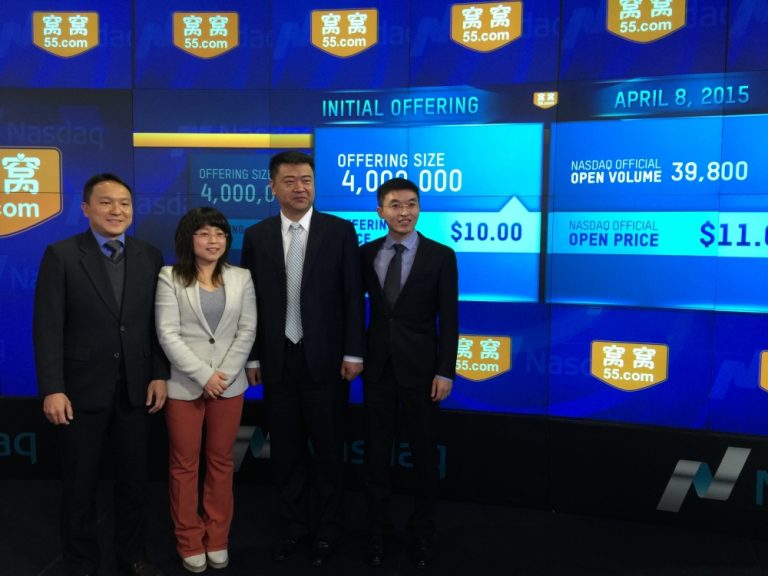
Tan and co-founder Wang Yunming had been on the receiving end of investment decisions. They co-founded Chinese e-commerce company 55tuan in 2009. Quest’s history records multiple venture capital rejections before its first round. The business later expanded across China and listed on Nasdaq in 2015. The setback came before the investment firm’s reputation, which makes it rather more instructive than another retrospective victory lap.
QuestVC began in 2011, initially for angel investments and merger-and-acquisition activities. In 2017, Tan returned to Singapore from Beijing, and the firm became Quest Ventures. Early backing of companies including Carousell, ShopBack and 99.co gave it a foothold in the region’s digital economy. The interesting asset was experience on both sides of the table: asking for money, then deciding where it should go.
A $50,000 invitation to think bigger
The institutional turn came in April 2020. Quest announced the first close of Asia Fund II, targeting US$50 million, with more than half committed. Pavilion Capital, owned by Temasek, and Kazakhstan’s QazTech Ventures were among the investors. That distinction matters: a fund target describes a pool intended for investments, not a corporate fundraising windfall.
QazTech’s involvement also brought a practical experiment. The first Kazakhstan Digital Accelerator cohort received US$50,000 per startup. Ten teams shared US$500,000, with mentoring over three months and a global demo day. Around 200 applications had arrived. Selected businesses ranged from education to agriculture, health and payments; the programme gave them a way to practise addressing international investors.
Those cheques were investments, rather than prizes for attendance. The design paired financial support with access to people who understood operations, marketing and technology. Its appeal is easy to grasp: a capable team can still be geographically far from the next useful conversation. Quest tried to shorten that distance.
Three audiences, one network
For founders, Quest offers early-stage equity capital, advice and introductions. Its Asia Fund page explicitly favours an introduction through an existing portfolio founder. For fund investors, it offers exposure to young businesses across Southeast and Central Asia. For governments and corporations, it runs programmes intended to turn innovation into companies, customers and market entry.
The products reflect those audiences. Asia Fund sits beside strategies for food and Web3. Vietnam Global Innovation supports entry into Vietnam through Enterprise Singapore’s Global Innovation Alliance. The Academy teaches venture investing and entrepreneurship. With the Applied Innovation Institute, Quest works on enterprise transformation; the partnership’s client examples include HP, Nissan, Tencent and Coca-Cola.
How the connections work
The economic core is fund management and investment ownership. The surrounding programmes deepen relationships with enterprises and public partners. That breadth distinguishes the proposition within a crowded market. Founders can also approach regional investors such as Vertex Ventures or programmes such as 500 Global’s Eurasia accelerator. Quest’s particular appeal lies in the combination, especially its Southeast Asia-Central Asia connections.
Good intentions meet the spreadsheet
The same approach appears in social impact. In 2022, Quest and Singapore Centre for Social Enterprise, raiSE, launched the Sustainable Impact Accelerator. The launch offered participants up to US$40,000, plus mentoring and networking. raiSE’s annual report records eight enterprises completing the first ten-week programme and collectively pitching to more than 2,000 investors, corporations, agencies and stakeholders.
Exposure is an opportunity, not a completed financing round. Still, preparing a social enterprise for that audience has consequences. Treatsure founder Preston Wong said the programme “sharpened our social impact measurement”. A business must articulate both the customer proposition and the benefit it creates. Benevolence gets a spreadsheet, which is probably healthy for everyone involved.
Quest’s stated culture is similarly practical: open debate, attention to data, multilingual work across time zones. Its more charming policies include casual dress and pet-friendly offices. The operational point is availability to founders. Regional knowledge is much less useful when nobody answers a difficult question until next Thursday.


The map is useful. The paperwork matters.
There are limits to connection-making. In August 2026, Quest analyst Linh Ha described Vietnam’s technology deal friction: founders’ valuation expectations, buyers’ cash-flow demands, complicated cross-border structures and insufficient audit readiness. Introductions cannot reconcile every price disagreement. A company still needs credible accounts, workable legal arrangements and someone willing to buy.
Selection matters, too. Quest describes its impact accelerator as suitable for high-growth enterprises with proven revenues and plans to raise an institutional round within twelve months. That is a fairly specific invitation. A worthy cause without a business ready for expansion would need a different kind of support. For applicants, the sensible first task is to establish programme fit before treating access to a network as an expansion plan.
“we should think of AI like the cloud”
James Tan / The Long Conversations / August 2026
Tan’s applied-AI thesis offers another boundary. He sees opportunity in using existing technology to solve business problems, rather than building another foundation model in Southeast Asia. That is a useful discipline for founders: explain the job your product does, the customer who needs it and why it can grow beyond its first market.
Readers can copy the relationship-building, the local homework and the habit of measuring outcomes. A small business content to remain small may find the venture model a poor fit. An ambitious one should arrive with evidence, not merely an impressive destination. Quest’s most useful idea is that expansion requires people who know the route. Even then, the company has to make the journey.