Two weeks after BEENEXT first met the founders of NoBroker, a mob of real estate brokers vandalized the startup’s office. The company was trying to help people find property without paying a broker. Apparently, some brokers had read the business plan.
For an investor, the attack might have been a reason to retreat. In BEENEXT’s account, it strengthened the investment case. The firm called to check that the founders were safe and confirmed its partnership. It formally partnered with NoBroker in August 2015 and invested the following month.
That episode captures the particular nerve of BEENEXT, a venture firm built around entrepreneurs and the problems they choose to confront. The obvious risk can sometimes reveal the opportunity. The difficult part is deciding when it does. An angry incumbent is evidence of a threatened business model; it is hardly a substitute for customers.
A founder on the other side of the table
BEENEXT began in Singapore in 2015. Its founder, Teruhide Sato, had already spent years making the kinds of decisions he would later assess in other people. He co-founded online payments business Cybercash Japan in 1997, then netprice, later BEENOS, in 1999. He took BEENOS public in Tokyo in 2004 and stepped down as its chief executive in December 2014.

The investment team’s experience extends beyond writing checks. Managing partner Dirk Van Quaquebeke previously built companies through Alps Ventures. Hiro Maeda leads the Japan-focused ALL STAR SAAS FUND. That background gives the firm a plausible claim to understanding the awkward distance between a promising pitch and a business that works on Tuesday morning.
Its preferred territory includes India, Southeast Asia, Japan and the United States. The portfolio crosses payments, software, marketplaces, healthcare and other technology businesses. The organizing idea is often a local bottleneck: something expensive, fragmented or inaccessible that software could make easier to use.
BharatPe’s merchant payments, Instamojo’s tools for small online sellers and Get My Parking’s parking technology show the range. BEENEXT invests in the businesses building those services. People looking to accept a payment or manage a parking lot go to the portfolio company.
The money has two addresses
A venture firm serves two constituencies. Founders receive capital and support; limited partners supply the investment funds and expect returns. BEENEXT sits between them, selecting businesses, supporting their development and managing investment vehicles. Its product is partly access: to companies for investors, and to money and useful people for entrepreneurs.
The structure matters when reading its financial headlines. In June 2020, BEENEXT announced $160 million across two funds: $110 million for its Emerging Asia strategy and $50 million for Japanese SaaS. These were pools of money to invest. Calling that figure BEENEXT’s valuation would describe a different transaction altogether.
Two mandates. A combined fundraise, not a company valuation.
BEENEXT said roughly half the Emerging Asia fund was intended for India. The separate Japan fund addressed domestic software adoption. This is a more informative picture than a single globe-spanning investment slogan: different markets require different judgments about buyers, distribution and growth.
For a founder, venture equity carries an ownership cost. A larger check can finance more experimentation, but it also puts another investor on the capitalization table. In the conventional venture model, fund managers earn management fees and a share of investment profits. The important negotiating questions concern the actual deal: ownership, governance, follow-on support and the time needed to build.
Japan’s introduction business
BEENEXT’s connection to Japan gives its cross-border pitch some substance. In June 2024, Japan Investment Corporation announced a $30 million commitment to BEE ACCELERATE FUND2, a vehicle targeting growth-stage technology businesses in India and Southeast Asia. JIC explicitly wanted stronger business links between Japanese companies and startups in those markets.
The arrangement serves interests on both sides. Japanese corporations can encounter technologies and potential partners outside their established networks. Startups can meet organizations with purchasing power and market knowledge. JIC described BEENEXT as one of relatively few managers pursuing this Japan-oriented strategy in the region.
Another Japanese institution, JICT, announced in December 2024 that it had approval to invest up to $2.8 million in BEENEXT Asia Fund 2, with investment scheduled for January 2025. Its announcement also named Panasonic Kurashi Visionary Fund among the other backers. The thesis covered businesses that could become useful regional infrastructure, including marketplaces, fintech, data and healthcare.
For a founder, the practical test is whether the introduction ends in a productive conversation. A foreign corporate logo in a presentation does little by itself. A buyer willing to trial a product, explain procurement requirements or help navigate a market is a different proposition.
The database broke before the relationship did
Trust gets more interesting when the numbers turn ugly. In a founder story published in June 2020, BEENEXT described an operational crisis at Indonesian business marketplace Ralali. A database problem caused the company to lose almost 90 percent of its business in one month, according to the investor’s account.
BEENEXT’s response was to give founder Joseph Aditya and his team room to repair the problem. The account says it was solved within the following month. That is a concrete description of how the firm wanted to behave under pressure, even though it is the investor telling the story.
The distinction matters. A repairable systems failure and a company with no demand require different responses. Patience helps when a capable team understands the problem and can fix it. It becomes expensive when everyone mistakes a disappearing market for a temporary technical issue. This case is an argument for diagnosis before intervention.
“They are fast but they don’t hurry.”
BEENEXT on NoBroker’s founding team, June 2020
The Fleetx story supplies a different test: changing an investment decision. BEENEXT initially declined to engage in August 2019 because of a possible conflict with another portfolio company. In October, partner Hero Choudhary pushed for another look. A meeting followed, and founder Vineet Sharma’s domain knowledge and questions impressed the investor.
BEENEXT says agreement to invest came within hours of the pitch discussion. It led the $2.5 million pre-Series A round that closed in November. Agreement and closing were separate events; the speed claim concerns the decision. The useful lesson is the second look. Someone inside the firm challenged an initial judgment and got the company reconsidered.
A contact book with a camp attached
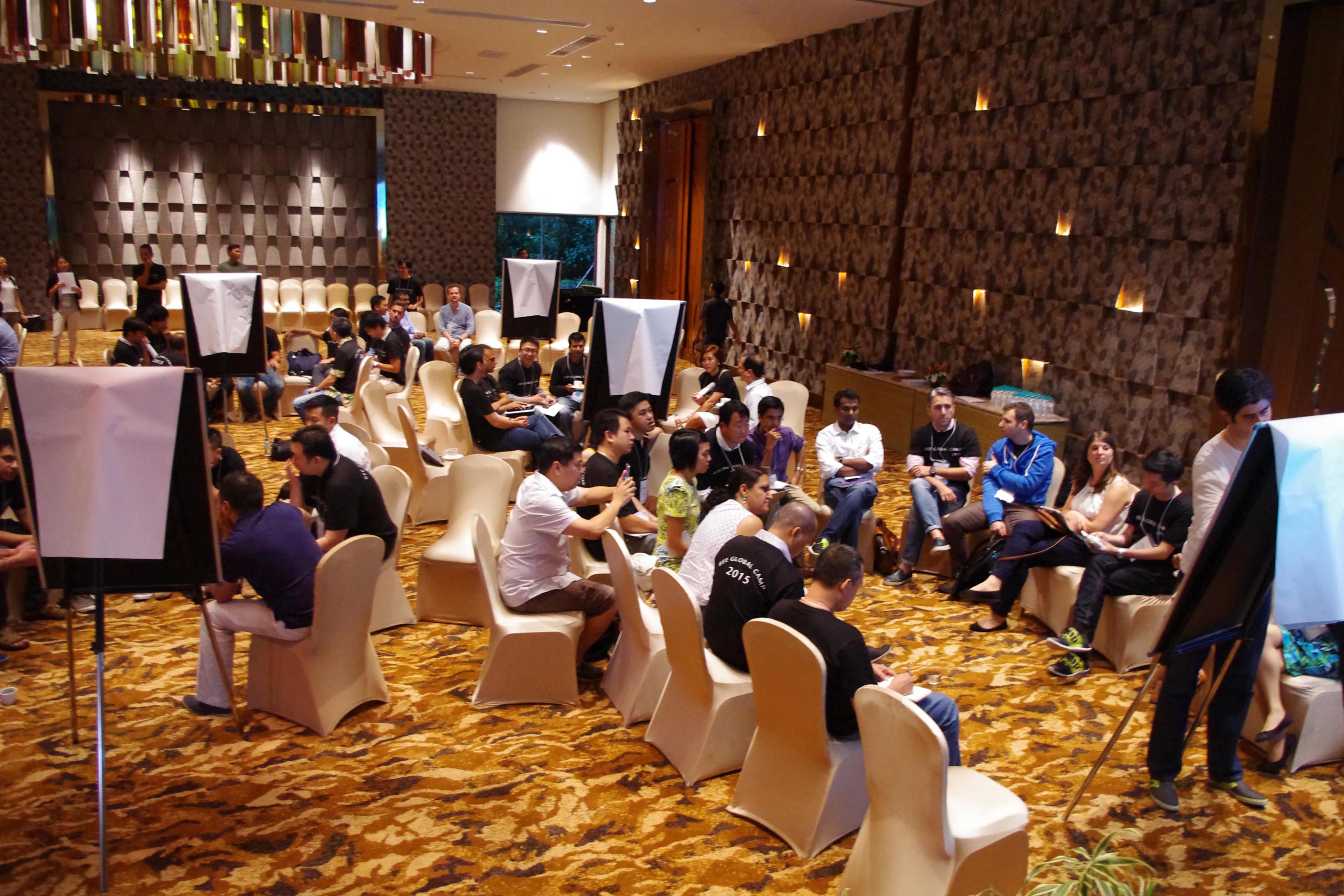
BEENEXT makes community part of its operating structure. Chinmaya Saxena is listed as partner for community strategy, and the firm maintains a private Founder’s Hub. Its BEE Global Camp gatherings put entrepreneurs in the same room. These are identifiable activities behind a word that investors often leave pleasantly vague.
The bee is deliberate branding. The company describes it as a symbol of carrying information and capital between entrepreneurs across borders. The metaphor earns its keep when one founder’s experience saves another a painful mistake. A network becomes useful through specific exchanges: a hiring recommendation, a customer introduction, an honest account of a failed expansion.
Trusting Social offers an example of a relationship beginning with a specific question. In 2015, a London fintech co-investor introduced BEENEXT to the idea of using telecom data to assess creditworthiness. Dirk traveled to Hanoi to meet founder Nguyen Nguyen. The opportunity involved people with digital activity but little conventional credit history.
That kind of introduction carries context a cold directory cannot. It also shows why geography alone is a poor investment thesis. Someone must understand the data, the customer and the route to adoption. The network can supply a meeting; the founder still has to build a viable business.
From expense receipts to coffee cups
There are tangible outcomes beyond the community photos. Fyle, whose own press archive records funding from BEENEXT, was acquired by Sage in July 2025. Its expense software helped businesses work with existing credit cards, capture receipts and automate accounting workflows. Sage reported more than 1,600 direct US customers at the time.
Sage’s annual report put the acquisition-date fair value of the consideration at £63 million. That is a price for the acquired business, not a measure of BEENEXT’s individual proceeds. The strategic logic was straightforward: expense management fits beside accounting software, and an established software company could carry the product to more customers.
The portfolio also reaches beyond the familiar software categories. In August 2026, BEENEXT participated in specialty brand First Coffee’s $1.3 million financing. The company had grown to 25 stores across Delhi, Punjab and Haryana, according to ETRetail. A coffee chain makes the firm’s sector flexibility rather easier to picture.
The next company to change is BEENEXT
In December 2025, Sato marked the firm’s tenth anniversary with a proposed reorganization. He said BEENEXT had managed about $1 billion over the decade and invested in more than 300 startups. His next step was to incubate independent regional and sector-focused VC teams in India, Southeast Asia and the United States, starting in 2026.
He framed the proposal around changes in technology, industry and geopolitics. The idea was to give teams autonomy while preserving shared relationships and values. It was an announced direction, with the attractive and difficult implication that a wider network would need to remain useful as decision-making became more distributed.
BEENEXT occupies a competitive neighborhood. East Ventures offers overlapping seed-to-growth coverage in Southeast Asia. Antler gives founders another route through company-building programs and early investment. For an entrepreneur, the choice comes down to stage, geography and the particular people who will help.
The copyable habit running through BEENEXT’s stories is specificity. Explain the customer’s problem. Show what broke and how the team responded. Revisit an initial no when there is reason to reconsider. Then ask the investor which person, market or piece of experience it can bring to the work. A useful answer should contain more than the word “network.”
Meet the people behind the bets
Explore BEENEXT, its portfolio, founder contact form and community essay. Follow LinkedIn, X or Facebook.
Watch BEE Global Camp 2019 in Tokyo on YouTube ↗. Read Sato’s second-decade message and the First Coffee funding news.