In 2015, Maven Clinic applied to Grand Central Tech with no revenue. It had, however, recruited 800 healthcare providers while in beta. Kate Ryder understood a gap in women’s and family healthcare, and her company was already finding people willing to help fill it. A conventional office landlord might have asked about the balance sheet. Grand Central Tech offered a year without rent or an equity obligation.
That detail explains Company Ventures better than a catalogue of portfolio logos. Its founders assembled a working community before establishing the venture firm. The room was the experiment. The investment fund came later.
- Give founders a place: the residency separates admission from investment.
- Make help ordinary: peers and investors are available during the working week.
- Move further upstream: Terrarium helps form healthcare companies before they have a product.
01 / First, remove the rent
Matt Harrigan and Michael Milstein established Grand Central Tech in 2014. They wanted New York to have the infrastructure that serious technology founders might otherwise seek in the Bay Area. Their offer removed two familiar startup burdens: paying for workspace and surrendering ownership to enter a program.
The underlying problem was less architectural. A founder can spend days searching for someone who has already solved a hiring question, tested a distribution channel, or negotiated a financing term. Bringing those people together reduces the distance between a question and an informed answer. Harrigan’s origin essay called it “the value of immediately proximate intelligence and aptitude.” A mouthful, perhaps, but a useful description of a neighbour.
In 2017, the community integrated with Milstein Properties and the broader Company offering at 335 Madison Avenue. In 2018, the founders established Company Ventures; its subsequent launch account reported a $34 million first fund. The development was cumulative. Once founders were working together, the question became what else the institution could usefully supply.
02 / A year beats a pitch afternoon
Company Ventures describes itself as a first-check firm. Its present interests include AI applications, data infrastructure and model augmentation, alongside a portfolio spanning financial technology, enterprise software and digital health. In a Tech:NYC interview, Harrigan described a typical investment of $1 million. Healthcare thesis posts put checks at $500,000 to $1.5 million.
The founders are participants and investment partners. Limited partners supply the fund’s capital. Those relationships connect through an unusually tangible support system: workspace, programming, introductions and practical fundraising help. A residency seat has no equity price at entry. An investment is a separate financing decision.
Harrigan says the residency generates the majority of the firm’s investment opportunities. It gives founders a year working alongside the team, with no scheduled demo day. That changes the evidence available to an investor. A pitch reveals how someone explains a business. Repeated contact can reveal how that person works through trouble, listens to criticism and revises a plan.
“we don’t have demo days”
Matt Harrigan / On the residency’s investment timing
For founders, the attraction is access without an immediate ownership bargain. For Company Ventures, the attraction is time to understand people before committing capital. The firm also invests beyond its physical community. Being in the room helps define its approach; it is not an admission ticket required for every check.
03 / The companies make the case
Maven’s early application contained more than an interesting healthcare concept. It showed provider recruitment, customer acquisition experiments and Ryder’s command of the problem. Company Ventures later invested in its seed extension. The useful lesson is to look for evidence appropriate to a company’s age. Pre-revenue need not mean pre-learning.
Stepful offers another view. The team approached Carl Madi in 2021, when his business was called Aja School. He was building a route from precarious work into healthcare careers. Company Ventures invested at seed, Series A and Series B. By November 2024, Stepful had announced a $31.5 million Series B led by Oak HC/FT.
The firm’s argument is specific: software can help expand the healthcare workforce by making training and credentials more accessible. Noetica illustrates a different application of expertise, using machine learning to extract and benchmark corporate transaction terms. In both cases, industry knowledge gives the technology something consequential to do.
Collective funding raised by alumni, according to the current homepage. This measures fundraising across companies, not the fund’s investment returns.
04 / Before there is a company
Terrarium pushes the model earlier. Publicly announced in February 2025 with innovation adviser Cactus, the healthcare venture studio researches opportunities, recruits founders and helps assemble new businesses. Wellstar and its innovation arm, Catalyst, joined as a strategic partner, bringing healthcare expertise and routes to validation.
The current Company Ventures program page advertises four months full-time, a $10,000 monthly stipend and access to more than 50 healthcare enterprise partners. Terrarium says founders retain majority ownership after financing. That is a different arrangement from an equity-free residency; founders should examine the financing terms as carefully as the research support.
Rota Health, its first announced incubation, tackles integrations between healthcare organizations and external vendors. Terrarium also lists Pixel Workforce, which maps tasks across healthcare roles to identify opportunities for redesign and automation. These are practical hospital problems. An elegant prototype still has to meet the institution that will buy and operate it.
05 / Borrow the habit, consider the fit
A separate access problem animates Boost, the fellowship run with NYCEDC. Its 2025 cohort received four months of mentoring, workshops, investor introductions and fundraising preparation. It serves founders who may have talent without an established route into venture networks. Company Ventures also connects startups with paid interns, primarily from CUNY.
The copyable habit is straightforward: make useful conversations recurring. Choose peers with relevant experience, bring unresolved questions into the room, and establish contact with prospective buyers before polishing the pitch. You do not need a Manhattan building to start doing that.
The fit requires judgment. Daily proximity offers less to someone unable to participate in person. Healthcare incubation demands domain commitment. Venture investment still requires the prospect of venture-scale growth. A desk removes one expense; it does not remove the obligation to find customers.
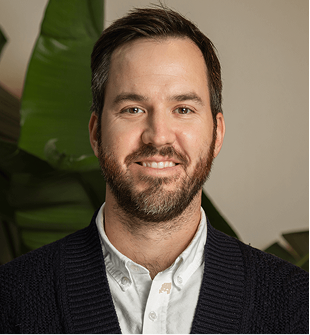
Harrigan worked in economic development and on ESPN mobile products before venture. His next product was a working environment for founders.