Most venture firms describe themselves as founder-friendly. It has become the industry's most worn-out phrase, printed on pitch decks the way "artisanal" gets printed on bread. Carya Venture Partners takes a more literal position: the people writing its checks are, themselves, founders. Before they ran a fund, they built companies - raised the money, hired the team, shipped the product, and lived through the quarters when none of it worked. That is the entire premise, and the firm has organized itself around it.
Carya is a Palo Alto micro-VC, founded in 2022, that invests at the earliest stages of a company's life. Its focus is a specific slice of the market: artificial intelligence, deep tech, fintech, and business-to-business software. It writes small checks - reported to range from roughly $100,000 to $5 million - and it does so before most of the market has heard the company's name. The pitch is not that Carya has the most money in the room. It is that Carya has been in the room before, on the other side of the table.
01 / What Carya DoesSmall checks, early, into hard things
The firm calls itself a supporter of "unconventional genius across stages." Stripped of the slogan, that means Carya looks for founders working on problems that sound implausible until they are not - the people, in the firm's own phrasing, who try "to make science-fiction happen." In practice this points toward enterprise AI: software that automates customer service, restructures back-office work, or turns messy operational data into something a business can act on.
Carya's stated thesis rests on three words it keeps returning to - restlessness, courageousness, and willingness. These are founder traits, not market categories, which tells you something about how the firm screens. It is betting on temperament as much as on the total addressable market.

02 / Who It ServesFounders at the prototype-and-nerve stage
Carya's customers, in effect, are its founders - the early teams it backs. These are companies at the prototype or first-revenue stage, often with more conviction than traction. Third-party trackers put the portfolio at roughly 18 to 26 companies as of 2025, a deliberately small number for a fund that promises hands-on involvement. You cannot sit on forty boards and still pick up the phone at 10 p.m.
The names on the list read like a survey of applied AI and fintech: Sanas, the real-time speech company; Arc, in fintech; Martian; Crescendo; Retell AI; AptEdge; DualEntry; and Stuut, among others. More recent additions include Accordance and Andean. The through-line is enterprise software with an AI core.
"Active capital is better capital." Carya Venture Partners
03 / The Problem It SolvesThe part nobody funds: after the wire
Early-stage founders rarely fail for lack of money at the moment of the raise. They struggle afterward - figuring out how to sell to a first enterprise customer, whom to hire, when to pivot, and how to keep the team steady when a plan collapses. Most of that work happens after the wire clears, and most passive capital is not built to help with it.
This is the gap Carya positions itself to fill. The firm promises what it calls "unwavering and patient support" through pivots and downturns, and much of its concrete value is distribution: introductions to enterprise buyers and design partners drawn from the partners' networks in business process outsourcing (BPO) and customer experience (CX). Those are unglamorous industries. They are also where a lot of enterprise AI actually gets bought and deployed, which makes the rolodex more useful than it sounds.
04 / How It DiffersThe operators actually operated
Plenty of funds claim operator credibility. Carya's partners can point to specific companies. Co-founder Andres Perez Soderi helped start Sanas, a speech-AI company, while at Stanford, and by his account raised more than $60 million before turning to investing. Sharath Keshava Narayana co-founded Observe.AI, which he helped scale from inception to unicorn status in under five years, past $15 million in ARR and 300-plus employees. The third founder, Marty Massih Sarim, rounds out an operator-heavy bench.
That background changes the nature of the help. A founder-investor who has already raised a Series A can be more specific about what the next round's lead will scrutinize. One who scaled a customer-experience company can make a warm introduction that actually converts. The firm summarizes the culture plainly: "Everyone at Carya are founders and operators at heart." The differentiation is not the check size. It is the empathy and the network attached to it.
There is a second, quieter difference: pace. Because the fund is small and the portfolio is narrow, Carya does not need every company to become a decacorn to return the fund. That relieves a specific pressure founders feel from larger vehicles, where a company that would be a healthy business is nudged to swing for an outcome it may not want. A micro-fund can afford to let a company grow at its own speed. The firm's language about "patient" support is, in part, a function of its own math.
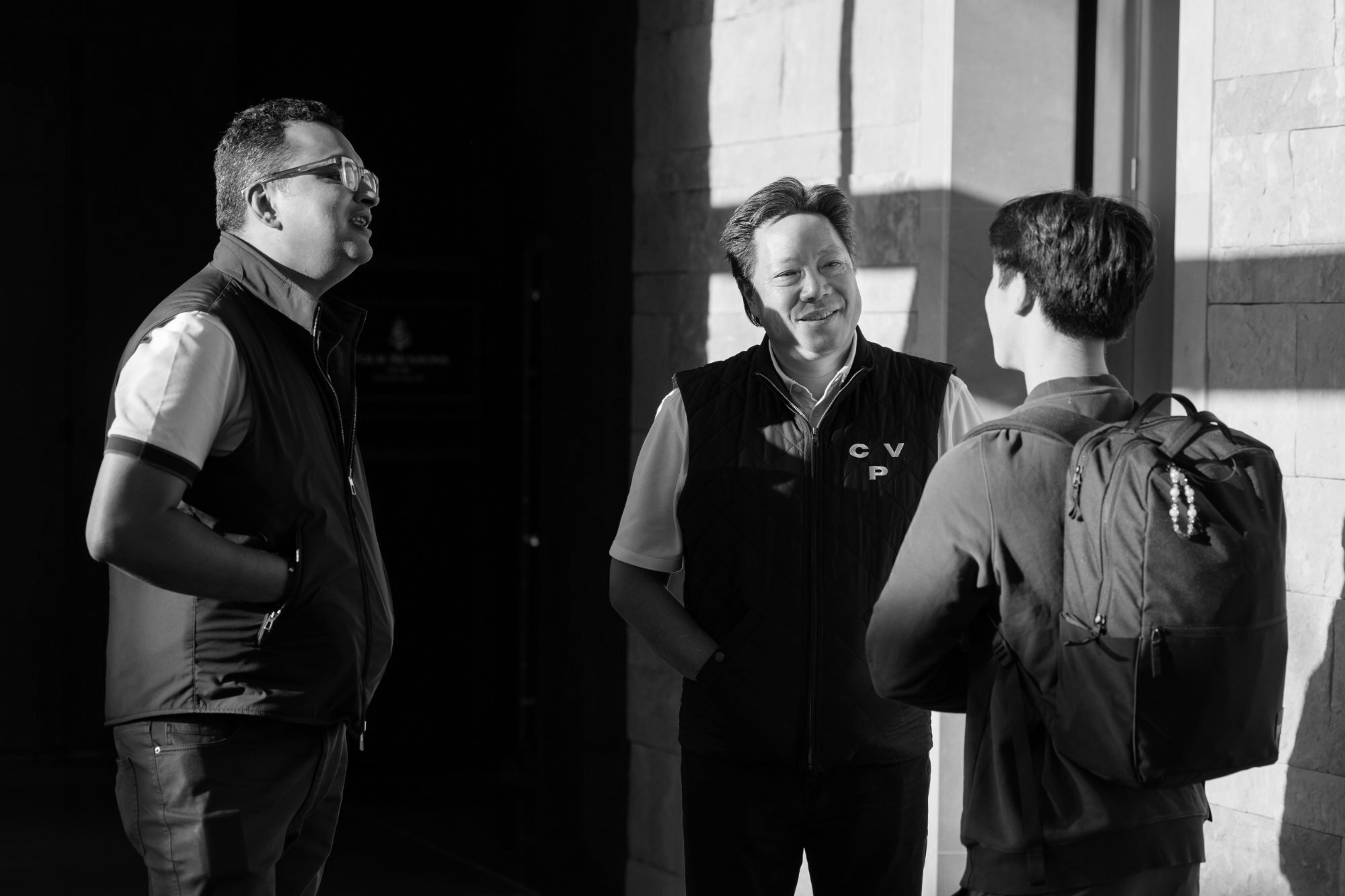
05 / Products & ServicesCapital, plus the things capital can't buy
On paper, Carya sells one product: early-stage venture capital. In practice it bundles three offerings. The first is the check - pre-seed and seed investment aimed at getting a company to its Series A. The second is go-to-market and enterprise access: the introductions, design-partner relationships, and sales guidance that turn a prototype into a paying pilot. The third is founder support - coaching on fundraising and recruiting, and a growth advisory board of operators assembled to help portfolio companies scale.
06 / Business ModelA micro-fund, run narrow on purpose
Structurally, Carya is a conventional micro-VC. It raises capital from limited partners, deploys small early-stage checks, and earns returns as portfolio companies appreciate and raise later rounds. The reported debut fund of roughly $20 million is small by Silicon Valley standards, and that is the point: a fund that size can be selective, concentrated, and genuinely present for each company. Carya reportedly opened a second fund in 2024, and has co-invested alongside firms such as Octopus Ventures and RiverPark Ventures on later rounds.
"Supporters of unconventional genius across stages." Carya's founding line
The economics of a micro-fund are unforgiving in their own way. With a small pool of capital, ownership matters, entry price matters, and follow-on strategy matters. Carya's answer is to get in early, when valuations are lowest and its operator help is most useful, then reserve judgment on doubling down until a company has shown it can move. The reported check band - from a $100,000 first bet to as much as $5 million in a company it has conviction on - gives the firm room to start small and lean in selectively rather than spreading evenly across the book.
07 / Where It FitsFirst-check specialist in a crowded market
Carya operates in one of venture's most competitive zones: the first institutional check into an AI or enterprise-software company. It competes with a wide field of seed and micro-funds - operator-led vehicles and community-driven funds all chasing the same early founders. Carya's wedge is specificity. Rather than spread across every category, it concentrates on enterprise AI and deep tech where its partners have direct operating experience and a network that maps to real buyers.
For a founder deciding whom to take money from, the calculation is straightforward. A larger fund offers a bigger balance sheet and brand. A firm like Carya offers proximity - partners who have shipped, sold, and survived, and who are structurally set up to stay close. Whether that trade pays off is the bet every hands-on micro-fund is making. Carya has simply been more explicit than most about which side it is on.
It is also worth being honest about what cannot yet be measured. As a 2022-vintage fund, Carya has not had time to produce exits - the outcomes that ultimately grade any venture firm are years away, and third-party trackers note zero exits to date. What can be observed now is process: a clear thesis, a concentrated portfolio in a category the partners know firsthand, and a second fund that suggests limited partners were willing to back the model again. Those are early signals, not conclusions.
The firm is young, and much of its record is still ahead of it - most of a seed portfolio's outcomes take years to resolve. But the identity is unusually clear for a fund this early in its own life. Carya decided what it is on day one: a small group of operators who would rather be the first call when a founder hits the wall than the biggest name on the cap table. In a market full of interchangeable term sheets, a clear answer to "why you" is worth something.