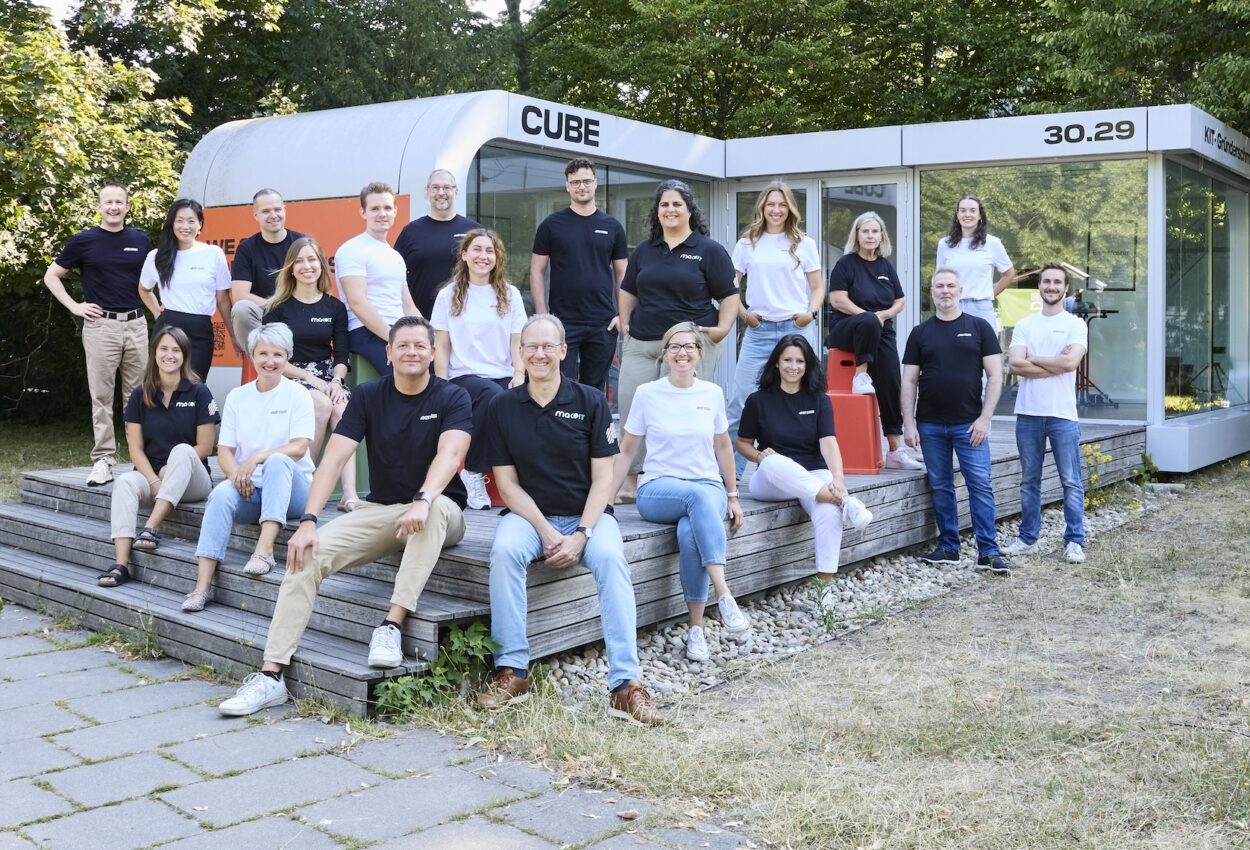
For the founders of OnSite Solutions, the problem began with buildings. Their research at KIT examined how buildings could become more digitally capable. Their company, featured by KIT-Gründerschmiede in September 2026, develops BAIOSS, a platform for assessing that capability and finding practical improvements. Yet the lesson they would repeat to another founder concerns something much less technical: speak to customers earlier. A research question had become a business question. The building was still there. The definition of success had changed.
- Start with a free, individual founder consultation.
- Connect the business question with patents, grants, investors and workspace.
- Test customer demand before polishing the technical answer.
That small shift explains much of KIT-Gründerschmiede. It is KIT’s entrepreneurship initiative in Karlsruhe, established in 2013 to bring founder support together. Its job is to help students and researchers turn ideas into companies. The interesting work happens between those nouns, where a promising discovery encounters licensing, team building, financing and someone asking what the thing actually does.
01 / A forge with several doors
“Gründerschmiede” means, roughly, founder forge. The name suggests hammering and sparks; the offer is rather more conversational. An initial appointment is free, available online or in person, and tailored to the individual. A person considering entrepreneurship can arrive before having a company, a polished pitch or even certainty that founding is the right career.
The next introduction depends on the obstacle. A scientist may need patent guidance. A student may need a co-founder. A team may need help choosing a grant programme or preparing an investor pitch. The initiative works with these different needs over time, rather than treating incorporation as the moment support has finished.
02 / A patent is only the beginning
Research founders inherit an unusual complication: their strongest asset may belong to the institution where they developed it. KIT’s technology-investment service explains that the university often initially owns the intellectual property. Startup advice therefore has to meet patent and licensing expertise. Otherwise, a persuasive pitch can get ahead of the rights needed to deliver it.
KIT-Gründerschmiede connects founders with that expertise. It also offers access to offices, laboratories and event space at the ZEISS Innovation Hub @ KIT. A laboratory-dependent venture needs somewhere to work after the idea leaves its original research setting. Here, infrastructure belongs in the same conversation as the business plan.
These connections give the initiative its position in the market. An independent accelerator can provide coaching and introductions; KIT’s entry point can connect a founder back into the university’s research and technology-transfer machinery. The useful distinction is institutional proximity. Whether it helps depends on what the venture needs.
- 01 Clarify the idea
- 02 Assemble the team
- 03 Plan the business
- 04 Find financing
- 05 Establish the company
- ↗ Share experience / return for coaching
03 / Who pays for the first conversation?
The initiative operates on behalf of KIT, a public-law institution. Free initial consultation makes asking the first question inexpensive. Grant-application advice, patent advice and investor matching also list no fee. Renting space is a separate offer. For founders, this makes the early conversation accessible without pretending every resource has the same terms.
Investment follows another logic. KIT can become a strategic co-investor in selected spin-offs based on its research or expertise. The investor-matching service lists equity capital of up to €300,000. Selection involves a structured process. A consultation opens a discussion; an investment requires a decision.
The technology-investments page reports 14 holdings as of October 2025. Its examples include INERATEC’s modular chemical plants and Aquarray’s miniaturized cell-screening technology. Those businesses show the practical range of university commercialization. They also explain why one standard software-startup checklist would be inadequate.
For an industrial partner or investor, the attraction runs in the other direction. The investor-matching service offers an introduction to KIT’s deal flow. A founder gets access to capital conversations; an investor gets a route into research-based company formation. Neither side is promised a transaction.
04 / The barbecue came first
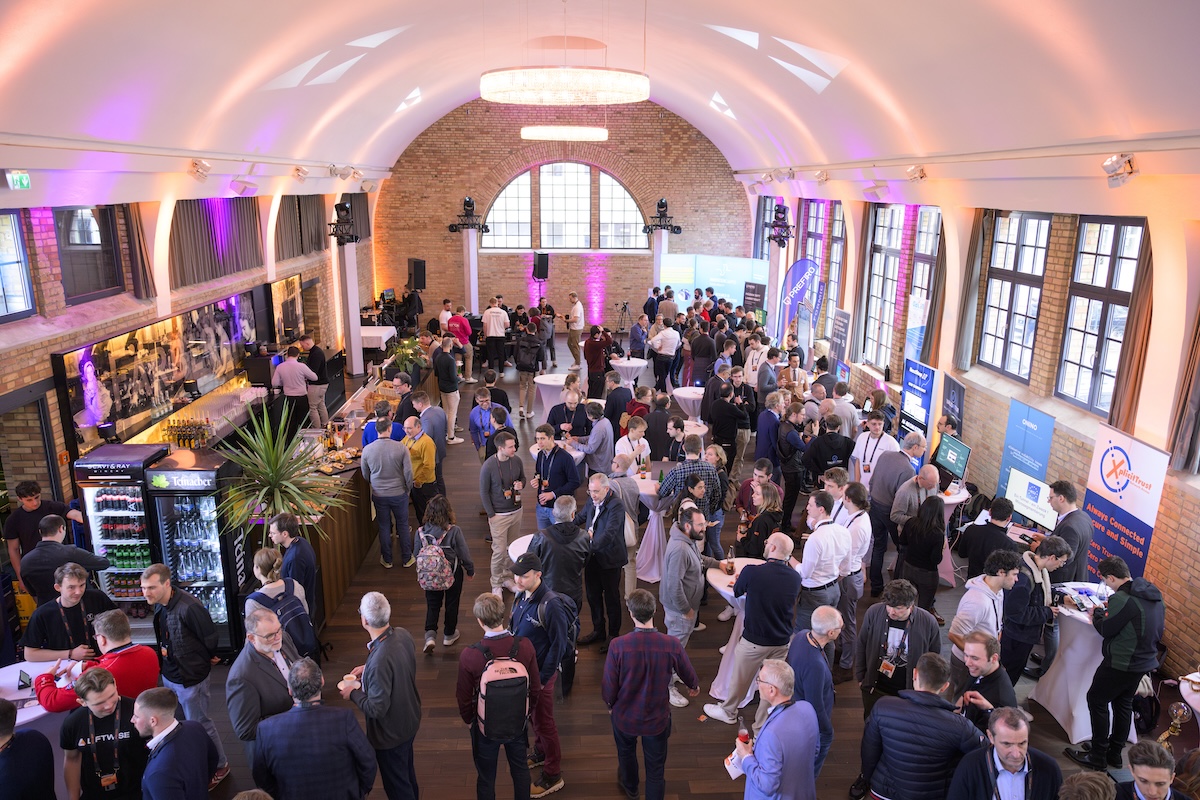
One detail upsets the tidy origin story. Gründergrillen, the Founders’ Barbecue, began in 2009, four years before KIT-Gründerschmiede. The social habit preceded the institutional umbrella. Students, researchers, founders and investors meet over bratwurst and after-work beer. The event lists no participation fee. Winter replaces the grill with mulled wine; the introductions continue.
There is a sensible idea beneath the conviviality. A founder rarely needs the entire ecosystem at once. They need the particular person who understands today’s problem. Repeated gatherings make that person easier to encounter. The institution’s 2025 review describes alumni exchange, female-founder programmes and research-focused work with maKeIT. Different rooms bring different people into the conversation.
EXIST-Women makes that early entry particularly explicit. Eligible applicants connected to KIT can apply without a specific startup idea. The twelve-month support programme covers personal development, prototyping, validation and market analysis, alongside networking and individual consultation. Participation has conditions: the programme targets the period before incorporation or business activity begins. Its 2026 application deadline has passed, while general support remains available.
05 / When the introductions get specific
StartUpSecure KASTEL gives cybersecurity teams a specialist route. Built around KIT-Gründerschmiede and the KASTEL competence centre, it combines startup support with security expertise, financing guidance and links to potential pilot customers. The Global Horizon Program tackles another boundary: international expansion, through soft-landing offers and accelerator connections. The services become useful when the destination becomes specific.
Then there is NXTGN. In July 2025, the consortium involving KIT and other university and innovation partners won Startup Factory support. Its announced package combines up to €10 million from the federal government over five years with the same amount pledged privately. That money belongs to the wider consortium. Its purpose includes connecting research-based startups with medium-sized industrial companies.
Five-year federal funding period. Announced July 2025; consortium-wide commitments.
06 / The door marked “Going wrong”
KIT-Gründerschmiede’s service map includes a revealing final branch. Alongside “Going steep,” it offers “Going wrong”: come back, examine weak points and consider another attempt. Its explanation is plain.
“Because failure is part of founding a company.”KIT-Gründerschmiede, Services
OnSite Solutions supplies the corresponding practical lesson. Early pilots exposed differences in buildings’ data quality and technical systems. The team says those findings shaped its product development. Looking back, it would test customer value earlier and more consistently. The research was useful; contact with actual buildings made the commercial assumptions less comfortable.
Other founders can copy that sequence: ask who needs the result, test the answer, then seek the specialist help that removes the next obstacle. University connections are especially useful when research, IP or laboratories matter. They cannot establish demand on a founder’s behalf. The first conversation costs nothing. Its value depends on what the founder is prepared to reconsider.