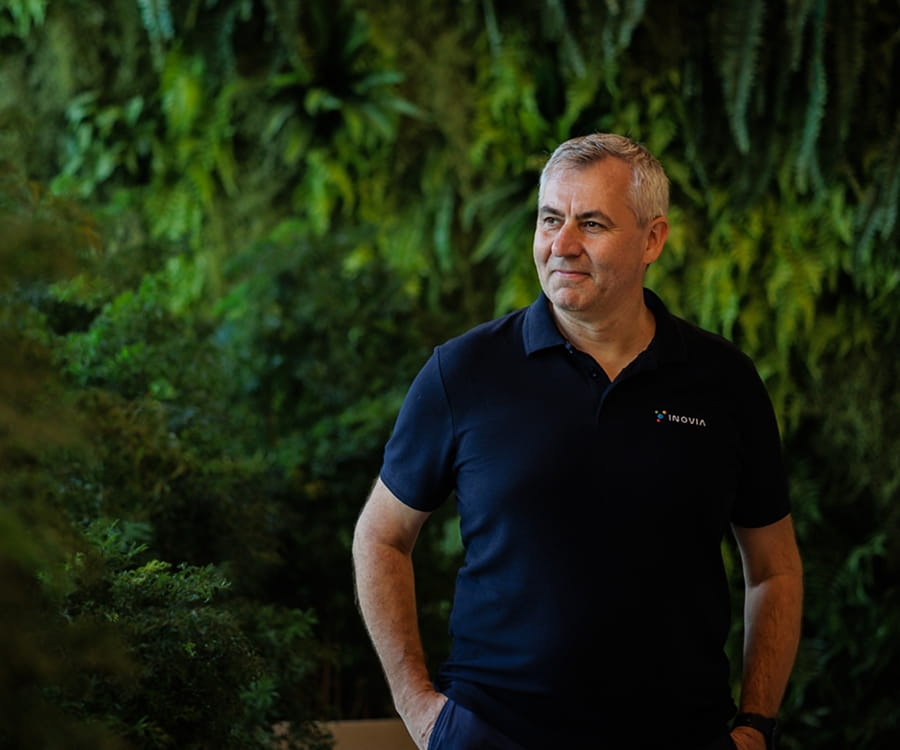
At first, INOVIA waited. Businesses would presumably arrive with problems, and the innovation centre would help solve them. In a case study published by its training partner Innolive, CEO Vlastimil Kocián describes the difficulty: he could talk to entrepreneurs, but lacked a framework for turning conversations into usable findings. A region could contain plenty of ingenuity while its new support organisation still struggled to discover what anybody needed.
- A free business diagnosis opens the door to specialist help.
- Spark tests ideas; Forge helps teams with early evidence of demand.
- Researchers, students and established firms share a regional network.
Innolive trained staff through workshops, shadowing and interviews inside companies. When employees took over the questioning, confidence faltered. Kocián says another training workshop helped. Eventually, the organisation had mapped more than sixty firms. The lesson travels well: a pleasant conversation becomes useful when somebody knows how to ask, record and act.
“Teach us to do it so we are not dependent on you.”Vlastimil Kocián, on his brief to Innolive
Translated from Czech
The region hired a connector
INOVIA began in November 2021 with three institutional founders: the Žilina Self-Governing Region, the city and the University of Žilina. Before the launch came seven months of research into business expectations. The initial founders’ contribution was €100,000. The proposition was straightforward: firms, researchers and young entrepreneurs should find one another more easily. Talent was already present. Cooperation needed somebody to organise it.
Today, its footprint covers five regional centres: Kysuce, Liptov, Orava, Turiec and Žilina. For a business owner, this matters less as an administrative map than as a shorter journey to a conversation. INOVIA describes itself as a strategic partner. Its regional position gives it a reason to care about an established manufacturer, a student’s first idea and a municipality’s service problem at the same time.
A clinic before a prescription
For established firms, the entry point is the Biznis ambulancia, or business clinic. The initial one-to-two-hour consultation is free. Its purpose is to identify barriers and growth potential before deciding what help fits. The follow-on packages have unusually legible dimensions: STIMUL offers ten hours for a specific operational problem; RAST provides twenty for development strategy and innovation processes; EXPANZIA offers forty for new markets and partners.
Published package scope. Hours are not a promise of results.
INOVIA’s company-services page reports more than 100 firms helped and a network exceeding 150 experts and mentors. Those are its own figures. More revealing is the breadth of problems it accepts: operations, growth, technology transfer, international partners and AI adoption. A private consultancy or independent mentor can address parts of this territory. INOVIA’s distinction is combining advice with public, academic and business connections rooted in one region.
First the customer, then the cleverness
The same habit appears in its research services. INOVIA argues that Customer Readiness Level should precede Technology Readiness Level. Before investing further in development, researchers should establish whom a solution helps and whether a practical user wants it. A free Early Opportunity Check starts that discussion. Further support examines commercial potential, possible partners and routes such as pilots, licences or spin-offs.
This is not a demand that every scientist become a salesperson. It is a way to ask the commercial question while there is still time to change direction. INOVIA uses an Innovation Due Diligence methodology adopted from the Central Bohemian Innovation Center, which co-developed it with Luleå University of Technology. Expertise can be borrowed; the difficult part is applying it to the project in front of you.
- 01Find the userWho has the problem?
- 02Test the needWhat evidence supports it?
- 03Choose the routePilot, licence or company?
Free admission. Bring your homework.
Spark and Forge separate two stages that startup programmes often blur. Spark’s June 2026 pilot ran over four Friday workshops, with customer conversations between sessions. Participants examined the problem, the intended customer and willingness to pay. The first offer was free for eight participants; INOVIA announced a standard €400 team price for later editions. Attendance at all four meetings was compulsory. Even a free experiment consumes time.
Forge’s autumn 2026 offer targeted ten teams with a prototype, minimum viable product or initial customer validation. The three-month programme was advertised as free, with 35 to 50 hours of coaching and expert sessions. Teams agree on measurable goals, review progress and appear on a public leaderboard. Benefits, including Demo Day participation, depend on activity. An attractive presentation cannot substitute indefinitely for doing the work.
A wastewater business makes it concrete
Eco Planet Slovakia supplies a useful example. Adam Krakovský’s business developed root-based wastewater treatment and water-retention solutions. INOVIA’s account describes support with the offer, manufacturing and purchasing processes, and planning a move from dozens toward hundreds of installations. The ambition was to turn individual projects into repeatable modules. Its Eko kocka product was already operating in dozens of applications, according to the August 2026 account.
Certification remained an obstacle. INOVIA describes helping identify laboratories, test spaces and relevant partners rather than promising a universal approval route. That distinction sets a practical limit on the model. Introductions cannot erase regulation; mentoring cannot create demand. Its four thematic hubs - green, healthcare, technology and social innovation - organise expertise around different problems, but each still needs users willing to test a proposed solution.
Local doors, longer corridors
The regional network also opens outward. INOVIA joined Slovakia’s Enterprise Europe Network consortium in July 2025. Its September 2026 update reports more than sixteen clients supported in the first year. Named collaborations include Vitalo Slovakia with Waldraff Technologies Türkiye and Novo with Czech company EGMedical. EU funding makes these EEN services free to companies. The introduction is the service; a successful commercial relationship still requires the firms’ work.
MIP project’s total eligible expenditure
January 2022 - December 2029
The larger MIP programme lists €7,842,505 in eligible expenditure through 2029 for regional innovation coordination and support. Alongside it, INOVIA Driver’s first IDEATOR cycle ended with 38 completed student workbooks and ten recognised projects. The transferable idea is pleasingly ordinary: meet people, define the obstacle, find the right expertise and run a small test. Regions copying it need patient funding and people prepared to leave their desks. The front door remains an excellent place to begin.