The most revealing number at SINE IIT Bombay is fifty. In its Titanium programme, researchers must pass a user-discovery gate involving 50 interviews. Picture the change of scene: someone who has spent years making a technology behave must now listen to people who may have no interest in its elegance. The experiment has moved outside the laboratory.
- SINE turns research-led ideas into businesses with infrastructure, mentoring and funding access.
- Its support includes physical and virtual incubation, biomedical facilities and prototype programmes.
- Y-Point, its venture fund, reached first close in July 2026 against an announced ₹250 crore target.
That small change of scene explains much of the Society for Innovation and Entrepreneurship. A scientist can demonstrate a result. A founder must assemble a team, secure rights to the invention, find customers and survive the interval before they pay. SINE works in that interval. Its offer is useful precisely because the tasks are so different from one another.
When the IT experiment outgrew IT
The story starts before the society. IIT Bombay established an IT business incubator in 1999. The campus’s 2014 account describes a pilot guided by Professor Deepak Phatak, with alumni backing, that attracted interest from other departments. Faculty wanted to turn their research into ventures. In 2004, SINE became an independent legal entity. An experiment centred on information technology had become an institution for technology businesses.
There was a practical legal reason for the separate organisation, too. A World Bank account explained that IITs could not hold equity, whereas SINE could hold stakes on IIT Bombay’s behalf and enter revenue-sharing arrangements. Commercialisation required an institutional vehicle as well as an invention. The machinery of entrepreneurship included agreements, permissions and a place for ownership to sit.
Today its users include early-stage technology companies, researchers and founders beyond the campus. General incubation welcomes technology-based proposals and prefers intellectual property. Particular programmes draw tighter boundaries. Titanium currently supports only IIT Bombay-origin IP. A founder should choose the route that fits the technology and its ownership, rather than treating every SINE programme as the same entrance.
The business around the bench
SINE’s incubation offer puts several kinds of expertise within reach: faculty and technical mentors, business advisers, legal and accounting professionals, IP support, student talent and investor introductions. Its published support also includes corporate connections for market validation and field trials, and hospital or regulatory connections for clinical work. These are introductions and services. The startup still has to do the work.
The biomedical side makes the distinction tangible. BioNEST provides incubation infrastructure for bio-med-tech companies, while SINE is also a partner for BIRAC’s Biotechnology Ignition Grant. A medical technology company may need specialist equipment and validation arrangements long before a sales team. Shared facilities can make that early work possible without each young company assembling the entire setting itself.
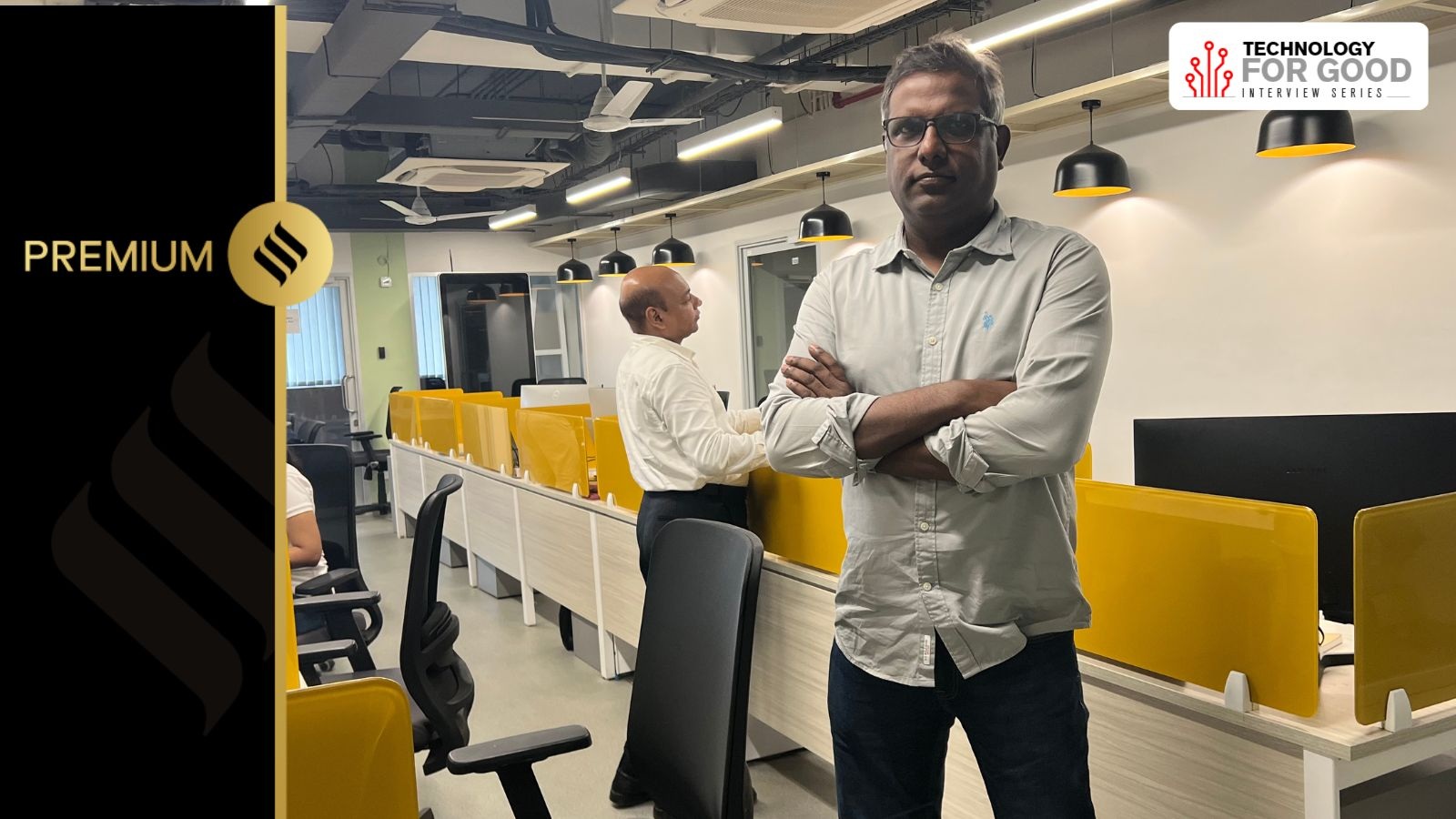
In his 2024 interview, chief executive Shaji Varghese described founders spending three to five years with SINE. The published general terms specify 36 months, with extensions considered individually. The difference matters when comparing incubation with a short accelerator cohort. Deep research, physical testing and commercial adoption have their own calendars; a pitch event cannot hurry all three.
“We are not an accelerator per se”Shaji Varghese, August 2024
Patience has a price list
SINE is a nonprofit society with commercial terms. Its published general offer lists 3% equity for physical incubation, subsidised office rent and conditional revenue sharing. Virtual incubation lists 1.5% equity and a ₹3,000 monthly association fee. The comparison below captures the starting terms, rather than the total cost of building a company.
Office rent: ₹50/sq ft/month for the first 18 months; ₹90 for months 18-36.
Association fee: ₹3,000/month. Optional seats are charged separately.
The physical revenue share is 3%, beginning when annual sales reach ₹50 lakh, with published annual minimum and maximum payments. Grants are excluded. Separate investment, licensing and specialist-service arrangements may add conditions or costs. For a founder, the sensible calculation is whether the access and support justify the cash commitments and dilution. Prestige does not settle that calculation.
A team before a deployment
Titanium supplies an unusually concrete version of the method. Across 18 months, it matches faculty innovators with business co-founders and offers ₹50 lakh in milestone-based grant tranches. Its five gates move from team formation through problem validation and user discovery to a first co-creator and first deployment. The order is instructive: the invention does not get to skip the people.
- 01Form the team
- 02Validate the problem
- 03Interview 50 users
- 04Find a co-creator
- 05Make a first deployment
Anyone can borrow that sequence without joining an incubator. Ask who experiences the problem, what they currently do about it and what would make them try something else. Then test alongside a willing user. Those conversations can change the product’s direction before expensive development hardens an assumption into hardware. A functioning prototype is evidence about technology; customer discovery supplies evidence about demand.
The cheque joins the conversation
The next step addresses money. SINE launched Y-Point in December 2025 with a ₹250 crore target, proposing pre-seed and seed investments in 25-30 research-led startups, with individual tickets up to ₹15 crore. Its remit includes advanced manufacturing, computing, materials, climate technology, healthcare, space and defence. These are investment plans, rather than grants automatically attached to incubation.
IIT Bombay announced the fund’s first close on 22 July 2026. The stated rationale was the shortage of early risk capital for technologies with long development cycles. SINE’s move into venture funding extends its response to that problem: a founder may have support and promising science yet still lack the resources to take the next commercial step.
The support reaches beyond India through partnerships. A five-year agreement announced with Monash in August 2025 covers infrastructure, mentoring, founder exchange and commercialisation. SINE sits between academic incubators, grant programmes and deep-tech investors. Its distinctive asset is the combination of campus access and commercial assistance, now supplemented by a fund.
There are limits to what that combination can accomplish. The campus’s 2014 account recorded about eight closures among 47 incubated companies. Equipment cannot create demand, and mentoring cannot remove technical uncertainty. For a service business with little need for research infrastructure, the bargain may be less attractive. For a research team facing its first customer, SINE offers a useful place to start asking better questions.
Visit SINE ↗ · Explore Titanium ↗ · Y-Point ↗
LinkedIn · X · Instagram · Facebook · YouTube channel