A robot can inspect a sewer. A sensor can read a field. A battery can keep a cold room running. Turning any of those useful inventions into a business requires another piece of engineering: finding someone willing to buy it, testing it under working conditions, and financing the months in between. At the Indian School of Business in Mohali, that is the territory occupied by the Atal Incubation Centre, better known as AIC-ISB.
The centre brings together an unusual set of tools: a business school’s network, government-backed startup schemes, sector-specific accelerators and access to prototyping facilities. Its work reaches beyond ISB students and alumni to external founders. The attraction is straightforward. A founder with a technical problem can seek help building a product; a founder with a commercial problem can seek introductions, advice and a route to a pilot.
Those are different jobs. AIC-ISB’s programme menu makes more sense when read as a sequence of business problems, each with its own admission rules and costs. The useful question for an applicant is what they need to prove next.
A business school with fields nearby
AIC-ISB began operating in 2019, established by ISB in partnership with Atal Innovation Mission, NITI Aayog. Its location gave the centre a concrete starting point. Punjab’s agriculture offered a setting in which a startup’s claims about productivity, resource use or waste could meet the people expected to use the product.
In November 2019, ISB and the Punjab government signed an agreement for the Enable Startup Track Acceleration programme, ESTAC. The programme launched that December. Its first agricultural track proposed six months of support for ten selected startups, with Startup Punjab and AIC-ISB helping enable pilots. It put a practical relationship with government alongside mentoring and fundraising assistance.
One early example associated with the centre was A2P Energy, which developed a model for collecting crop stubble and converting it into biofuel pellets and other straw-based products. That is a business problem with several moving parts: collection, processing and demand for the output. Its relevance to Punjab is easy to see without a slide explaining the addressable market.
The centre’s homepage now reports more than 70 startups supported. Its distinctive proposition is the combination of business advice, institutional connections and programme-specific help with entering a market. The school supplies a meeting place for expertise that a small founding team would struggle to assemble alone.
First, buy the founder some time
Before a company has a customer, somebody has to pay for the founder’s time. AIC-ISB’s NIDHI Entrepreneur-in-Residence programme tackles that expense through a fellowship of up to ₹30,000 a month. The offer pairs financial support with makerspace access, mentoring and co-working facilities. It explicitly targets people pursuing entrepreneurship full time.
That commitment changes the calculation for applicants. NIDHI EIR is intended for technology ventures, including ideas involving substantial technical uncertainty or research from academic institutions. Its published rules exclude final-year undergraduate and postgraduate students and discourage ideas without substantial technological innovation. A promising business can still be the wrong business for this particular scheme.
GENESIS EIR provides another early-stage route, focused on innovators in Tier-II and Tier-III cities working in electronics, information technology and deep technology. Cohort 3 advertises up to ₹10 lakh. It also requires physical incubation in Mohali, giving participation a consequence beyond filling out an application: selected founders must be able to work there.
Maximum support per selected EIR, subject to sanction
The disbursement schedule is as revealing as the headline amount. Half is linked to onboarding and documentation; the other half depends on agreed milestones, recommendations and progress records. Founders need to describe what the money will accomplish in terms that can later be checked.
The purchase order enters the picture
For a venture with a working product, the next challenge may be securing a serious trial. The published GENESIS Pilot Funding programme offers up to ₹40 lakh for market-ready innovations tested with corporates, public-sector undertakings and other eligible organisations. Applicants need a pilot work order or purchase order, alongside a prototype or minimum viable product.
That requirement gives the programme its commercial logic. A prospective customer has to make a documented commitment. AIC-ISB’s offer then includes mentoring, a needs assessment and a plan for the pilot. The programme describes a tripartite agreement involving the startup, the centre and the corporate partner before disbursement.
The matching-fund route starts further along. Its published ceiling is ₹50 lakh, linked to institutional investment already received. An investor’s promise or signed term sheet does not qualify. The page specifies an equity instrument. For founders comparing financial support, that detail belongs near the top of the page.
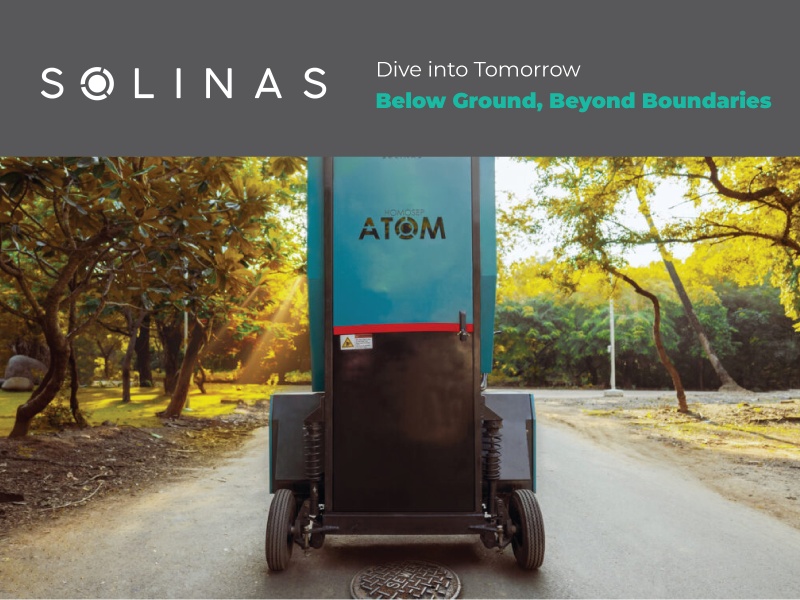
Solinas, featured in the centre’s newsroom, makes the practical stakes visible. The company began as a student project at IIT Madras and works on water and sanitation infrastructure with robotics and software. AIC-ISB’s account describes its Endobot robot and Swasth software for monitoring assets. Technologies like these must fit the routines of organisations responsible for physical systems, which makes operational testing central to their commercial story.
Read the price in three currencies
Startup support costs money, time and sometimes ownership. AIC-ISB’s published offers illustrate all three. VoltUp, its four-month electric-vehicle accelerator, listed a ₹20,000 fee plus GST for its 2024 programme. It addressed charging, batteries, manufacturing, recycling, financing and mobility, combining workshops with individual mentoring and market-access support.
Culture Catalyst has a different bargain. The programme, created with Punjab Cultural Project and NICEorg, lists no programme or success fee, while specifying an equity component of up to 5%, distributed among participating angel investors. It offers access to a ₹1 lakh grant and support with branding, revenue growth and investment connections.
Separate programmes, separate offers. Compare the full agreement.
Time deserves the same scrutiny. Culture Catalyst estimates four to ten hours of weekly participation and makes founder attendance mandatory. Its hybrid format includes virtual masterclasses, online industry talks and in-person immersions. For a small business, that commitment competes with selling, production and managing suppliers.
This is also where AIC-ISB becomes more interesting than a catalogue of technology buzzwords. Culture Catalyst includes food, fashion, furnishings and experiential tourism. Its eligibility rules require a business at least a year old and a minimum annual turnover of ₹1 lakh. Commercial readiness matters even when the product is rooted in heritage.
A battery has to be useful somewhere
The 2025 fellowship backed by the Royal Norwegian Embassy in New Delhi and Innovation Norway gave battery entrepreneurs a specific brief: community applications. AIC-ISB and TERI were part of a programme covering possibilities such as water pumps, cold storage and microgrids, alongside recycling and resource efficiency.
The design offered two three-month phases, with ₹1 lakh for the first and an additional ₹1 lakh for candidates advancing to the second. Progression depended on assessments including community usefulness, sustainability and potential for commercialization. Mentoring was online, so relocation was unnecessary. The contrast with GENESIS EIR’s physical-incubation requirement shows why founders must inspect the individual offer.
Agriculture remains part of the mix. The 2025 NIDHI Accelerator edition targeted early-revenue agricultural ventures at least a year past incorporation, with up to ₹5 lakh for the top three startups. Its themes ranged from precision farming to post-harvest work and market connections. The support was designed around companies that had already reached initial market validation.
ArthX, the HDFC Parivartan programme advertised for 2026, sharpened the regional focus again: sustainability startups with revenue and a meaningful Punjab presence. It announced a ₹1 crore grant corpus, with up to ₹10 lakh per selected startup. Those figures describe a programme’s advertised support, rather than the centre’s own corporate fundraising.
The lesson starts before the application
AIC-ISB’s newsroom includes a useful origin story from Padcare Labs. Founder Ajinkya Dhariya saw people handling discarded sanitary pads and diapers at a landfill near Pune. The observation drew his attention to a disposal problem that needed both technology and an organised collection system.
“There is no disposal at source and no supply chain.”
Ajinkya Dhariya, Padcare Labs
In AIC-ISB’s January 2025 newsroom feature
The lesson for a founder is concrete: look closely at how the problem is handled today. A product specification alone may miss the work needed to collect material, train an operator or persuade a purchasing department. Those observations can change what gets built and which partner needs to be involved.
For someone considering AIC-ISB, a useful preparation exercise is to name the next experiment: a prototype test, a paid pilot, a distribution agreement or proof that customers return. Then match that experiment to a programme’s stage, sector and terms. The centre can convene people and resources; the founder still has to run the experiment and respond to its results.
Timing matters too. GENESIS EIR Cohort 3’s published application deadline was September 3, 2026. Its schedule places screening between September 4 and 18, with later evaluations and approvals still ahead. A published timetable is a plan, and applicants should treat subsequent stages as conditional.
AIC-ISB occupies the busy space between technical possibility and a business that can operate. Its value to an individual founder will depend on whether the next mentor, facility or customer introduction helps answer a specific question. The best question to bring through the door may be the least glamorous one: what would make somebody pay for this?