An investor can decline a pitch in seconds and leave a founder wondering for months. Tech Nordic Advocates has a modest remedy: ask investors in its Diversity Venture Fund network to respond within two weeks, either arranging a meeting or giving brief, useful feedback. In the grand theatre of entrepreneurship, a reply deadline is hardly glamorous. It is, however, something a founder can use.
- A Nordic and Baltic network offering mentors, fundraising support and international market access.
- Individual membership costs €350 a year; programmes and fundraising services carry separate fees.
- Targeted support for female and non-binary founders sits alongside broader business services.
A useful introduction has a job
Jeanette Carlsson founded TNA in 2015 after becoming involved with Tech London Advocates. Her background was economics and consulting, including work at PwC and IBM. The appeal of a regional network was practical: individual Nordic countries were small markets. Linking them could give founders more people to sell to, learn from and raise money from.
That idea now has several entrances. An early founder can seek mentoring or the five-month International Startup School. A company ready to grow can pursue the International Scaleup School. Investors can look for deal flow; corporate partners can meet young companies. The common problem is finding the relevant person before time and money disappear into the search.

TNA is the Nordic and Baltic arm of Global Tech Advocates. Its website describes the wider community as 48 hubs across 60 countries, connecting 30,000 tech leaders. Those are network figures, rather than TNA customer counts. Their value to a founder depends on whether somebody in the next market can make an introduction that matters.
The pandemic exposed a different gap
During COVID, TNA set up a resource hub as startups lost access to markets and faced funding delays. Carlsson says that work exposed especially difficult conditions for female founders. Looking at more interventionist approaches abroad helped persuade her to develop structured support, backed by public and private partners, rather than rely chiefly on networking events.
The resulting female-founder offer joins mentoring, acceleration and access to investors. Denmark and Finland describe it in three modules. The third, the Diversity Venture Fund, is an ongoing facility: founders submit a pitch deck, receive readiness feedback, get legal preparation and meet investors committed to considering female and non-binary founders.
Capital raised by 78 female founders with the initiative’s help since 2023. This is money raised by participating founders, not funding received by TNA.
TNA also dates its Beyond Gender Diversity initiative to 2024. It extends the focus to other underrepresented founders, including LGBTQ+ people, founders of non-Nordic or Baltic ethnic heritage, neurodiverse people and the over-50 community. The argument is commercial as well as social: an ecosystem can overlook a capable founder before ever examining her business.
Networking, with an invoice
TNA is a not-for-profit, with several paid offers. Solo Advocate membership is €350 annually and is aimed at tech decision-makers. It includes events, mentoring opportunities and priority investor matchmaking. Corporate memberships, sponsorships and bespoke projects give businesses other ways to participate. Partners help fund particular programmes.
TNA Invest makes the fundraising transaction explicit. It charges €1,000 upfront for onboarding, investor readiness and pitch-deck work, then 5% of investment it helps secure, payable when the money arrives. That fee belongs in a founder’s financing calculation. On an illustrative €1 million raise, the success fee alone would be €50,000.
€51,000 total service fees on this example, before any other costs.
International market entry is another purchase. The UK Market Access Programme runs for three months, with a typical published price of £12,000. It covers market insight, setup guidance, local operational expertise, coaching and introductions. A complementary trade mission is demand-dependent and priced separately. The programme begins by agreeing goals and KPIs, a sensible antidote to judging a trip by the quality of its reception drinks.
Four days to prove you are ready
The Norwegian 2026 accelerator makes the requirements concrete. Its offer is for 30 female or non-binary founders or C-level leaders of tech companies based in Norway. Applicants need revenue or progress beyond a minimum viable product, with projected revenue and growth. Four bootcamp days precede a five-month accelerator for those demonstrating international scaleup potential.
Coaching, peer groups, pitch events and market connections lead towards a scaleup and international expansion plan. With Innovation Norway and partner support, the listed participant price is NOK 10,000 plus VAT. An idea still searching for its first evidence of demand may need earlier-stage help. Eligibility makes that distinction before the passport comes out.
Against the alternatives - a local incubator, an export adviser, a conference or an investor network - TNA’s proposition is the combination of these services across borders. Buyers should specify the missing piece. A founder needing a British customer has a different problem from one needing a better pitch deck. Neither problem is solved by accumulating business cards.
A prize with an afterlife
In September 2026, Visa’s Norwegian She’s Next recipients were Bikeloop’s Hedda Heyerdahl, Muzziball’s Ingerine Dahl and Æira’s Mari Zimmermann. Each received NOK 55,000 from Visa and a year of TNA acceleration support valued at NOK 55,000. The cash and the non-cash package are distinct; the arrangement gives the winners support beyond the ceremony.
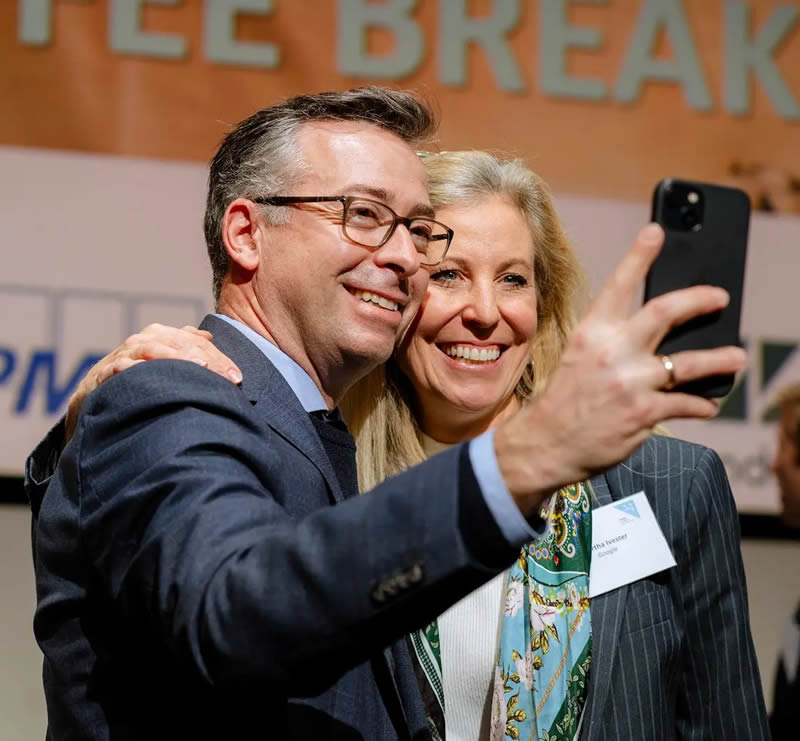
Continuity also explains TNA Champions. Alumni asked what happened after their programmes ended; TNA built an offer with mentoring, masterclasses, peer support and partner benefits. It costs €695 for six months or €1,200 annually. Keeping the relationship alive becomes another service with a price.
The habit worth copying is simple: give each introduction a purpose, prepare before the meeting and agree what happens afterwards. No network can supply customer demand or compel an investment. But a founder can insist that access means more than being allowed into a room.
“You don’t have to be a techie to work in tech.”
Jeanette Carlsson · WeAreTechWomen, 2023