A patent is a peculiar kind of trophy. It can hang on a university wall for years while the invention behind it waits for a customer. Purdue has plenty of inventions to work with: its Office of Technology Commercialization reported 269 technologies licensed in fiscal 2025. The difficult work is deciding who needs them, what still needs fixing and whether a new company is the best way to get them into use.
That is the territory occupied by Purdue Innovates. Created by Purdue University and the Purdue Research Foundation in April 2023, it brings intellectual property protection, startup assistance and access to investment into a connected system. A scientist can seek a licensee. An alumnus can build a business around an invention developed elsewhere. An established company can look for research worth turning into a product.
The appeal is practical. Universities contain people who understand molecules, machines and markets, but those people do not necessarily share a calendar. Purdue Innovates tries to organize the handoffs. Its story becomes interesting at precisely the moment the research presentation ends and somebody asks who will pay.
One entrance, several ways out
The 2023 launch addressed an organizational problem: knowing where to go. Purdue already had commercialization and entrepreneurship resources. Bringing them together gave inventors and founders a common starting point and explicitly widened the welcome to alumni whose companies did not use university-owned intellectual property. Brooke Beier, the initiative’s senior vice president, helped articulate that broader remit.
Today, the work spans different professional disciplines. The Office of Technology Commercialization evaluates disclosures, protects intellectual property and negotiates licensing arrangements. The Incubator helps founders clarify customer problems and develop businesses, while also helping university technologies become more ready for commercial use. Purdue Innovates Ventures supplies an investment route for qualifying companies.
This is a university commercialization operation within a nonprofit foundation. Its market position comes from access to Purdue research, inventors and alumni, combined with people who can work through the details of bringing an invention to market. Patent counsel and product development support belong in the same conversation here. A founder who arrives needing money may first need evidence.
The customer rewrote the product
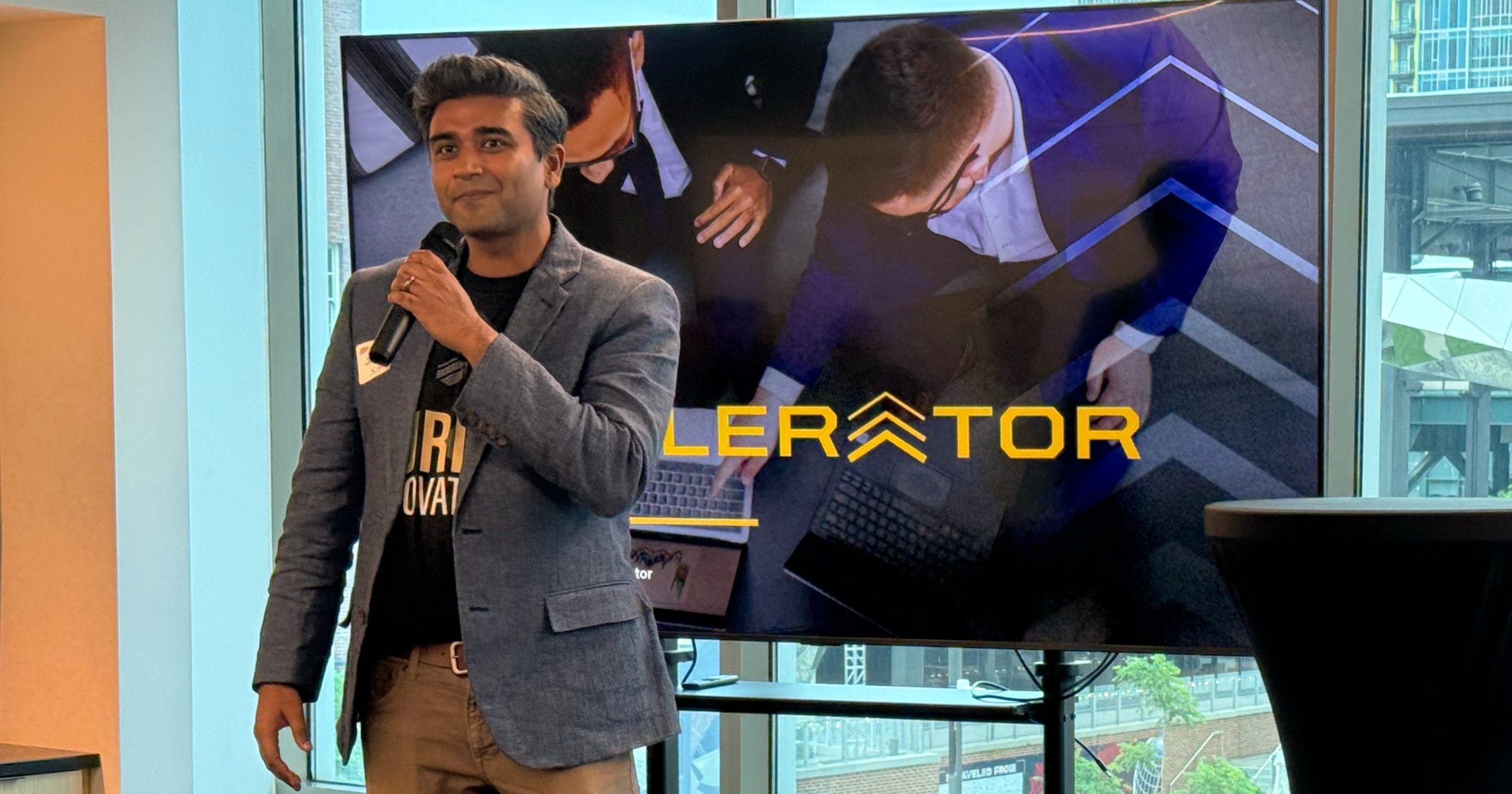
Consider Second Opinion, a participant in the second accelerator cohort. In a June 2026 account, co-founder and CEO Samar Shah described arriving with a legal AI product focused on reviewing contracts. Mentor conversations forced a harder question: were small businesses the right customers, or simply a refuge from slow enterprise sales?
Shah said customer discovery redirected the company toward a dashboard for business commitments spread across email, accounting software and other tools. That change affected the product plan, pricing and sales pitch. The original framing proved too narrow in his telling; this was a reported change of direction, rather than evidence that an entire business had collapsed.
The lesson is available to anyone willing to ask an awkward question. Investigate the work surrounding the task your product performs. A faster review may matter less than knowing which promises the business has made. Here, the accelerator’s value was the pressure to examine that assumption before building more around it.
“We stopped thinking of ourselves as a contract review tool and started thinking of ourselves as a contract dashboard.”
Samar Shah · Co-founder & CEO, Second Opinion
The money comes with a job to do
The accelerator advertises investment of up to $100,000 through a SAFE, a simple agreement for future equity. Participants receive capital in exchange for an equity interest under the agreement’s terms. The headline amount is a ceiling, so it should not be read as a uniform check for every company. Mentorship, product development resources and investor introductions accompany the funding.
There is a time commitment, too. Although remote work is possible, the program requires attendance at certain events in West Lafayette. The first cohort began in March 2025; PRF reported 71 applications and five accepted companies. All five received funding. That is roughly one place for every 14 applicants, a measure of selection rather than a prediction of startup success.
Research funding follows a different logic. The Trask Innovation Fund supports specific milestones achievable within six months on formally disclosed Purdue technology. Its guidelines provide for recovery of the money from future licensing revenues. The useful unit of progress is something a prospective partner can evaluate: a stronger prototype, a completed test or another defined development milestone.
Licensing also has several price-and-commitment levels. An option can reserve the opportunity to negotiate while a company examines the technology; it often involves a fee and ongoing intellectual property expenses. An evaluation license permits limited testing. A full license carries agreed financial obligations and requirements to develop the technology. Purdue is offering routes to commercial use, each with its own obligations.
All five received funding. The program advertises up to $100,000 per company through a SAFE.
An idea needs a different room than an investor pitch
Firestarter serves Purdue students, staff, faculty and alumni contemplating a company in the next three to nine months. Its seven-week format works through the business model, how to explain the idea and preparation for a pitch. Feedback comes from mentors and fellow participants. That is a useful setting for an uncertain proposition that needs examination before it becomes a fundraising campaign.
Ventures applies a more demanding investment screen. Its published criteria call for demonstrated proof of concept, at least one full-time-equivalent team member and the ability to attract outside capital. It seeks companies addressing billion-dollar-plus problems across agriculture, deep technology, digital technology, life sciences and mobility. A Purdue connection can come through a founder, a senior executive or a license to university intellectual property.
The first accelerator cohort demonstrates how elastic that connection can be. It included remote photography business Capturely in Los Angeles, drone-detection company DroneSpotter in Chicago and London-based Elisyan Wealth Ventures. Greenshoot Materials, in Denver, joined with two Purdue technology licenses for compostable coatings. West Lafayette is the meeting point; the businesses need not all share its postcode.
For a conventional small business seeking steady local revenue, the accelerator’s emphasis on rapid growth may be a poor match. A company without a Purdue connection also faces a basic eligibility obstacle. Purdue’s own resource directory points toward other routes, including Elevate Ventures, High Alpha and federal small-business research funding. Choosing the right program starts with the kind of business being built.
Count the deals. Then read the labels.
Purdue’s commercialization figures show activity at several stages. Fiscal 2025 brought 479 total disclosures, 863 patent applications and 161 licenses and options. The office reported 18 Purdue-IP startup companies and $14.57 million in gross revenue. That revenue belongs to OTC’s reported operations; it is not a valuation of Purdue Innovates or the sales of its startup community.
Technologies licensed rose from 203 in fiscal 2023 to 224 in 2024 and 269 in 2025. The progression is encouraging, although these are annual totals, not a tracked group of inventions moving neatly through a funnel. A license can cover multiple technologies. A patent application is not an issued patent, and an issued patent is not proof of demand.
The distinction matters because university innovation is easy to decorate with large numbers. The reader should look for the next commercial event: an agreement, a customer, a product or outside investment. The Incubator’s fiscal 2025 work included 116 intake meetings and 32 projects intended to advance Purdue intellectual property toward licensing. Those figures describe the workbench, not just the trophy cabinet.
Let industry in before the prototype is finished
Purdue added another approach in April 2026 with Planned Commercialization. The initiative invites companies to identify promising technologies earlier and help shape their development. Its components include technology assessment, a structured process for moving research toward products and an Innovation Hub through which companies can fund minimum viable products based on Purdue intellectual property.
The Innovation Hub connects that development work with Purdue Polytechnic’s practical master’s program. The proposition addresses two needs at once: companies get a way to work on emerging technology, and students gain experience with applied development. It also places commercial questions earlier in the research-to-product process, when changing direction may involve less finished work.
A complementary effort invests in people who already know the science. The Commercialization Fellowship announced three new fellows in August 2026: Christian Lange working on single-photon generation, Dylan Ryals on a honeybee genetics service and Brenson Jassim on modified peptide therapeutics. The breadth is almost comical until the shared problem becomes clear. Each project needs someone to help carry specialist research toward a usable offering.
Bring a question that could change your plans
The organization’s public-facing culture is built around cohorts, mentors and working conversations. Its staff roster combines scientific training, licensing experience and legal expertise. These are useful ingredients for researchers whose next problem sits outside their specialty. They also make for an unusual room: the person who can explain a patent claim may be sitting near someone who wants to know why a customer would switch suppliers.
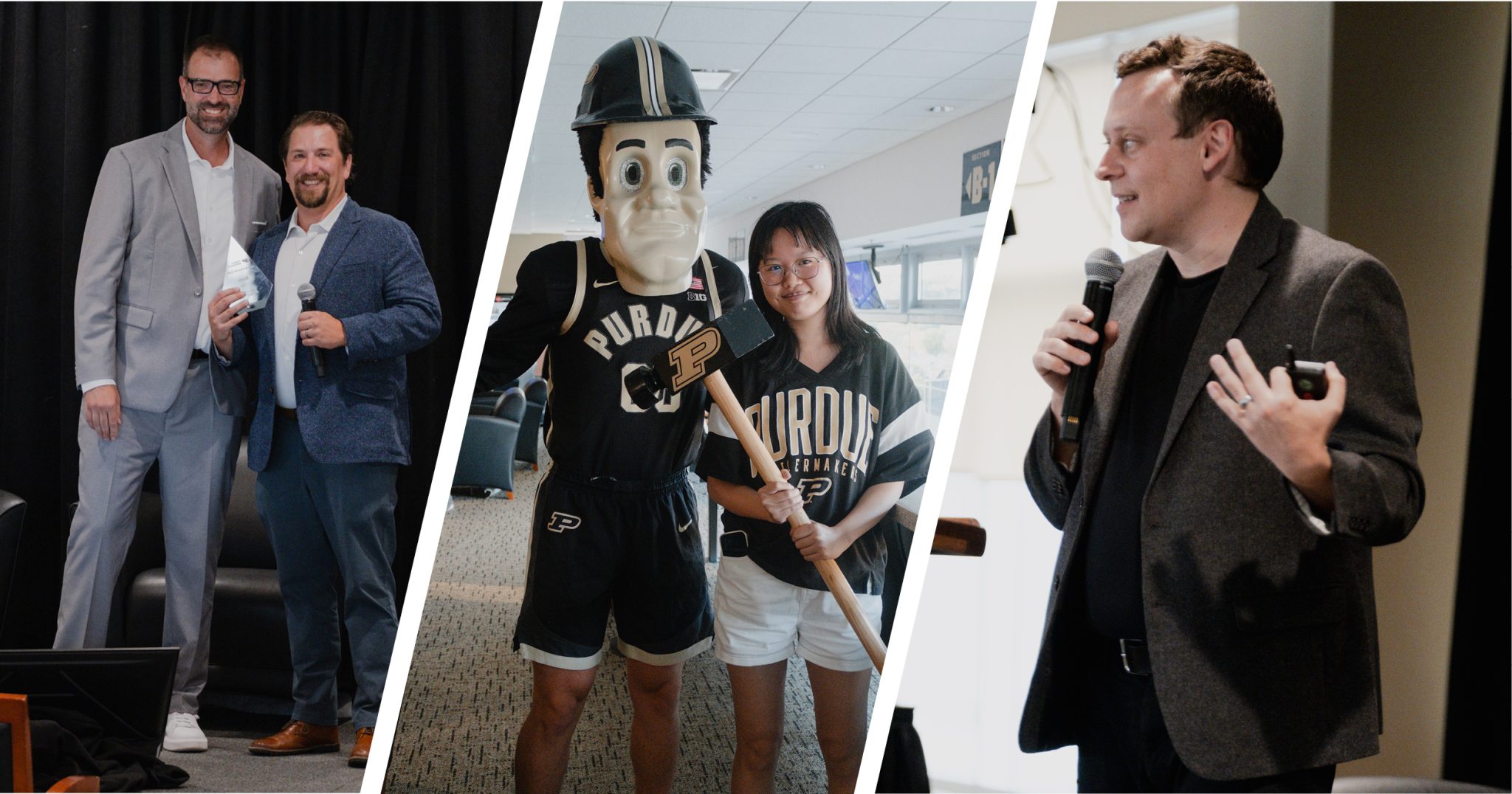
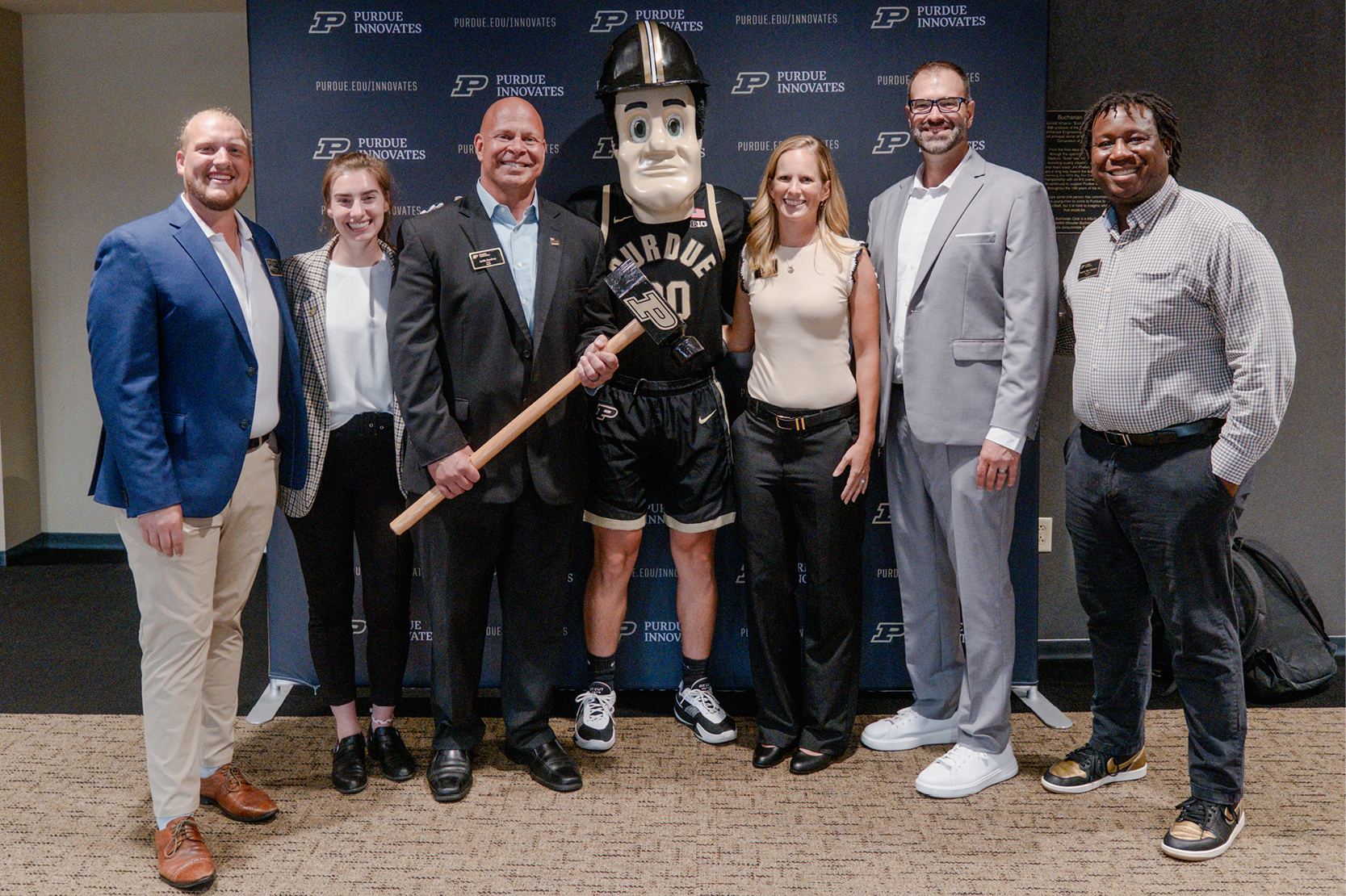
On August 27, 2026, the second accelerator cohort finished its 14-week program at Pitch Night. PRF’s September 9 report described five teams presenting after mentorship and investor-pitch preparation. The photographs include microphones, handshakes and Purdue Pete. The mascot supplies the school spirit; the presentations still have to explain the business.
For an inventor, the practical entry point is the disclosure and commercialization team. For a prospective founder, it is the Incubator’s intake process. An established company can explore available technologies and discuss an evaluation or licensing arrangement. Investors and alumni can approach the community from another direction, offering capital, experience or introductions.
The part other organizations can copy is the connection between those conversations. Give inventors a clear entry point, assign commercial work to identifiable people and tie support to a question that can be answered. For founders, the useful habit is smaller still: arrive prepared to change a premise. A university can help protect what you invented. The customer may explain what you should build next.