The cofounder arrived through speed dating. Daniel Locatelli and Ioannis Dikeoulias met at an event organized by Triathlon, Saarland University’s entrepreneurship and technology-transfer organization. More meetings followed. So did a product, conversations with potential customers and revisions. Their company, seatbase, now develops software to help businesses understand their cloud applications, license use and avoidable costs. For an institution charged with getting ideas into the economy, arranging that first conversation is a fairly concrete result.
Triathlon’s work stretches from those introductions to patent support, funding applications and places to make prototypes. Its audience includes students considering self-employment, researchers with inventions, teams trying to launch and companies looking for technology or talent. The name brings together entrepreneurship, innovation and transfer. The common problem is the distance between having something promising and knowing what to do with it.
A new name with a long institutional memory
The university launched Triathlon in February 2023, combining existing activities and adding more hands-on help with commercial implementation. Its structure brought together a central university unit, a transfer company and an incubation company. The launch leadership included Michael Jung, Ralf Zastrau and Jens Krück. Treating those managers as the founders of a conventional private consultancy would miss the institution behind the project.
The university had opened its first Starterzentrum in 1995 and received EXIST Entrepreneur University recognition in 2013. Triathlon’s LinkedIn profile reaches further back, listing 1985 as its institutional starting point. Those dates describe different stages. The current organization inherited decades of relationships and startup work; it did not create that history overnight. Its mission belongs to the university’s engagement with the surrounding economy and society, with Saarland’s structural transformation providing the local stakes.
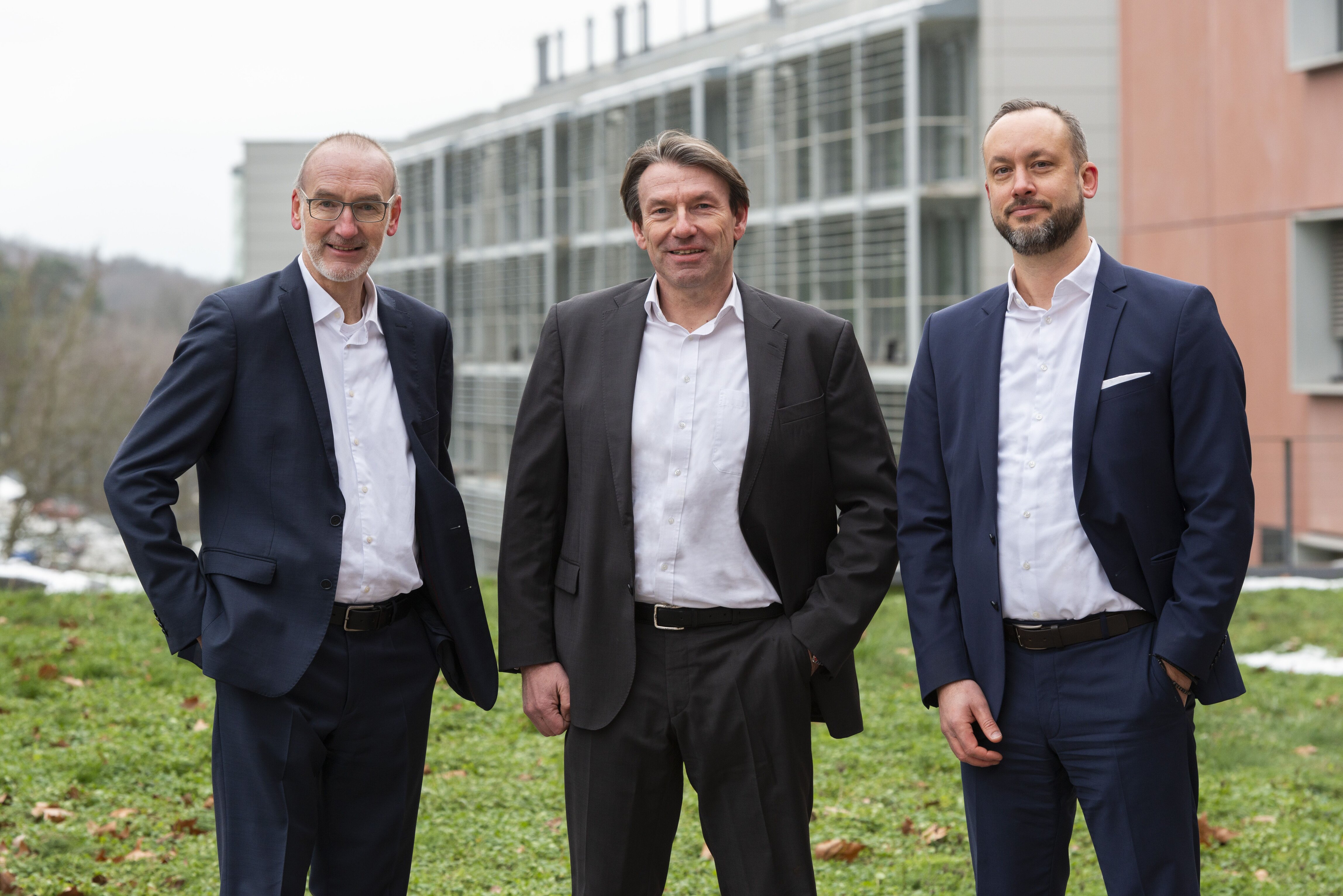
The €21.2 million place to try things
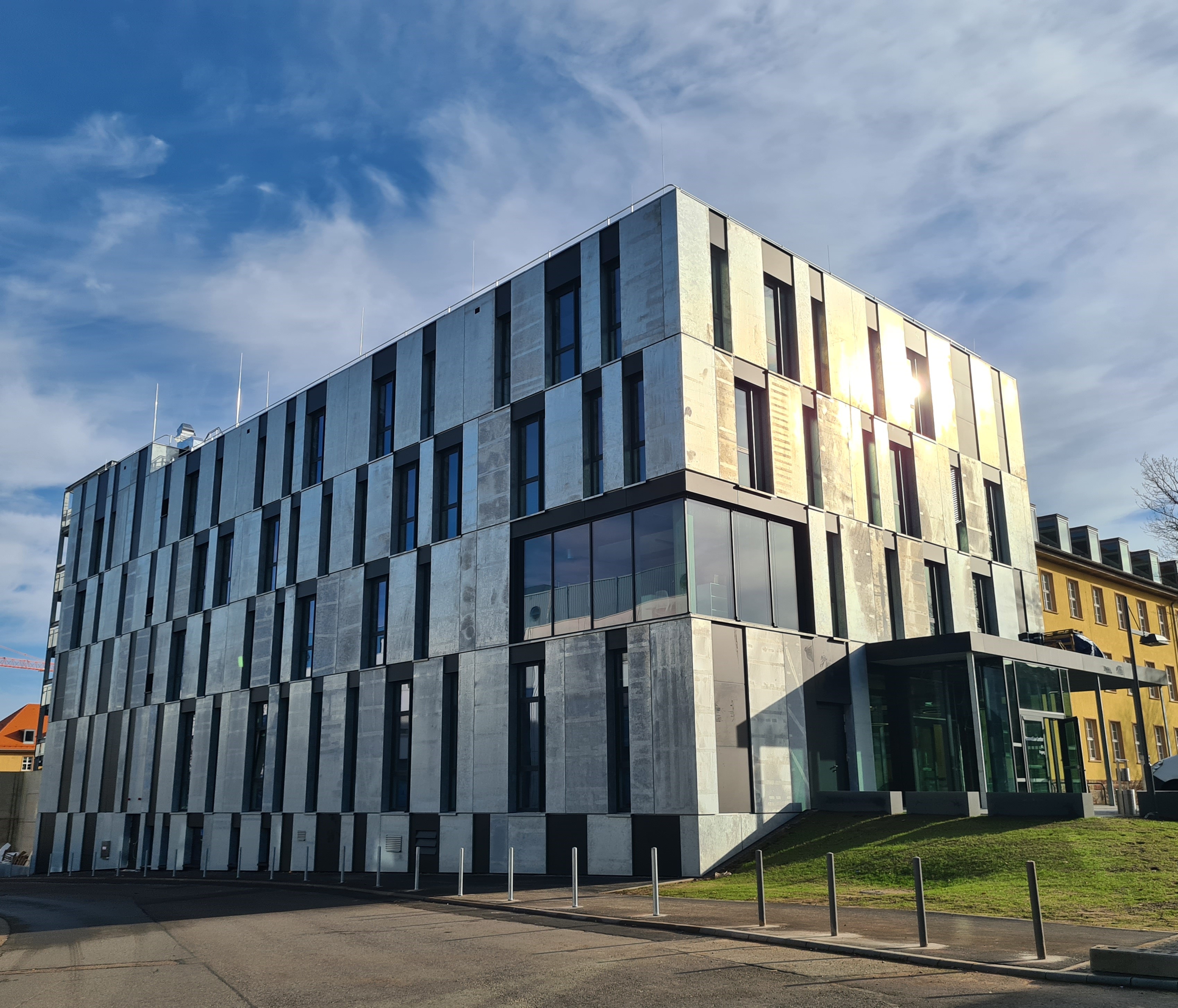
The physical expression of that ambition stands on the Saarbrücken campus. Opened on April 25, 2024, the Innovation Center combines workspaces, meeting rooms, events and prototyping. Its four floors give students, researchers and businesses somewhere to work alongside one another. A conversation about an invention can happen in the same building as a discussion about its business model.
The building and initial equipment cost approximately €21.2 million. Around €16 million came from the European Regional Development Fund and Saarland, split equally. These are infrastructure figures. They describe what it took to create the setting in which the advice and experimentation happen. The university subsequently reported 450 events and around 20,000 participants from the center’s April opening through the end of 2024. That measures use, rather than proving that every gathering produced a business.
€21.2m building + initial equipment
- EU regional fund
- Saarland
- Balance of total cost*
Inside, the center advertises 80 workspaces and room for events of up to 200 guests. Café Comame supplies a less formal meeting point downstairs. That detail matters: a founder seeking a collaborator needs chances to meet people as well as a desk. The public-facing culture is built around workshops, shared facilities and repeated contact.
A prototype gives the conversation something to hold
The FabLab supplies the tools for a different kind of feedback. Its digital-production area lists several kinds of 3D printer, a scanner, a laser cutter and electronics workstations. Across its planned two-part setup, the workshop covers 180 square metres; the wood and metal area is described as still being developed. Registration and preparation precede use, with theoretical material available through an online learning platform.
For someone working from a drawing or CAD file, shared machinery can make a first physical test more accessible. Triathlon’s offer includes learning how to use the equipment, so the user leaves with more than a part. One participant, Alexander Rieth, describes the atmosphere with the phrase Die lockere Macher-Atmosphäre inspiriert
- the relaxed maker atmosphere inspires. It is a modest, useful description of a workshop where people learn from one another.
The patent has more than one exit
A researcher can also approach Triathlon without planning to become a chief executive. Its intellectual-property services cover identifying and protecting research results, assessing market opportunities and finding routes to commercialization, including licensing. The published scope includes technical inventions, biological materials, software and confidential know-how. Advice can begin while a research project is still being planned.
This gives established companies a role beyond sponsoring a pitch contest. A business might need access to research expertise or a technology it can develop within an existing operation. A license may suit that purpose. A separate startup may suit another. Triathlon’s place in the market rests on connecting these possibilities to the university’s research base, rather than offering a single prescribed destination for every idea.
A simplified view of Triathlon’s services. Projects follow different sequences.
When the laser became a venture
LAHA makes the research route tangible. Nina-Marie Burmeister and Larissa Schatteburg describe a hearing-device project that replaces a conventional loudspeaker with a fine laser fiber. Their account traces the underlying idea to experiments in which animals responded to laser pulses as sound. In January 2026, the team described itself as working on prototypes, speaking with investors and preparing for market readiness. The technology remained under development.
Their visit to Triathlon’s startup advisers began the route toward an EXIST research-transfer application. Approval became a turning point: it gave the team the resources and confidence to pursue the project more seriously. The three-year support covered personnel, product development and coaching. This is what changed their assessment of the opportunity, in their telling. Advice connected an experimental result with a financing route and the work of building a venture.
“Ehrliches Feedback für echte Fortschritte”
Honest feedback for real progress - Startup Launchpad’s published promise.
Three days a week is a real price
Triathlon’s 2026 Startup Launchpad puts a schedule around that work. The three-month program asks teams for approximately three days each week. It combines workshops, mentoring, weekly one-to-one reviews and intermediate pitches every four weeks. The published start date was July 6, with Demo Day scheduled for September 22. At this profile’s September 9 reporting date, that final pitch event was still ahead.
The time commitment is substantial for anyone balancing a job, studies or research. The winning team has an opportunity for incubation valued at up to €100,000, linked to developing the venture in Saarland. That conditional offer should be understood on its own terms. For a prospective participant, the useful questions concern the work required, the feedback available and whether the program fits the team’s stage.
The bill extends beyond the building
Triathlon operates within a university-supported system, with institutional resources and public project funding helping sustain its services. The Impuls project, run with FITT, receives support from Saarland and the European Regional Development Fund for startup advice and qualification. This matters to the business model: the people receiving assistance are not necessarily the institutions paying for the capacity to provide it.
A January 2026 initiative adds approximately €5.5 million over four years for a collaboration between saaris, FITT and Triathlon Transfer GmbH. Its intended users include small and medium-sized businesses seeking research partnerships and access to technology or funding. The partners have distinct responsibilities: company and location connections at saaris, applied research and transfer at FITT, and market-oriented commercialization and IP strategy at Triathlon. It is a joint project budget, not Triathlon’s own financing round.
The wider network also includes SouthwestX, selected in the federal Startup Factories competition in July 2025. The university-led consortium announced more than €20 million for five years, including up to €10 million in federal support. Its partners include DFKI, Max-Planck-Innovation and universities beyond Saarland. Connections into France and Luxembourg broaden the potential reach. That initiative belongs to the surrounding support system and has its own scope and financing.
Copy the conversations before the construction
Triathlon’s published first-year review counted more than 25 company formations. In April 2025, the university reported second place among large universities in the latest Gründungsradar results. Both are useful signals of activity and institutional commitment. Neither tells a prospective founder that their own product will find demand. Commercial judgment still has to happen one customer conversation at a time.
Seatbase’s experience supplies the most portable lesson. The founders describe building an initial product and repeatedly adjusting it after speaking with prospective customers. Their account offers an observable correction process, without a tidy tale of one spectacular failure. An introduction created the team; market conversations helped refine what it should build. An organization copying Triathlon can begin by making those two activities easier.
The more expensive elements depend on conditions that other places may struggle to reproduce: a university research base, sustained institutional support, public investment and partners willing to work together. Individual programs also demand time and a suitable project. A team that cannot commit several days a week would have difficulty with Launchpad’s format. A company without a relevant research need may gain less from the transfer offer than from ordinary business advice.
The next addition points back toward education. In July 2026, the university announced an English-language entrepreneurship and innovation MBA for the coming winter semester, organized by its Europa-Institut and connected to Triathlon. The sequence keeps expanding: learn, meet, test, protect, build. For a would-be founder, the practical first move remains pleasantly unarchitectural. Get in touch, describe the problem and find out who can help with the next step.