Five percent is an oddly modest number to put at the center of a technology story. But consider what Tntra says happened when it modernized a live American bank-payments platform. The team moved 5% of traffic, then 25%, then 50%, before completing the switch. Transactions were compared. Settlement totals were checked to the cent. The interesting part was the permission to proceed.
The useful version
- Tntra connects business advice, proprietary AI platforms, and product engineering.
- Its customers range from startups to enterprises and institutions building innovation programs.
- The practical pitch: build the product while preserving the knowledge needed to run it.
That small sequence offers a way into a company with a large vocabulary. Tntra talks about ecosystems, intellectual property, and innovation. Its more persuasive material concerns ordinary organizational headaches: payments that must keep clearing, caregivers whose observations disappear, shipping records copied between websites. These are problems of coordination. Buying another tool is only the beginning.
The handoff is the product
Mehul Desai and Shardul Bhatt established Tntra in 2020. Their earlier work together included mobile wallets and payments. In a 2021 interview, they described a business combining engineering, incubation, and venture support. Even then, the ambition extended beyond supplying programmers: customers could develop products, patent portfolios, and engineering teams they could eventually own.
The founders had identified a troublesome seam. An adviser can recommend a direction. A development team can implement a specification. An investor can finance a company. Someone still has to carry the reasoning between them. Tntra's bet is that this continuity has commercial value.

Today its three principal offerings are practitioner-led advisory, AI platforms and solutions, and @POD engineering. Advisory covers business, technology, AI, and IP decisions. The company calls its overall method i³: Ideas, Innovation, Impact. That tidy progression is useful only if someone can specify the checks between those words.
“Our purpose is to connect the two with care.”
Mehul Desai, on ideas and technology, October 2026
A permission slip for the next five percent
In the payments case, the initial obstacle was an accumulation of interdependent systems. Growth made that complexity harder to tolerate. Tntra describes establishing identity and encryption foundations before moving deeper into transaction processing. Old capabilities remained until their replacements demonstrated equivalent behavior.
The copyable lesson is a decision rule: establish what must remain true before increasing exposure. It requires comparable transaction records, clear acceptance criteria, and people authorized to stop the rollout. Without those conditions, gradual deployment can merely distribute uncertainty over a longer calendar.
A different case makes the same coordination problem visible. For an unnamed American digital-health organization, Tntra reports delivering native iOS and Android observation apps in 15 weeks. Observers, caregivers, geriatric specialists, and primary-care providers received different views. Everyday changes could enter a structured reporting system, with a notification feature for escalating concerns. The achievement described is a working reporting channel; it does not establish a measured reduction in hospital admissions.
Two mobile platforms. Four care roles.
A shared route from observation to escalation.
In freight forwarding, Tntra describes collecting information from multiple carrier websites and returning standardized records to an ERP system. Its published figures are about 15,000 bills of lading processed daily and a 30%-40% efficiency improvement. The pleasing detail is multilingual support: the bottleneck included the languages in which the shipping information arrived.
Three names worth untangling
T(u)LIP handles innovation workflows and lifelong learning. Organizations can capture ideas, evaluate them through stages, and connect work to capability development. Its Gurukula learning component uses challenges and mentorship. The proposition is sensible: a project plan needs a parallel plan for the people expected to deliver it.
Shruti AI supplies enterprise intelligence, including document processing, search, automation, and decision support. In February 2026, Tntra gave it the title of virtual Chief AI Officer. The memorable title comes with a less theatrical division of responsibility: leaders set priorities, specialists validate outputs, and humans retain accountability. A platform's executive title confers no independent authority.
ASPIRE applies the stack to enterprise value. It examines assets such as data, software, skills, relationships, and infrastructure, then models possible combinations and strategic choices. Its proposed starting engagement lasts 30 days. Think of the question as: what could this company do with what it already has? The output informs leadership decisions rather than substituting for them.
The people must outlast the project
@POD brings practitioners, engineers, AI tools, governance, and knowledge capture into an engagement organized around an outcome. Teams can change composition as the work evolves. Tntra describes options to transfer or absorb the capability, retain a managed team, or continue through a hybrid arrangement. That is its competitive argument against engagements that leave behind code while taking the operating knowledge away.
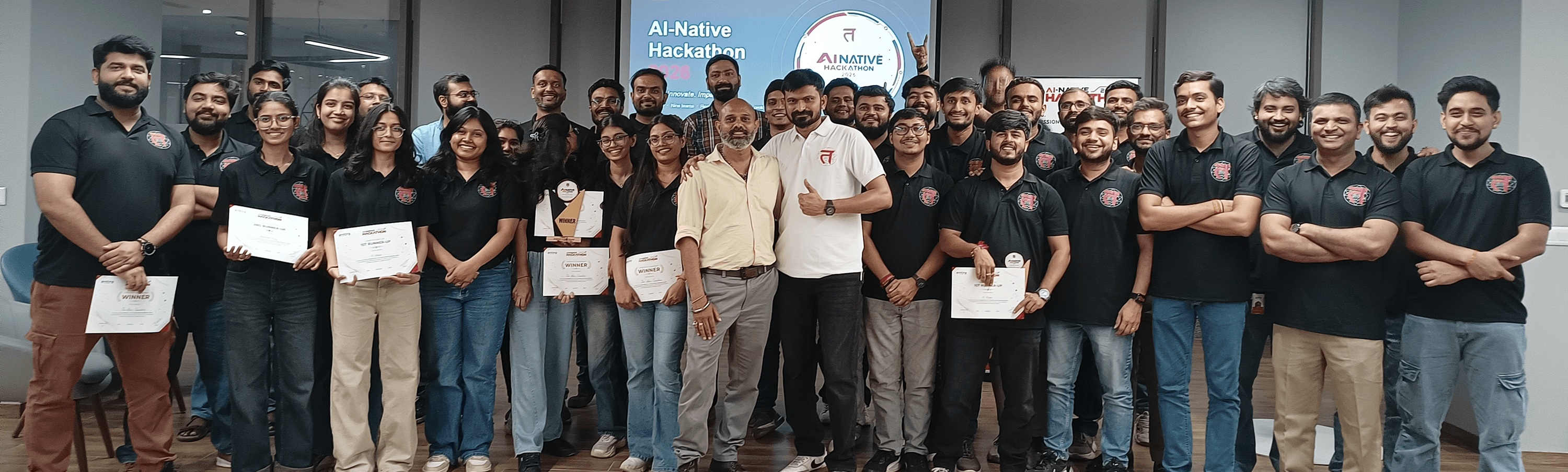
There are concrete customer relationships beneath the architecture. Italian online-pharmacy marketplace 1000farmacie engaged Tntra for a technology-stack and mobile upgrade, with headless commerce separating storefront presentation from backend functions. Seed Group announced a partnership in July 2023 to support Tntra's expansion into the UAE and wider region. Tntra also offers IFS enterprise-software implementation, integration, upgrades, and support.
Buy an outcome. Price the work.
The commercial mix spans consulting, engineering engagements, managed services, and SaaS/PaaS platforms. Incubation adds mentorship and potential pre-seed or seed investment for selected ventures. Funding a portfolio company and raising money for Tntra are separate transactions.
For budget orientation, Clutch lists $25-$49 hourly rates and a $25,000 minimum project size. Those directory figures are indicative, not a quote for an AI deployment or enterprise migration. Buyers should price integration, security, internal staff time, and ongoing operations alongside development.
Tntra occupies the intersection of a product-engineering firm, technology adviser, and venture builder. An internal team or a combination of specialist suppliers can cover similar ground. Its proposition deserves consideration when the hard part is keeping strategy, delivery, and ownership connected. The useful buying question is wonderfully concrete: when this team leaves, who can explain how the system works?
Follow the work
Explore Tntra, its T(u)LIP platform, Shruti AI, ASPIRE, and company news.
LinkedIn · X · Instagram · Facebook
Watch Mehul Desai on Ideas, Innovation, Impact, or browse Tntra's YouTube channel and podcast conversations.