In 2016, the Boy Scouts of America was still collecting customer information on three-part carbon forms. Think about that object for a moment. One person writes. Several sheets receive the impression. Somewhere, somebody must turn the handwriting into usable information. An organization devoted to preparing young people for the future had a stubbornly physical front door.
That detail opens an unusually revealing account of The Ksquare Group. Technology consultancies tend to introduce themselves with capabilities. Here, the introduction is a form. It tells us what the work actually demands: replacing familiar routines while the organization using them keeps moving.
- Ksquare builds enterprise software, connects systems and implements Salesforce.
- Its BSA engagement grew from a small assignment into broader responsibility.
- Its current AI portfolio includes legacy modernization and ongoing agent supervision.
The form that gave the game away
Ryan Hill, formerly BSA’s national director of digital experience, describes a transformation plan covering four walls. The team initially struggled to find a starting point. Earlier outside partners had disappointed on some combination of price, quality and speed. Ksquare entered through a small assignment; successful delivery earned it progressively more responsibility.
Hill later became Ksquare’s chief marketing officer. His retrospective is therefore an interested account, but its sequence is instructive. The decision grew from observed work. A buyer did not need to settle every question about a supplier before letting it solve a bounded problem.
A fortnight is a useful unit of trust
MuleSoft’s separate account describes the engineering underneath that relationship. BSA needed to move away from its legacy environment, and its resources and schedule made the internal-only option impractical. Ksquare helped organize the transition around APIs, the interfaces through which software systems exchange information.
The teams assessed code, flows and dependencies, ranked APIs by complexity, and tackled easier domains first. They demonstrated progress every two weeks. That cadence gave a sprawling migration a recurring appointment with reality. Something had to work, and someone had to see it.
“It was like changing airplane tires, mid-flight.”
Vijay Challa, then BSA CIO, describing the migration
The transferable lesson is modest enough to use tomorrow: inventory the dependencies, pick a manageable first move, and inspect working results. Organizations need people able to make decisions at those reviews. Without that authority, a fortnightly meeting can become another place where a blocked project waits.
The people behind the price
Hill reports contractor and service rates up to 45% below the onshore alternatives BSA considered. That is a comparison of rates in one engagement. The explanation he gives is Ksquare’s nearshore engineering operation in Mérida, supported by university relationships and its own training institute.
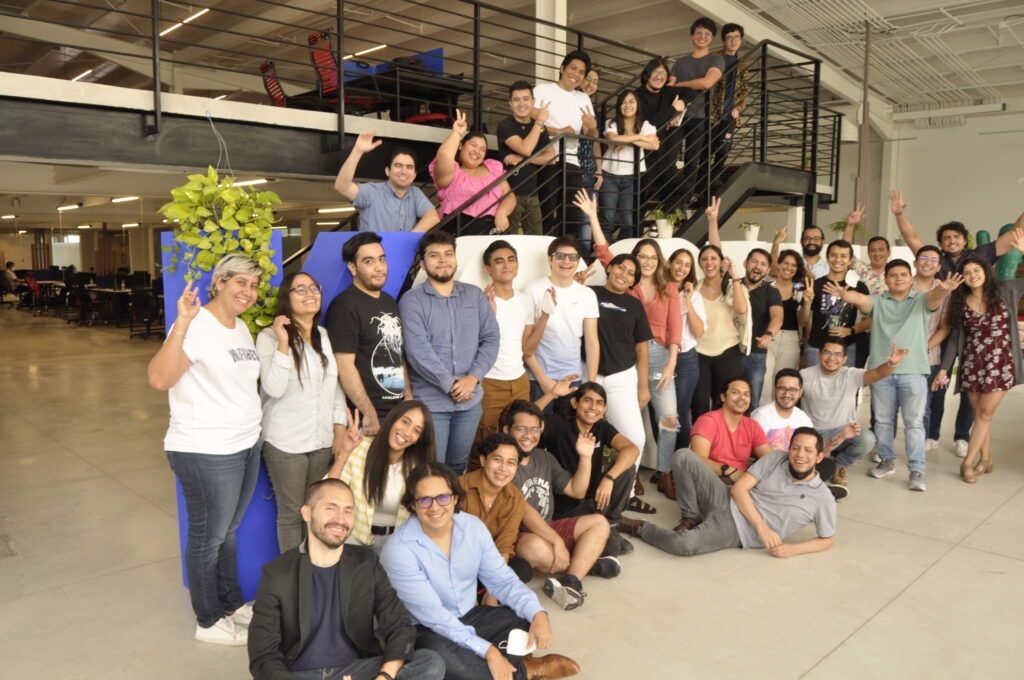
Today, Ksquare advertises sponsored certifications, rotations between practices and early exposure to clients. Its university offers aspiring engineers mentorship, project experience and a route into employment. These are mechanisms for renewing technical skills, a recurring expense in a business where the platforms keep changing.
Founder Varma Buddharaju’s company also makes some of its teaching visible. Its GitHub organization includes JavaScript training tutorials and React guidelines. A prospective customer can inspect that small public window into how the company shares engineering knowledge.
Buying a place in Salesforce
In 2019, Ksquare acquired Great Wave Tech, a Salesforce specialist. The deal brought employees, customers and certified technical architect Glenn Kohner into the business. It made strategic sense: acquiring experienced people and existing relationships can shorten the route into a demanding platform ecosystem.
Salesforce now lists Ksquare as a Summit consulting partner. The practice covers implementation, integration, migration and Agentforce. Alongside it sit custom application development, data engineering and quality assurance. The commercial proposition spans the systems surrounding a customer database, including the connections that make that database useful.
Buyers can choose an internal team, a specialist consultancy or a larger systems integrator. Ksquare’s position combines platform specialization with a wider engineering bench. Inc. placed it at No. 1,302 on its 2022 Inc. 5000 list, a dated marker of growth rather than a forecast.
Five screens, one workspace
A current banking case makes the proposition concrete. Ksquare says bankers were moving among more than five tools to serve one customer. It put Salesforce Financial Services Cloud underneath conversational web and mobile journeys, bringing the banker’s work into a single workspace.
The company reports roughly 60% faster onboarding and about 35% higher application completion. The interesting change is the consolidation behind those figures. Customers and employees can lose time at the seams between systems; improving the journey can mean removing those seams.
First map the machine. Then move it.
K-Moderne, Ksquare’s modernization accelerator, applies a related idea to older software. It maps code, data flows and business rules into a knowledge graph before assisting migration. Generated documentation and tests help carry the system’s behavior into a modern stack.
There is a useful purchasing question here. Which rules must survive? A replacement can look cleaner and still omit an exception that matters. Buyers need engineers and business owners who can judge that behavior together. A map helps them have the conversation; it cannot make the business decision.
For a company considering this work, the first useful deliverable could be a map of one troublesome process: the systems it touches, the rules it follows and the person authorized to resolve an exception. That is a proposed buying discipline, rather than a claim about a particular Ksquare contract. It makes a proposal easier to evaluate because the client can point to the problem being purchased.
The morning after the AI demo
KAOS extends the service relationship beyond launch. Ksquare describes continuous agent supervision, prompt tuning, model-update validation and governance evidence. The buyer is purchasing responsibility for what happens as an AI system encounters changing data and software.
That offer is most relevant when a customer has continuing operational needs and can define who approves changes. Teams that need only a small, isolated application may have little use for such a broad relationship. The sensible buying decision starts with the amount of coordination the work requires.
The company's current market spans banking, insurance, healthcare, hospitality, manufacturing and public services. Those customers have different rules, but a shared purchasing problem: someone must connect new capabilities to an existing organization. The carbon form was an early version of that problem. The AI agent is its latest occupant.