A luxury property and hospitality company had a peculiar problem. It owned the software for knowing its customers, yet struggled to act on what those customers wanted. Preferences sat in disconnected systems. Marketing campaigns were poorly configured. The loyalty application and the customer database did not reliably keep each other informed. The machinery was there. The connections needed work.
- CriticalRiver connects and improves enterprise software, data, and workflows.
- Its AI push grows out of implementation work in systems such as Salesforce and Oracle.
- The useful lesson: fix one measurable business process before adding more technology.
A loyalty program with a loose connection
CriticalRiver replaced another integrator on the account. Its published case describes a repair job: connect Salesforce Service Cloud and Marketing Cloud, clean up journeys and templates, organize customer preferences, and improve approval processes. These are modest-sounding verbs. Together, they describe the difference between owning a marketing system and operating one.
The firm reports a 7% improvement in retention and a 26% increase in cross-sell and upsell revenue. Those are supplier-reported results from an unnamed customer. Still, the mechanics are instructive: the project made existing tools cooperate. The shopping list was less interesting than the wiring diagram.
Improvement in
customer retention
Increase in cross-sell
and upsell revenue
The business between the boxes
CriticalRiver, founded in 2014, occupies that space between a platform purchase and a functioning business process. It implements enterprise applications, integrates systems, builds custom software, modernizes cloud infrastructure, and provides data engineering and ongoing support. Salesforce and Oracle are central to its work. A customer might need help with a sales quotation, utility billing, or an analytics pipeline.
That breadth can sound suspiciously like a consulting menu with everything on it. The customer names make the work more concrete. Five9 describes help with sales and billing automation. Hetero Labs credits the team with adapting Salesforce to a business spanning products and geographies. Guidewire and Swift Passport & Visa Services appear in its testimonials too.
A healthcare insurance engagement shows the same pattern in a different setting. CriticalRiver describes replacing siloed, laborious data processing with a governed AWS environment, using Airflow to orchestrate more than 100 daily jobs. Data-quality checks and shared workflows were part of the design. Its case reports a 15% overall cost reduction. That percentage belongs to that engagement, rather than a general savings promise. The detail to copy is the combination: infrastructure, quality controls, and a way for analysts and engineers to collaborate. Moving data to the cloud alone would leave several of those problems intact.
The buyer is typically an enterprise team with an operational knot to untie. Alternatives include an internal IT group, a specialist integrator, or a broad consultancy such as Accenture or Cognizant. CriticalRiver’s proposed distinction is the combination of platform implementation, custom engineering, and continued operation. The test for buyers is whether that combination fits their particular knot.
- 01ConnectSystems + data
- 02RepairRules + handoffs
- 03AutomateWork + measurement
Can a consultant sell the same lesson twice?
There is another knot inside the consulting business itself. A team learns something valuable on one assignment. How much of that knowledge can it reuse on the next?
In a March 2025 interview with entrepreneur Sramana Mitra, CEO Anji Maram described an experiment in finance: prepare roughly 70-80% of a data model, then customize the remainder. He was discussing a target approach, rather than a universal delivery guarantee. Large organizations and mid-sized ones, he said, had different requirements and different capacities to pay.
The commercial idea followed the engineering idea. Charge for setup and reusable intellectual property, then collect recurring fees for managing data, pipelines, and evolving requirements. At the time, pricing was still being tested. Traditional application services would continue alongside the experiment.
For a buyer, the calculation extends beyond implementation: include migration, customization, infrastructure, and ongoing support. Reuse can reduce repeated work, but the remaining customization determines whether a packaged approach fits. Unusual accounting policies or fragmented source systems can make that remainder substantial. A useful proposal makes those assumptions visible.
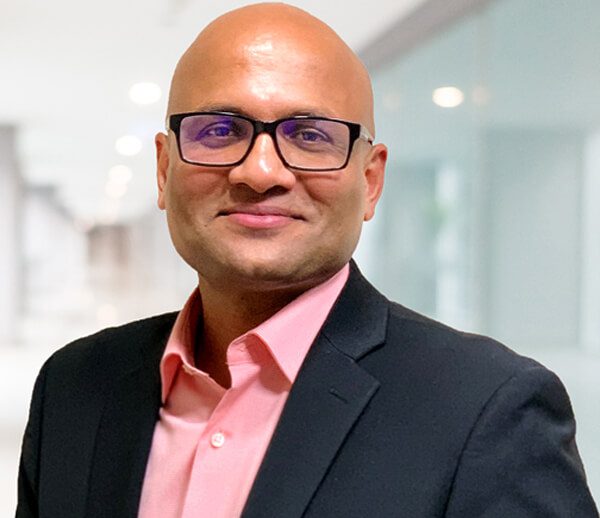
“We are a self-funded company.”
ANJI MARAM / MARCH 2025 INTERVIEW
In the same interview series, Maram put revenue at approximately $50 million and said the company had not raised outside money. That is a dated founder account. He also acknowledged mistakes and the expense of learning, crediting board guidance and better efficiency with improving margins. Growth had an operating cost, even without a venture round attached.
A stake in the people doing the work
A services firm’s accumulated knowledge goes home with its employees every evening. Retaining people therefore matters to the delivery model. In April 2024, CriticalRiver announced an ESOP initiative intended to give every employee a stake, framing it as a step toward employee ownership.
That announcement is about participation and ambition; it does not establish a completed transfer of all company equity. Its significance is the incentive it proposes. Someone maintaining a customer’s integration may also have a financial interest in the firm’s future. Whether that improves delivery depends on how ownership operates in practice.
The company also emphasizes collaboration and learning, and reported seven Great Place to Work certifications in its November 2025 announcement. These culture claims belong beside the ownership plan. In this business, continuity is part of what a customer is buying.
The agent still needs a working system
In November 2025, CriticalRiver launched CR AI(x), an innovation hub for enterprise agents. Its announced concepts included reconciliation, enterprise search, data analysis, and IT security controls. The proposal combines engineering with governance and organizational readiness. An April 2026 Anthropic partnership added a route for helping enterprises deploy Claude within their existing environments.
That direction follows the earlier integration work. An agent reconciling accounts needs connected records, usable rules, appropriate permissions, and a way to explain its actions. A model’s capabilities are only one part of the assignment. The surrounding process determines how safely and usefully those capabilities can be applied.
For readers, the transferable move is small enough to copy: choose one expensive handoff, identify the systems and people involved, establish a baseline, and measure the repair. An organization seeking a simple self-service tool may need little consulting. One with contradictory records and unclear decision rights has preparation to do. CriticalRiver’s opportunity sits inside that preparation, where the software already purchased begins to justify itself.