technology-consulting
(28)
The Company That Put Gas Pipelines and Résumés Under One Roof
Blackstone Technology Group spent decades learning where complicated operations break. Its answer is an odd but coherent pair: find the humans who can fix the system, then build the software that makes one stubborn industry run.

PALO IT wants to fix the work around the code
The technology consultancy is putting AI to work on the handoffs, habits and legacy systems that slow software down. Its projects with airlines, health insurers and fitness clubs show what that bet looks like in practice.
Neem fixes the big systems. And the tiny pictures.
The UK consultancy works on both sides of the shopping basket: the data that moves products and the images that help people choose them. Its most revealing work makes complicated things easier to see.

Rafael Moiseev Is Building a Marketing Department That Remembers
At Customertimes, Rafael Moiseev has turned a varied career in sales, SaaS and logistics into a practical thesis: AI can multiply a marketing team’s output, but only people can supply its judgment, memory and point of view.
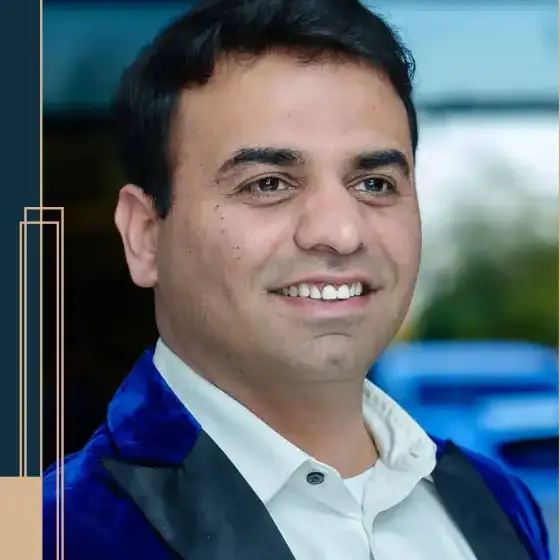
Ankit Shah Built for the Crisis Before Anyone Ordered One
InterSources began with data, lost its largest client in the financial crisis, and rebuilt around a habit its founder still prizes: move toward the hard problem while everyone else is backing away.
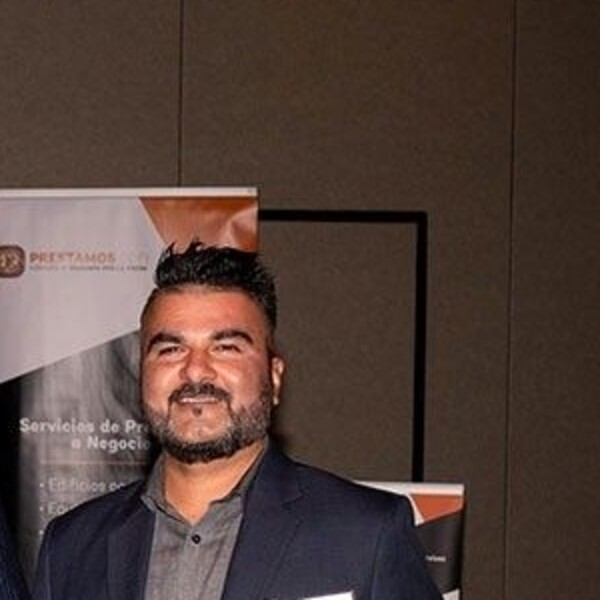
Rajiv Khattar Built a Career in the Work Between Talent and Technology
For more than 17 years at Agama Solutions, the Bay Area executive has worked where software delivery, client trust and technology talent meet. His record offers a quiet lesson in the value of staying close to the work.

Mahesh Kumar Bet on the Unfashionable Work of Making Software Useful
From business consulting to running Apptomate across Chennai and San Francisco, Mahesh Kumar has built a career around translation - turning technical possibility into software that organizations can actually use.

Lee Mainman Has Spent Two Decades Making Enterprise Change Feel Human
At Bits In Glass, Lee Mainman has translated waves of enterprise technology into a consistent promise: make complicated change useful. His other workshop is more literal - vintage cars, home projects and the patient work of putting things back together.

The 3,000-Person Boutique Inside Omnicom
Credera sells the intimacy of a boutique and the reach of a holding company. Its real product is the difficult handoff between a boardroom idea and the systems that make it work.

The 1,000-Engineer Company Hiding Inside Your Banking App
OBSS spent two decades becoming the engineering layer behind banks, insurers and retailers. Now the Turkish consultancy is turning that delivery muscle into AI-native services - and a portfolio of products of its own.

Wipro’s 80-Year Pivot: From Cooking Oil to Enterprise AI
The Indian company that began with vegetable oil now runs critical technology for banks, hospitals, manufacturers and retailers. Its next reinvention is harder: making AI useful across the enterprise without losing the delivery discipline built over eight decades.

The Company Enterprises Call When Their Tech Stack Stops Speaking English
Presidio has built a multibillion-dollar business translating a messy universe of clouds, networks, security tools and AI pilots into systems that companies can actually run. Its real product is accountability.
EPAM Built a $5.5 Billion Business in the Gap Between the Slide Deck and the Shipping Code
EPAM sells something large companies routinely struggle to buy: advice that survives contact with the codebase. Its global teams pair consulting, design and industry knowledge with the engineers needed to ship and run the result.
Kyndryl
Kyndryl inherited the systems big companies cannot switch off. Now the IBM spin-off is trying to turn that unglamorous responsibility into a modern consulting, cloud and AI business.
Cognizant
Cognizant built a $21.1 billion business by doing the unglamorous work behind modern companies. Now it wants to own the last mile between an impressive AI demo and a system a bank, hospital or factory can actually trust.
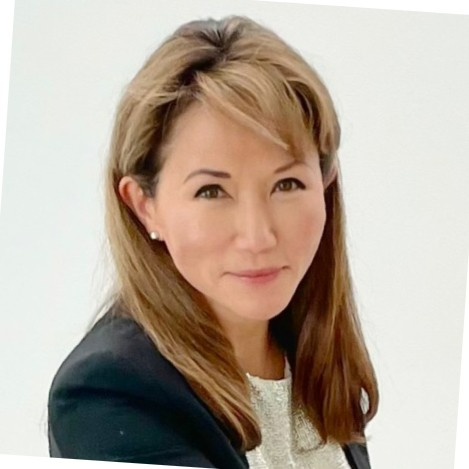
Heather MacLeod
After three decades translating agencies, consultancies and emerging technologies for business audiences, Capgemini Americas CMO Heather MacLeod has built a career around one durable idea: complexity only creates value when people can see themselves inside the story.

Tata Consultancy Services
TCS helped invent the offshore software model. Now the $30 billion company is trying to make nearly 600,000 people, decades of client trust and a sprawling product portfolio add up to an advantage in enterprise AI.
Gartner
For 47 years, Gartner has sold executives something rarer than information: a defensible way to choose. Now the firm behind the Magic Quadrant is turning its own research library into an AI product - while protecting the human network that makes the library valuable.
Wavestone
Wavestone grew from a French telecom consultancy into a €954 million transformation firm by joining strategy to implementation. Its next test is whether a founder-controlled European challenger can turn enterprise AI from experiments into working systems.

IBM Built the Future by Killing Its Favorite Machines
The century-old company survived because it learned a brutal trick: make the old system compatible with the next one, then charge for the crossing.

Flexon Technologies Talent360.ai
Flexon Technologies is a Pleasanton, California-based IT services and staffing firm founded in 2015 that pairs technology consulting, custom software development and cloud/DevOps engineering with a global talent-sourcing practice. Under CEO Amar Bandaru, the roughly 120-person, bootstrapped company has moved into AI - building Talent360.ai, an AI-powered talent-management and recruiting platform, alongside a suite of vertical products (Flex EHR, Flex LMS, Flex TMS, Flex LPS, Flex FIT) aimed largely at healthcare and enterprise operations.
Grid Dynamics
Grid Dynamics (NASDAQ: GDYN) is a digital engineering and technology consulting firm that helps Fortune 1000 companies modernize software platforms, build cloud-native systems, and deploy AI and generative-AI solutions. Founded in 2006 out of a Silicon Valley open-source engineering community, the company blends product engineering, data engineering, and digital-engagement services, with a particular strength in retail, financial services, and consumer-facing commerce. It reported record 2025 revenue of $411.8 million and employs roughly 4,900 people across the Americas, Europe, and India.

TEECOM
TEECOM is a technology planning, design, and engineering firm that makes technology work in buildings. Founded in 1997 and led by founder David Marks, the remote-first company partners with architecture, engineering, and construction (AEC) teams to design the unseen layer of modern buildings - structured cabling, networks, audiovisual, acoustics, security, wireless, distributed antenna systems, and emergency responder radio. With 150-plus engineers, designers, and subject-matter experts, TEECOM has delivered integrated technology systems across more than 28 countries for clients like Salesforce.
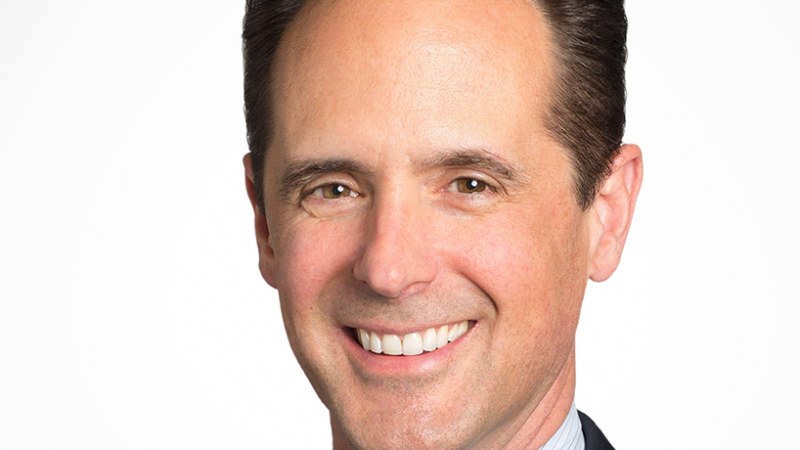
David Marks
David Marks is the founder, President, and CEO of TEECOM, a California-based technology design and engineering firm he built from a one-man operation into a 200+ person global consultancy over nearly three decades. Starting at the Moscone Convention Center expansion in San Francisco, he has since shaped the technology infrastructure of hospitals, Fortune 500 offices, universities, and civic institutions across the U.S., EMEA, and APAC. A licensed Professional Engineer with credentials in communications distribution, design technology, and LEED, Marks is known for his belief that buildings should work as hard as the people inside them - and that the best technology is the kind you never notice.

Deepak Nagpal
Deepak Nagpal is the CEO of Audax Labs, a Bothell, Washington-based technology innovation company he has led since 2016. With a career spanning over two decades across NTT DATA, Capital One, and Interra Information Technologies, and an MBA from Oxford's Said Business School, he has built Audax Labs into a multi-practice consultancy operating across AR/VR/MR, AI, IoT, cloud migration, and data analytics - serving industries from automotive and healthcare to BFSI and government, with partnerships spanning Microsoft, Google, Amazon AWS, Hitachi Vantara, Oracle, and Rocket Software.

Michael DeLacey
Michael DeLacey is the US CEO of Symetri, the global AECO and manufacturing technology consultancy he helped build from a two-person New England Autodesk reseller in 1994 into a 500-person organization spanning the US and Europe. As co-founder of Microdesk — which Symetri acquired in 2022 and rebranded in 2023 — DeLacey has spent three decades embedding building information modeling, enterprise asset management, and cloud-based digital workflows into the design, construction, and operations practices of architects, engineers, and manufacturers. His conviction: teach people to fish, not fish for them.
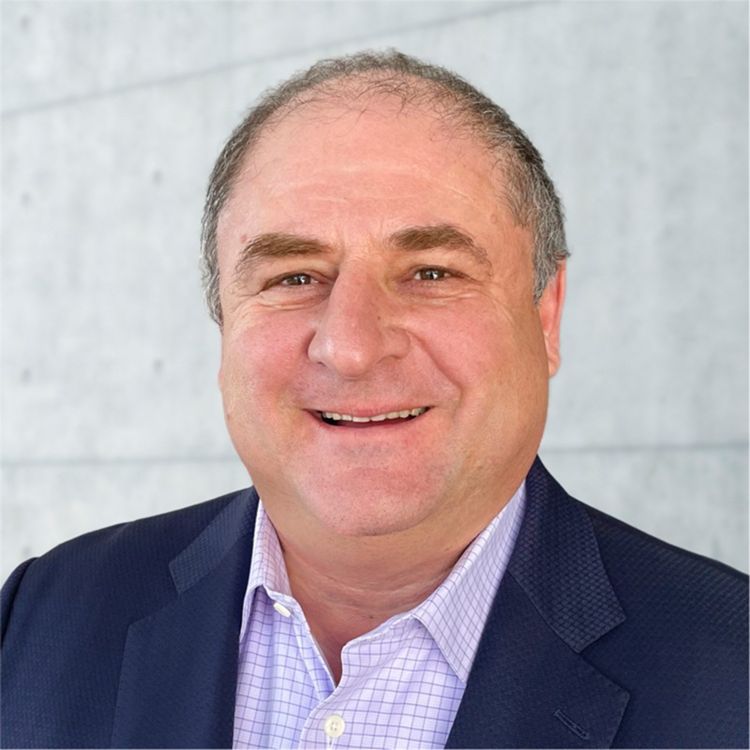
Leonard Livschitz
Leonard Livschitz is the CEO and Director of Grid Dynamics (NASDAQ: GDYN), a Silicon Valley-based digital engineering company serving Fortune 1000 enterprises. An immigrant from Kharkov, Ukraine with dual master's degrees - one in robotics from Ukraine and one in electrical engineering from Case Western Reserve University - he spent over two decades at Ford, Visteon, HP, and Philips before co-founding Luxera and ultimately taking the helm at Grid Dynamics in 2014. Under his leadership, Grid Dynamics has grown from a boutique e-commerce consultancy into a publicly traded AI and cloud engineering powerhouse with nearly 5,000 employees and over $350 million in annual revenue, earning a Preferred Vendor designation from AWS in 2025 amid a 30% year-over-year growth in its AI division.
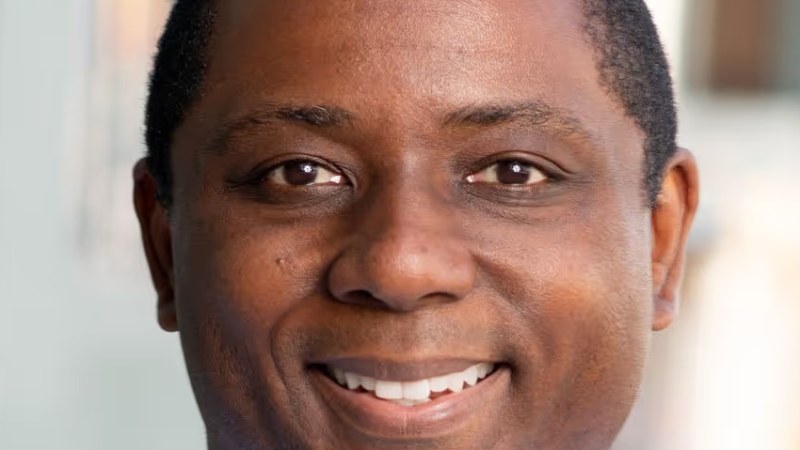
Chike Agbai
Chike Agbai is the CEO and Founder of Azumo, a San Francisco-based nearshore software development company he launched in 2016 after nearly two decades on Wall Street advising over $100 billion in enterprise software transactions for clients like Oracle, Salesforce, and Dell. A Stanford Economics graduate, he pivoted from investment banking to entrepreneurship on the conviction that exceptional technical talent exists everywhere - not just in traditional tech hubs. Under his leadership, Azumo has grown to 110+ employees across 20+ countries in Latin America, earned a 4.9-star rating on Clutch, served 100+ clients including Facebook, Twitter, and Discovery Channel, and been recognized among the '10 Smartest Companies of the Year 2025.' He credits his grandfather's migration from Louisiana to Los Angeles in the 1930s as the spark behind his own entrepreneurial ambition.