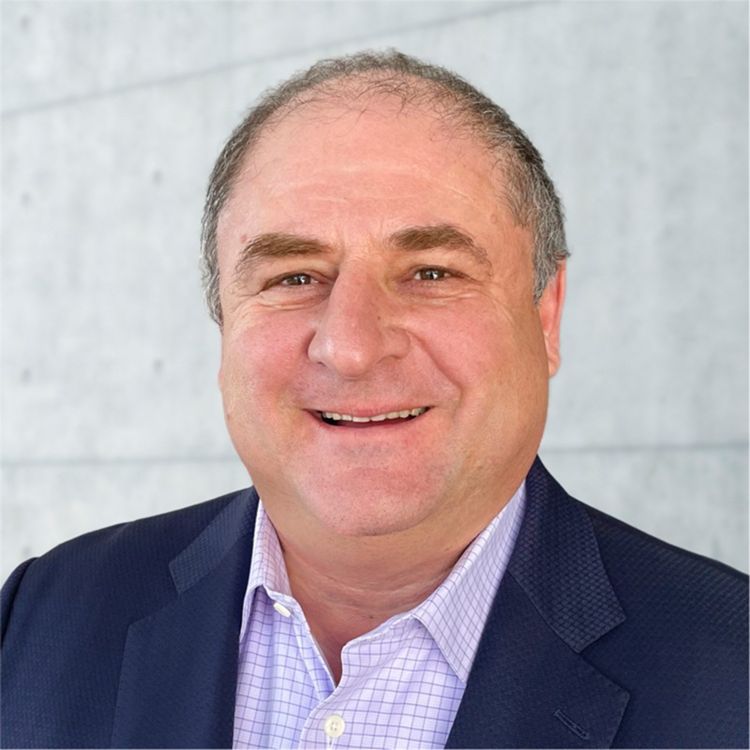
The Operator in the Machine
Two master's degrees, three languages, and a career arc that swings from automotive robotics in Ukraine to LED lighting in Silicon Valley to enterprise AI for Fortune 1000 companies. Leonard Livschitz - CEO of Grid Dynamics since 2014 - is the kind of executive who earns his credibility the slow way. He doesn't arrive with a hot take. He arrives with a decade of domain knowledge and a team that can ship.
Grid Dynamics sits at a strange and lucrative intersection: not quite a consulting firm, not quite a product company. It builds the production-grade infrastructure that lets enterprises - retailers, banks, pharmaceutical giants - actually use AI at scale. Not demo AI. Not pilot AI. Production AI. The kind that runs when the servers are hot and the C-suite is watching the dashboard.
As the innovation cycle moves to the AI-native enterprise, the value lies in the mastery of orchestrating complexity.
- Leonard Livschitz, CEO of Grid DynamicsLivschitz joined Grid Dynamics' Board of Directors in 2006 - before the company had its current shape, before cloud computing was a given, before AI was anything more than a research curiosity for most businesses. He watched the company find its footing as an e-commerce engineering specialist, helping major US retailers like Williams-Sonoma and Macy's rebuild their digital storefronts from the inside out. He became CEO in 2014 and never stopped steering.
Robots First, Business Later
Before Silicon Valley, there was Kharkov. Livschitz studied mechanical engineering at Kharkov Institute of Technology from 1983 to 1989, specializing in robotics and industrial machinery. Then he crossed the Atlantic and earned a second master's - this one in electrical engineering with a focus on systems and control - from Case Western Reserve University in Cleveland, Ohio, completing his studies in 1994.
His first move after graduation wasn't a startup. It was Ford Motor Company, working in direct marketing. Then Visteon, the automotive components company spun off from Ford, where he moved quickly. Within 15 months of joining, his team had generated four OEM engagements targeting $150 million in new annual revenue - a fast-moving outcome in an industry that typically measures business development cycles in years, not quarters.
The years that followed took him across the technology landscape - executive and management roles at HP and Philips across sales, engineering, R&D, and manufacturing. Then VP of Sales and Marketing at LedEngin, a solid-state lighting startup. Then co-founder and CEO of Luxera from 2010 to 2014, an LED smart systems company he built from scratch before making the pivot to Grid Dynamics as its top executive.
The Agentic AI Bet
The bet Livschitz is making now is specific. Grid Dynamics doesn't want to sell AI software. It wants to be the firm you call when your AI software isn't working the way the vendor promised - when you need someone who can build the integration layer, the observability stack, the governance framework, the cost management system that makes a language model useful inside an actual enterprise.
In 2025, that bet is paying out. Grid Dynamics' AI division grew 30% year-over-year, driven by specialization in intelligent search, AI platform infrastructure, and agentic solutions. The company earned a Preferred Vendor designation from a major cloud hyperscaler - the result of a two-year vendor consolidation process that Livschitz called a major strategic unlock. By Q3 2025, total revenues reached $104.2 million, up 19.1% year-over-year.
The full-year 2024 numbers told their own story: $350.6 million in revenue, up 28.5% from $312.9 million in 2023. Q4 2024 alone hit $100.3 million - exceeding analyst expectations. For a company that started as a boutique engineering shop helping retailers rethink their online catalogs, these are not incremental wins.
The Acquisition Instinct
Livschitz isn't content to grow organically. In 2024, Grid Dynamics acquired JUXT, a UK-based firm with deep expertise in designing data-driven infrastructures for major banks and financial institutions. The move was a deliberate expansion into a sector where Grid Dynamics had historically been underrepresented - and where AI transformation spending is concentrated.
It fits a pattern. When Livschitz identifies a capability gap or a geographic blank spot, he closes it with precision rather than waiting for organic recruitment to catch up. The JUXT deal brought expertise in financial services, European market presence, and a client roster in global banking - three things Grid Dynamics needed and now has.
The NASDAQ Moment
On November 17, 2023, Livschitz stood at the NASDAQ MarketSite in Times Square and rang the Opening Bell. The ceremony started at 9:15 a.m. Eastern. The broadcast went live. It's the kind of moment that reads as ceremonial - and it is - but it also marks a genuine milestone for a company that had been built from a services firm into a publicly traded technology enterprise. Livschitz had been on the journey since 2006. The bell was a punctuation mark, not a period.
For the Fortune 1000 CEO, Grid Dynamics represents an elite capability - a partner to be deployed on high-value AI transformations where hands-on experience, architectural rigor, and industrial-grade execution are paramount.
- Leonard LivschitzWhat He's Building Toward
Livschitz frames the current moment in enterprise AI with the kind of clarity that comes from having watched multiple technology transitions from the inside. The challenge for large companies isn't access to AI models - those are commodities now. The challenge is the surrounding infrastructure: how do you integrate a language model into a supply chain system? How do you ensure the outputs are auditable? How do you scale it without the cloud bill becoming absurd?
Grid Dynamics' answer - and Livschitz's positioning strategy - is to be the firm that does the hard engineering work after the AI vendor has left the building. Agentic AI, where AI systems execute complex multi-step workflows autonomously, is the current frontier. The company has built practices specifically around this space, and Livschitz has structured his executive team to accelerate it: in April 2025, Grid Dynamics appointed Dr. Eugene Steinberg as Chief Technology Officer and Rajeev Sharma as Managing Partner for the Asia-Pacific region, expanding both the technical leadership and the geographic reach.
Three languages. Two master's degrees from two continents. A career that started with industrial robotics and arrived at agentic AI. Leonard Livschitz is not in a hurry. He's been building the same thing for a long time - just with increasingly complex raw materials.
Education
(Robotics & Industrial Machinery)
(Systems & Control Engineering)