The Story
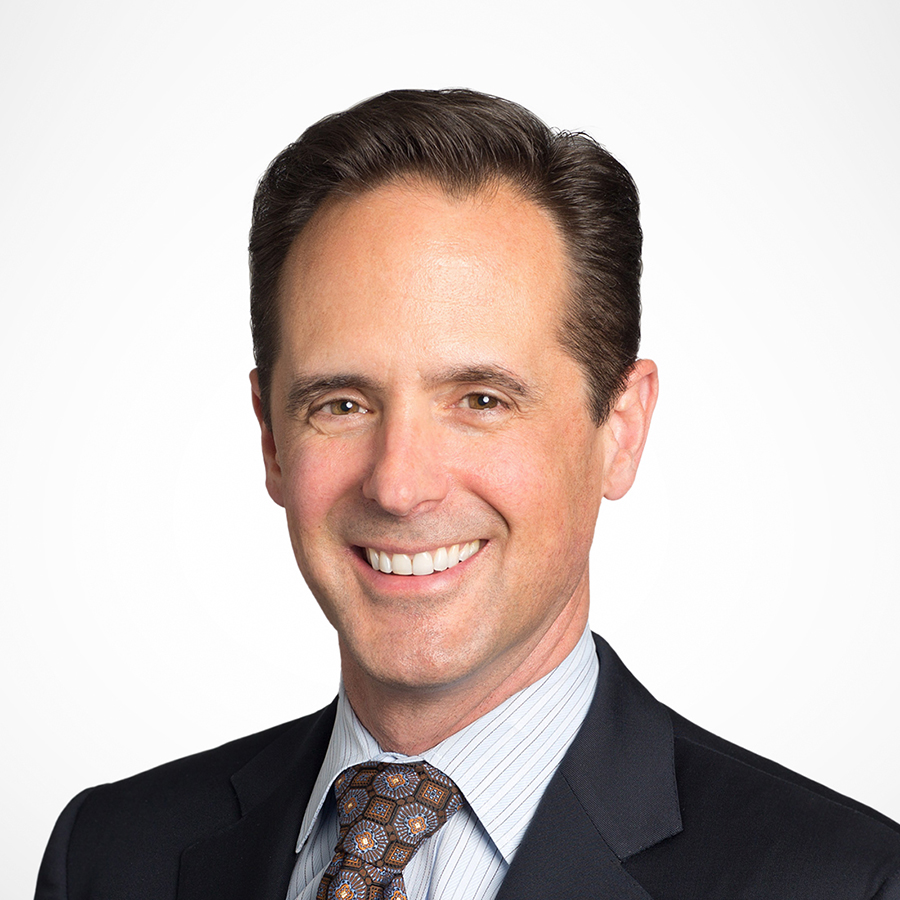
The Engineer Who Decided His Bosses Were Wrong
It started with a disagreement. Not a dramatic one - no slammed doors or scorched-earth exits. Just a quiet conviction that the firms David Marks was working for had the future of building technology exactly backwards. In 1996, while employed at The Engineering Enterprise in Oakland, he wrote a business plan for a new division: TEE Communications, a group that would focus specifically on networks, cabling, and the digital infrastructure that buildings were going to need. The idea didn't get traction. So Marks took it with him, founded TEECOM in 1997, and never looked back.
What he saw coming was not complicated, in retrospect. Buildings were about to become data centers. The question was who would design the nervous system. Marks had trained as an electrical engineer at Cal Poly San Luis Obispo - after a brief and unhappy stint at UC Berkeley, where he found the program a poor fit - and had cut his teeth on the Moscone Convention Center expansion in San Francisco, his very first professional project. The complexity of integrating communications, security, audiovisual, acoustics, and networking into a single coherent design was exactly the kind of systems problem that suited his thinking.
TEECOM grew without venture capital, without acquisition, and without the usual shortcuts. Revenue climbed from $1M to $10M to well past $20M. The firm expanded from Oakland to the UK, Dallas, and Portland. Projects accumulated across every sector: Palomar Hospital, Parkland Hospital, Stanford Hospital, UCSF, the California Academy of Sciences, and Fortune 100 corporate campuses spanning the US, EMEA, and APAC. The California Academy of Sciences converged network design won an InfoWorld award for one of the top 15 green IT projects in the world - a recognition that, true to form, put the technology at the center rather than the people who built it.
Marks holds four professional credentials - PE, RCDD, CDT, and LEED AP - each representing a different dimension of the built environment where TEECOM operates. He does not wear them as ornaments. They represent the reasoning behind his core design conviction: "If it doesn't need to be seen or heard, it shouldn't be." The best technology infrastructure, in his view, is the kind that quietly enables everything and announces nothing.
"If it doesn't need to be seen or heard, it shouldn't be."David Marks - TEECOM Design Philosophy
The leadership style that emerged over 28 years is less CEO-as-visionary and more CEO-as-systems-architect - applied to people and culture the same way he applies it to buildings. He does not set rigid yearly targets. He sets guiding principles, because, as he has said, understanding why matters more than fixing a predetermined destination. He believes that professional services businesses succeed or fail on the quality of the people doing the work, and has built TEECOM accordingly: unlimited personal time off, remote work flexibility, performance-based compensation, and an explicit commitment to career development and mentorship.
The result is a company that the San Francisco Business Times ranked in both its top 100 fastest-growing firms and its top 20 best places to work lists - simultaneously. TEECOM has earned Great Place to Work certification in both 2025 and 2026. The San Francisco Chronicle named it a Top Workplace for the second time. In an industry not historically known for enlightened people practices, those recognitions say something about the intentionality behind the culture.
Marks speaks about all of this in terms that are notably uninterested in the conventional metrics of business success. His stated ambition for TEECOM is to create a self-sustaining organization where no employee ever fears losing their job to external forces, where people love coming to work, and where the projects they deliver genuinely improve the lives of the people who inhabit the buildings. He calls it, simply, wanting to leave the world a better place. He embodies it literally: he picks up trash on his walks, a habit rooted in Boy Scouts principles that has never left him.
"I want to leave the world a better place."David Marks - Personal Philosophy
The path from The Engineering Enterprise to a global consultancy with offices on two continents was not a straight line. Marks has spoken openly about wishing he had trusted his instincts earlier, about the value of not being afraid to try new things. An early mentor once told him, when pressed for the rationale behind a technical decision: "I don't know, I just copied it from someone else." That admission - honest, undefended, oddly liberating - stuck. It modeled the kind of intellectual honesty that Marks has carried into his own leadership, where understanding the fundamentals matters more than repeating industry convention.
In 2025, he was selected to speak at the Global Security Exchange (GSX) conference in New Orleans - one of the largest security industry gatherings in the world. The invitation is a signal of where TEECOM sits in the broader ecosystem: not just as a contractor executing specifications, but as a firm with a perspective on where the industry is heading and why. Marks has been building toward that position since 1997, one building at a time.