Technology likes to introduce itself with a launch. A product appears, a market shifts, a new acronym takes a seat at the table. Yet most companies experience technology in a less cinematic way. They need a project staffed, an application tested, a system integrated and a deadline treated as something sturdier than a suggestion. Rajiv Khattar has spent his career in that practical country between a client’s ambition and a team’s ability to deliver it.
Khattar is a San Francisco Bay Area executive at Agama Solutions, the Fremont IT services and consulting company founded in 2006. His public professional record shows more than 17 years with the firm. Depending on the directory or period, his work is described through the titles management analyst, president and CEO. The labels vary; the center of gravity does not. It is the work of understanding an organization, finding what it needs and assembling the people and processes that can move it forward.
Agama’s listed specialties make the terrain clear: software quality assurance, service-oriented architecture governance, project management and application development. Its broader portfolio reaches into staffing, product development, cloud transformation, data work and digital learning. Read together, those services reveal a useful truth about corporate technology. Code and talent are not separate concerns. A missing engineer can be as consequential as a missing feature. A weak handoff can undo a clever architecture.
The useful middle
There is a peculiar glamour gap in business. Strategy gets the elegant slide deck. Products get the screenshots. Operations gets the 4:47 p.m. message asking whether the person with the needed skill can start on Monday. The middle is where a plan acquires names, calendars, test cases and consequences. It is also where trust becomes measurable.
Khattar’s professional recommendations describe him in the vocabulary of that middle. One colleague praised his technical insight and business savvy, adding that he could handle issues requiring delicate judgment. Another called him dependable, approachable and professional, while emphasizing his attention to customer satisfaction. These are not ornamental compliments. In a services business, they describe the machinery.
“Rajiv is a true expert in what he does and has a passion to deliver quality to his clients.”A colleague on Khattar’s client work
Technical insight helps an operator ask a better question. Business judgment helps decide which answer matters. Approachability makes it more likely that a problem will surface before it becomes an expensive surprise. Dependability closes the loop. Put those traits together and you get something less flashy than disruption but considerably easier to renew: confidence.
made specific
matched to work
made dependable
This is the understated logic behind Agama’s pairing of technology services with staffing. The firm does not merely present a catalog of technical nouns. It promises access to the people, methods and experience needed to use them. A business asking for application development may also need project leadership, testing discipline and a team that can operate across time zones. The problem arrives as one sentence. Delivery expands it into a system.
Quality assurance is a revealing specialty for such a company to carry. Testing is where confidence meets evidence. The application either behaves as expected or it does not; the performance threshold is met or missed; the defect returns or stays fixed. This makes quality work a useful counterweight to the vaguer language of transformation. It asks people to define success closely enough that another person can verify it.
Project management applies the same discipline to time and responsibility. Who owns the next decision? Which dependency can stop the release? When does a small delay become a client problem? These questions rarely make a product demo, yet they shape whether the demo becomes a working system. Khattar’s blend of technical and business experience belongs naturally in this zone, where a detail can be both operationally small and commercially large.
Staffing adds another layer of consequence. A résumé can list the right tools while missing the temperament a particular project requires. A capable specialist can still be placed into a role with an unclear mandate. Matching, then, is not a keyword exercise. It requires enough knowledge of the client to recognize the real constraint, and enough knowledge of the candidate to see where that person can contribute. The work rewards memory: what happened on the last engagement, which signals proved reliable and where an apparently minor mismatch became costly.
A career measured in context
Before his long Agama chapter, Khattar’s public career summaries connect him with Teledata Technology Solutions Limited and Lufthansa. His education adds another layer: an MBA from Indira Gandhi National Open University, completed between 2000 and 2002. That sequence joins management training with experience around technology and large-scale services, then carries it into an IT consultancy built in the Bay Area.
Completes an MBA at Indira Gandhi National Open University.
Builds experience associated with Teledata Technology Solutions and Lufthansa.
Develops a tenure of more than 17 years at Agama Solutions in the San Francisco Bay Area.
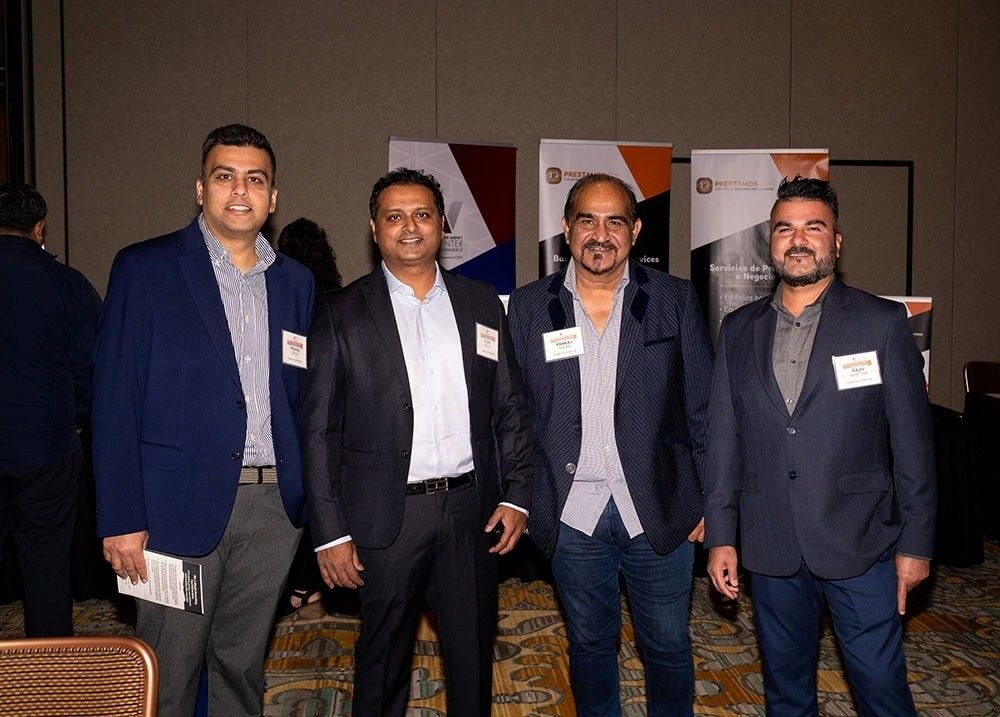
Joins Agama executives at a Northern Nevada small and minority business networking mixer.
Seventeen years is enough time for entire technology categories to move from novelty to plumbing. Cloud computing matured. DevOps condensed the distance between building and running software. Data platforms became executive priorities. Artificial intelligence returned with a new vocabulary and a larger budget. Through those changes, the services company’s task remained recognizable: help a client obtain capability it does not yet possess in sufficient measure.
Long tenure can be described too easily as loyalty, which makes it sound passive. The more interesting possibility is accumulated context. An operator who stays close to repeated deliveries sees where projects stall, which hiring signals mislead and which promises survive contact with a calendar. The value is not the years themselves. It is what the person learns to notice inside them.
The people side of technical work
The 2023 networking photograph places Khattar beside Agama colleagues rather than alone at a lectern. It suits the work. Technology services is a team sport conducted through client rooms, interviews, status calls and the steady negotiation of expectations. Even a highly skilled technical specialist arrives inside a web of relationships. Someone has to make those relationships usable.
Agama’s public language repeatedly returns to teams: resource acquisition, adaptable professionals, recruiters who build lasting relationships and the search for right-fit talent. The company has also promoted training for applied artificial intelligence roles, including live cohorts designed around tools such as large language models, retrieval systems and agents. That current emphasis extends the same operating idea into a new market. New technology creates a skills gap. A services firm tries to close it with people who can do the work.
For an executive in Khattar’s position, the challenge is double. Clients need an honest account of what a team can deliver. Candidates and employees need roles in which their skills can become useful. Push too hard toward sales and delivery suffers. Push too hard toward utilization and people become interchangeable inventory. The healthy middle depends on judgment, a quality colleagues attach to his name.
“He is a dependable, approachable and a professional person.”A client-facing colleague on working with Khattar
Approachability deserves a second look. In management writing, it can sound soft, tucked below strategy and execution. In practice it controls the speed of bad news. A recruiter who can raise a concern early, an engineer who can admit uncertainty and a client who can say the brief has changed all reduce the cost of pretending. The approachable executive gets more chances to correct the course while correction is still cheap.
Staying close to the promise
Agama describes its ambition in terms of customer satisfaction, technical excellence, managerial talent and on-time delivery. Those are broad claims, but they establish the scorecard. A services company lives or dies by the small distance between what it sells and what the client experiences. Every proposal writes a check that operations must later cash.
Khattar’s career is most legible through that distance. His public record does not revolve around a single invention or dramatic exit. It shows an executive remaining near the recurring work of clients, teams and technical delivery. There is discipline in such repetition. Each engagement changes the details while testing the same fundamentals: listen accurately, staff carefully, manage plainly and deliver what was agreed.
The technology business will keep inventing new nouns. The useful operators will keep turning them into verbs. Test the system. Form the team. Clarify the scope. Fix the handoff. Earn the next conversation. Rajiv Khattar’s long run at Agama Solutions belongs to that durable grammar - a career built less around claiming the future than helping organizations make it work on schedule.