A desk lamp that adjusts to the light around it. A business devoted to washing wool. A vehicle trying to occupy the space between a bicycle and a car. The projects gathered around Castres-Mazamet Technopole have an appealing habit of escaping the usual startup vocabulary. They are concerned with things people can switch on, wear, manufacture or drive. Eventually, somebody must agree to buy them.
That last step gives this innovation organization in southern France its purpose. It helps founders investigate an idea, turn it into a workable proposition and make contact with the people needed to develop a business. Its expertise runs through health, digital technology and chemistry, while its project roster reaches into mobility, materials and ecological transition. The interesting part is the connective work: bringing a technical question to someone who can answer it, before the founder spends heavily on the wrong answer.
Four founders, one local wager
The association emerged in 2006 through the Communauté d’agglomération de Castres-Mazamet, Laboratoires Pierre Fabre, and the Tarn’s commerce and craft chambers. Its origins explain the combination of scientific ambition and municipal practicality. A pharmaceutical business, public authorities and organizations representing employers had reasons to want new ventures to take root nearby. The technopole became their shared instrument for helping that happen.
It is a nonprofit association, with public support for its innovation work, including from the Occitanie region. Founders use its advice and connections; the territory benefits when businesses establish and develop locally. That arrangement makes location part of the service. The organization addresses students, researchers, prospective founders and existing companies with innovative projects, while also promoting the area and helping animate its business premises.
The local infrastructure gives those introductions somewhere to lead. The Le Causse business area combines company accommodation with an innovation-support presence. The university campus at La Borde Basse brings another concentration of expertise, including the Castres IUT and ISIS engineering school. A founder can therefore approach the technopole with a problem that sits awkwardly between business development and academic knowledge. Connecting those worlds is an explicit part of its job.
The expensive questions come first
The published route starts with a confidential conversation and an assessment of fit. Pre-incubation lasts six months and can be renewed once. Participants examine buyers, competing solutions, technical requirements, commercial channels and projected finances. Collective training is paired with individual follow-up. The organization explicitly places this work before major expenditure: the first useful product of the relationship may be a better question.
Incubation then covers development and testing through to first customers, over twelve months, also renewable once. Its entrance requirements include an understanding of customer expectations and relevant standards or certifications, together with the intention to establish locally. Support extends to financing plans, intellectual property, performance indicators and introductions to beta testers. The published destination is a paying, repeatable market. That is an objective for the program, rather than a result automatically delivered to everyone admitted.
Investigate the market
and feasibility
Review the project
and its fit
Develop, test and work
toward first customers
For a founder comparing alternatives, the useful questions become quite specific. Which expertise can an adviser actually reach? How closely will the support follow the project? A general business adviser, specialist accelerator or another incubator may answer those questions differently. Castres-Mazamet’s proposition rests on its local relationships and the way it combines them. The name on the door matters less than the help available when a prototype or a financing plan needs attention.
First, make the wheels turn
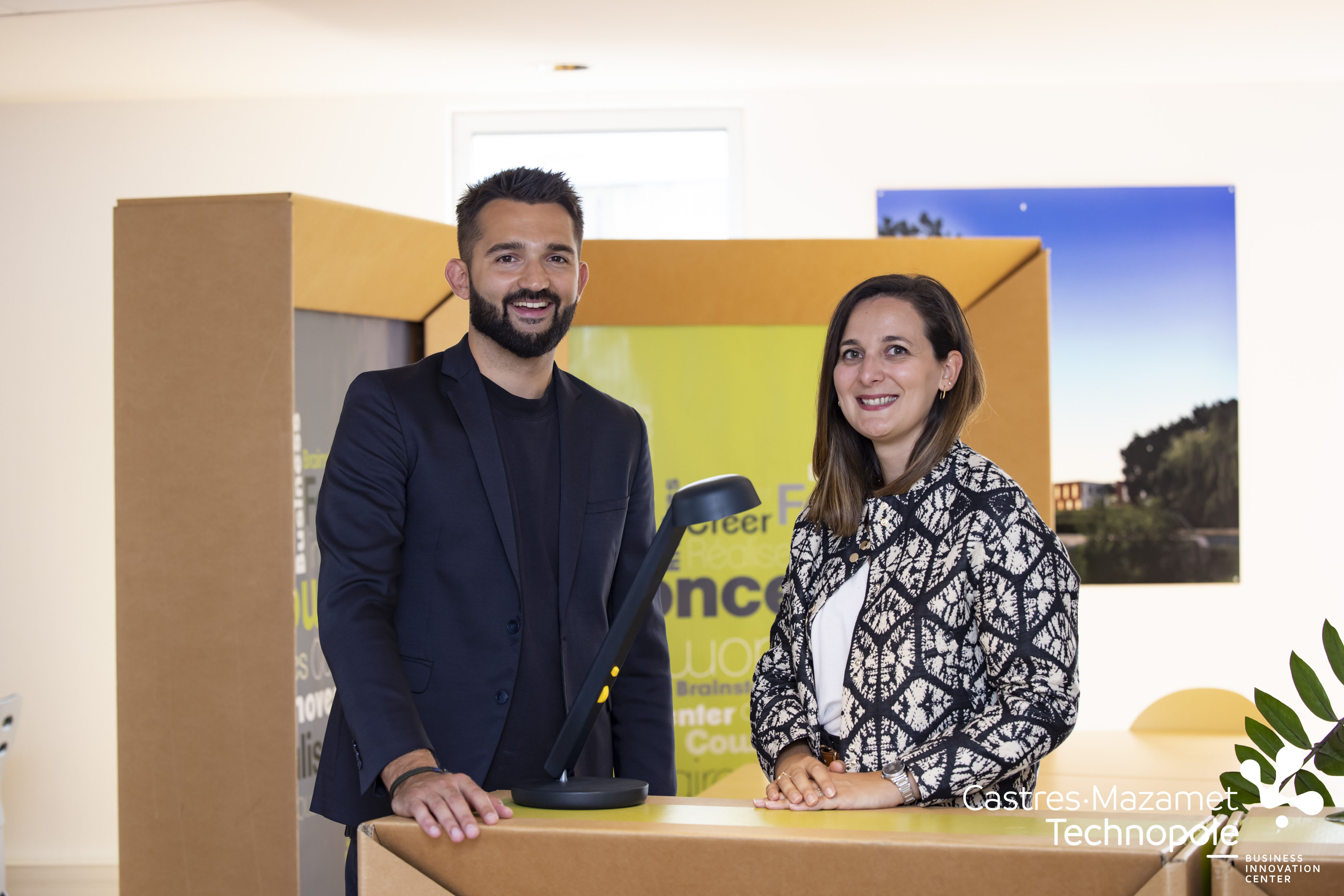
Maillon Mobility supplies a concrete example. In a 2024 project update, cofounders Charles Pugnet and Paulin Fabre described developing an intermediate electric vehicle. By mid-May, their first prototype was running, allowing them to test the mechanical chassis before adding bodywork to a later version. Their research also included a questionnaire and meetings with businesses and local authorities to understand prospective users.
The sequence is instructive. Mechanical testing and conversations with buyers addressed different uncertainties. The next prototype would introduce more of the vehicle; further work would concern testing and reproducible manufacture. Those were development plans at the time of the account. The story’s value is in the order of operations: learn something useful from the machine before committing to every part of it.
“un support au jour le jour”
Charles Pugnet, Maillon Mobility, describing the technopole’s day-to-day support in 2024
Another supported company, Floatee, described a different decision. Its founders encountered the technopole through a rural startup competition in 2021 and later explained that the proposed support matched their needs more closely than the standardized approaches they had considered. Their 2024 update reported more than 10,000 children’s flotation T-shirts sold and a €2 million fundraising. Both figures concern Floatee. They give substance to a client story without becoming financial results for the incubator.
A firefly with an address requirement
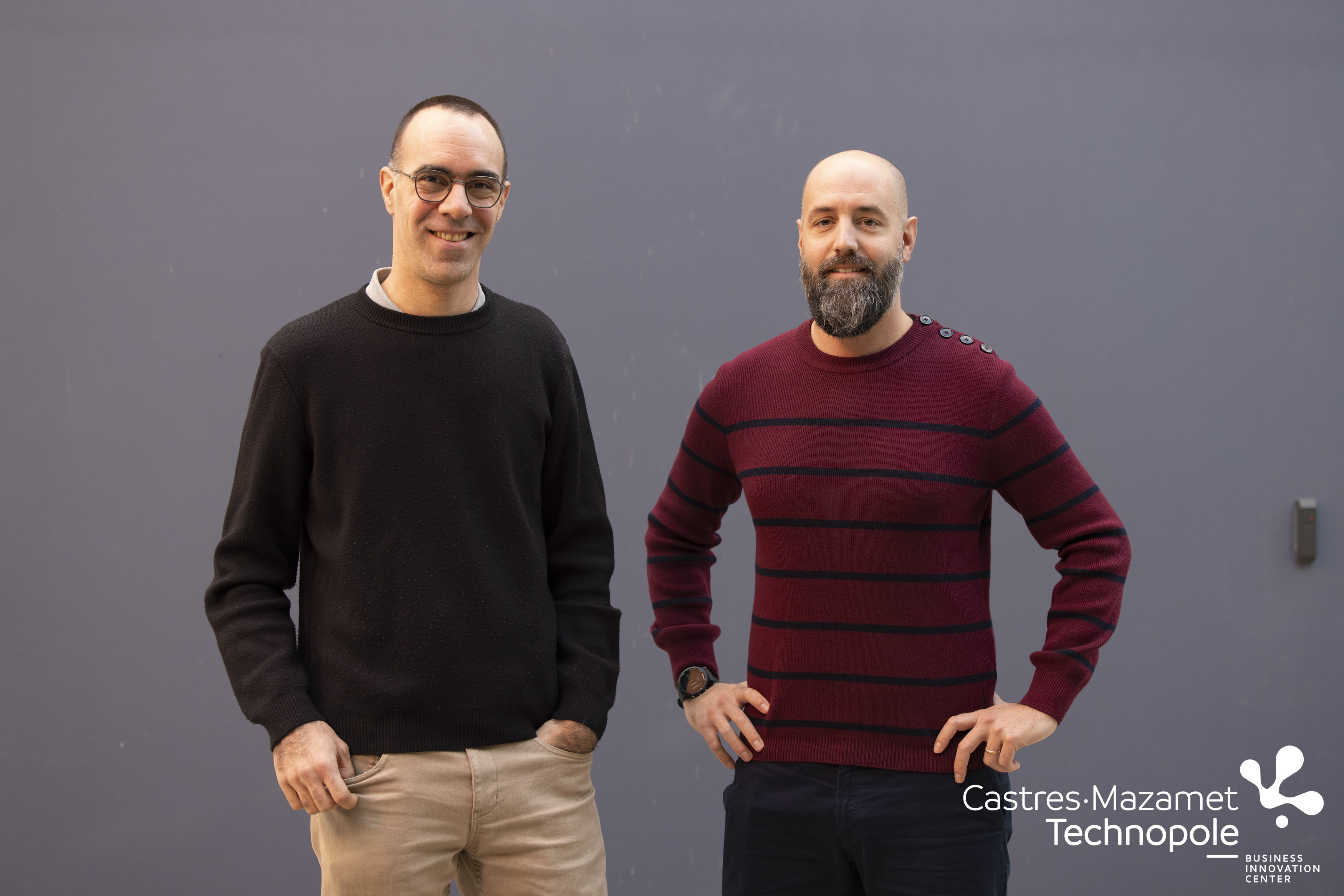
La Luciole, the technopole’s ecological-transition incubator, makes the exchange unusually visible. Its published 2025 call offered two places for a program scheduled to begin in January 2026. Selected projects could receive twelve months of renewable support, with awards of €6,000 and €4,000 toward approved services. The terms also valued training at €10,000 and workspace and services at €3,000 a year. These are different forms of assistance, not an unrestricted cash payment.
The eligibility rules are just as revealing. A project or company under a year old must address ecological transition and establish its headquarters or a secondary site within the agglomeration. The program assesses feasibility, market knowledge, the team and territorial impact. A founder seeking that support needs both an eligible idea and a willingness to build a local presence.
Support for approved services. Training and workspace were listed separately.
The workshop has a wider door
The area’s practical resources extend beyond formal incubation. Innofab is a collaborative fabrication space, promoted by the technopole, where members can use machines and learn from one another. Its own site lists 3D printing and laser cutting, welcomes a broad public and describes volunteer help with projects. A mobile operation also travels to surrounding communities. The workshop can meet people where they are, with rather more equipment than a networking breakfast.
Research platforms provide more specialized capabilities. GALA, carried by IMT Mines Albi, works on formulation technologies. ILIPACK, associated with the IUT’s packaging department, addresses how packaging behaves during transport and storage. The Connected Health Lab at ISIS brings together space, equipment and multidisciplinary expertise for health research and development. These platforms have their own operators. The technopole’s role is to help make the region’s capabilities accessible through relationships and collaborative projects.
That distinction helps explain the market position. A regional intermediary can be useful precisely because a small company cannot employ every specialist it may eventually need. The benefit depends on the match between the venture’s question and the available expertise. A machine, laboratory or introduction earns its place when it advances a particular piece of work.
A million-euro project to make introductions useful
Local anchoring has not confined the organization to local contacts. Links’Up, a completed European cooperation project running from 2016 to June 2019, addressed growth in e-health and e-tourism. The technopole led work connecting startups with large companies. Its account reports a transnational pilot involving 50 startups, 12 large companies and eight experts, as well as six startups selected for support in entering other markets.
The Eurorégion Pyrénées-Méditerranée, the project leader, publishes a total budget of €1.045 million. That figure belongs to the whole partnership. It paid for a cooperation program addressing finance, market connections and professional development, rather than representing a funding round for Castres-Mazamet Technopole. The reported activities included training, sector meetings and structured support for businesses exploring another region.
The principle is portable: introductions become more useful when someone prepares both sides and follows through. A startup needs to understand what an established business might buy; that business needs enough detail to judge whether the proposed collaboration is worth pursuing. The program’s participation figures describe the reach of the work. They should be read as participation, without quietly turning every meeting into a contract.
Even the conveners have to reconsider
The Université de la e-santé gives the technopole another way to connect people. The agglomeration’s 2024 report records 600 participants, 35 sessions and 391 business appointments. Beyond the event, videos and podcasts preserve conversations with people working on digital health. The organization has built a place for those discussions as well as support for individual ventures.
Its published English event page also contains a telling moment of self-questioning: a proposed pause to rethink the format. The organizers asked whether health technologies were actually being used, and whether future services would meet local needs. The documented reason for reconsideration was relevance and adoption. For an organization devoted to innovation, applying that question to its own event is a useful discipline.
The work continues under changing leadership. Sophie Assemat’s election as president was reported in June 2026 and is reflected on the official team page. A month earlier, local reporting identified two new incubator admissions following an April selection meeting: cybersecurity venture CyferAll and agricultural-technology business BSAgri. Their different fields underline how the local brief continues to accommodate new problems.
Founders elsewhere can borrow the sequence: identify the buyer, isolate the next uncertainty, find the relevant expertise and spend toward evidence. Using the actual programs also requires fit, selection and, where specified, a local commitment. The practical attraction of Castres-Mazamet is that someone has organized the contacts and the process. The founder still has to build something a customer wants.
Meet the people. Explore the work.
Visit the technopole, explore La Luciole or ask about your project through the contact page.
Follow LinkedIn, X and Facebook. Read the news archive, listen to Innova’Cast, or watch digital-health interviews and event replays on e-santé TV on YouTube. The event also has an Instagram account.