Consider the distance between two people in the same city. One is developing a medical device. The other knows how to manufacture its smallest component. They might work a few kilometres apart and still spend months looking for each other. For a health business, proximity is only the beginning. Someone has to make the introduction useful.
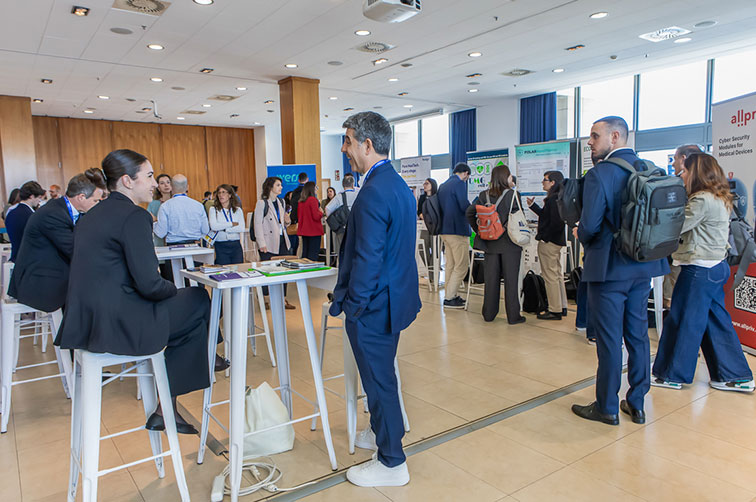
That is the territory occupied by Catalonia.health, a Barcelona nonprofit whose members stretch from biopharmaceutical startups to hospitals and investors. At its May 2026 Connection Day, more than 250 professionals gathered at the World Trade Center. Almost 200 one-to-one meetings were scheduled. The revealing detail is the appointment book: collaboration was given a time and a place.
- More than 230 members across the health value chain.
- Partnering, growth training, investment analysis and business representation.
- A practical starting point for finding collaborators in Catalonia.
First, widen the circle.
CataloniaBio began in 2006, created by biotech entrepreneurs. HealthTech Cluster followed in 2014 with 17 founding members. Their constituencies had different tools, but shared concerns: investment, technology transfer, international markets and the business of turning research into something usable.
In December 2017, members approved a merger. Elections for the combined CataloniaBio & HealthTech followed in early 2018. Bringing these groups together widened the range of people a member could encounter. A therapeutics company and a digital health venture could now belong to the same business community.
By July 2024, the name had become a poor description of the membership. Then CEO Javier Selva explained that it no longer conveyed the community’s breadth. The replacement, Catalonia.health, was unveiled internally at a summer BBQ attended by 600 people. Even the setting made sense: the organisation was introducing itself to the people who made it useful.
“We bring science to innovation and the market.”
Javier Selva, then CEO · July 2024
A meeting needs a job to do.
An early venture may need a development partner. A hospital may want to explore a clinical problem. An established company may need talent. Connection Day puts these different searches on one programme, with research presentations, investor discussions and an exhibition area.
Its 2026 edition included 33 exhibiting companies and a Job Marketplace run with Barcelona Activa, with nearly 100 registered candidates. The format makes an important distinction: a company’s next constraint might be a person to hire rather than money to raise. Putting both conversations nearby gives an attendee more reasons to come prepared.
Activity counts describe the gathering; they do not measure contracts or patient outcomes.
The €60 explanation.
For a less abstract view of the offer, look at the Infrastructure Connection visit scheduled for 21 October 2026. Eurecat’s programme included printed electronics, an assistive robotics living lab and ultrasonic moulding. Companies could explore technical capabilities and arrange meetings with experts about their own challenges.
The listed price was €60 plus VAT for non-members and free for members. That is a useful, limited comparison: one event price, with a specific set of facilities and conversations attached. Annual membership fees vary by organisation and are discussed directly. Event admission should not be mistaken for a research contract or a completed technical solution.
The wider model combines membership, selected paid activities, sponsorship and supported programmes. Members also gain sector representation, negotiated benefits, access to international event opportunities and coworking access. The customer is an organisation trying to advance its work; patients are the intended beneficiaries further along the chain.
Growth requires homework.
Some needs survive a good introduction. The first IMPULS programme, supported by ACCIÓ, brought eight companies through twelve sessions between February and July 2026. Participants included Heecap, OneChain Immunotherapeutics, Qrem and Xenopat. They worked on growth plans, with training covering strategy, financing, monetisation, legal questions, talent and digital transformation.
Individual mentoring was the element participants rated most highly, according to the association’s account. That makes the programme interesting beyond its cohort size. Its published eligibility targeted member companies with at least five years of activity and revenues above €500,000. The assumption was that an established business could still need help deciding how to grow.
There is something readers can copy here without joining anything. Separate the problem into questions that different people can answer. Who understands the manufacturing constraint? Who has navigated the regulatory process? Who can challenge the revenue plan? A useful network becomes easier to build when the requests are precise. Catalonia.health supplies settings for those exchanges, but the company still has to decide what it needs and what it will do with an answer.
Who gets a seat?
Catalonia.health’s distinction is the breadth of its membership. Biocat supports the wider BioRegion; Fenin represents healthcare technology; Farmaindustria represents innovative pharmaceuticals in Spain. These organisations occupy overlapping territory. Catalonia.health gives companies across subsectors a shared association, with hospitals, research centres and investors in the same network.
Expertise is organised as well as invited. Five member committees cover Innovation, Digital, Shared Value, Talent and Business Development. Their July 2026 working day collected proposals and priorities for the coming year. Meanwhile, the annual investment study with EY adds a different tool: survey-based intelligence about the sector in which members are making decisions.

The introduction is the beginning.
In September 2026, Laura Iglesias became general director, with Eva García Ramos serving as president. The stated priorities were stronger connections, growth and more member value. An October study visit to Limburg through RISEMED4EU extended that search for useful ideas beyond Catalonia.
The lesson for a reader is practical: arrive with a defined need, seek relevant expertise and follow up with a concrete next step. An introduction cannot supply clinical evidence, regulatory clearance or a purchasing decision. A passive membership will leave much of the offer untouched. For a company ready to do the follow-up, however, finding the right counterpart can turn a vague search into work that can actually begin.
Official website ↗ · Membership ↗ · Investment studies ↗
LinkedIn ↗ · Twitter / X ↗ · YouTube channel ↗ · Photo albums ↗
Meet the new general director ↗ · Inside the IMPULS programme ↗