Aidan Petrie had a problem with the customers he could not take. At Ximedica, the medical-device developer he co-founded, some entrepreneurs arrived too early, with too little money. Their ideas needed work before they could afford the people equipped to do it. That is an awkward arrangement: the expertise required to become fundable is itself expensive. In 2017, Petrie and finance executive and angel investor Lydia Shin Schroter established NEMIC to work in that interval.
- A nonprofit helping healthcare founders prepare for commercialization.
- Specialists cover design, regulation, clinical validation and finance.
- Eligible Rhode Islanders can join education and accelerator programs free.
- Its fellows’ fundraising belongs to the fellows, not NEMIC’s balance sheet.
The New England Medical Innovation Center occupies a useful position in the market. It can help a clinician with an invention, a device startup assembling evidence, or a healthcare business sorting out its commercial model. The common problem is a gap between knowing something could help and knowing how to build a business around it. NEMIC’s declared mission puts development, validation and adoption in the same sentence. Each word introduces a different set of people.
01 / The prototype has company
Consider SMöLTAP, the infant-positioning device developed by physicians Brian Alverson and Ravi D’Cruz to rethink the spinal-tap experience. NEMIC reports helping the company through five rounds of prototyping, FDA classification, testing and a $500,000 fundraising round. The sequence is the interesting part. An invention rarely arrives with its regulatory status, evidence requirements and investor explanation neatly attached. Those must be developed too.
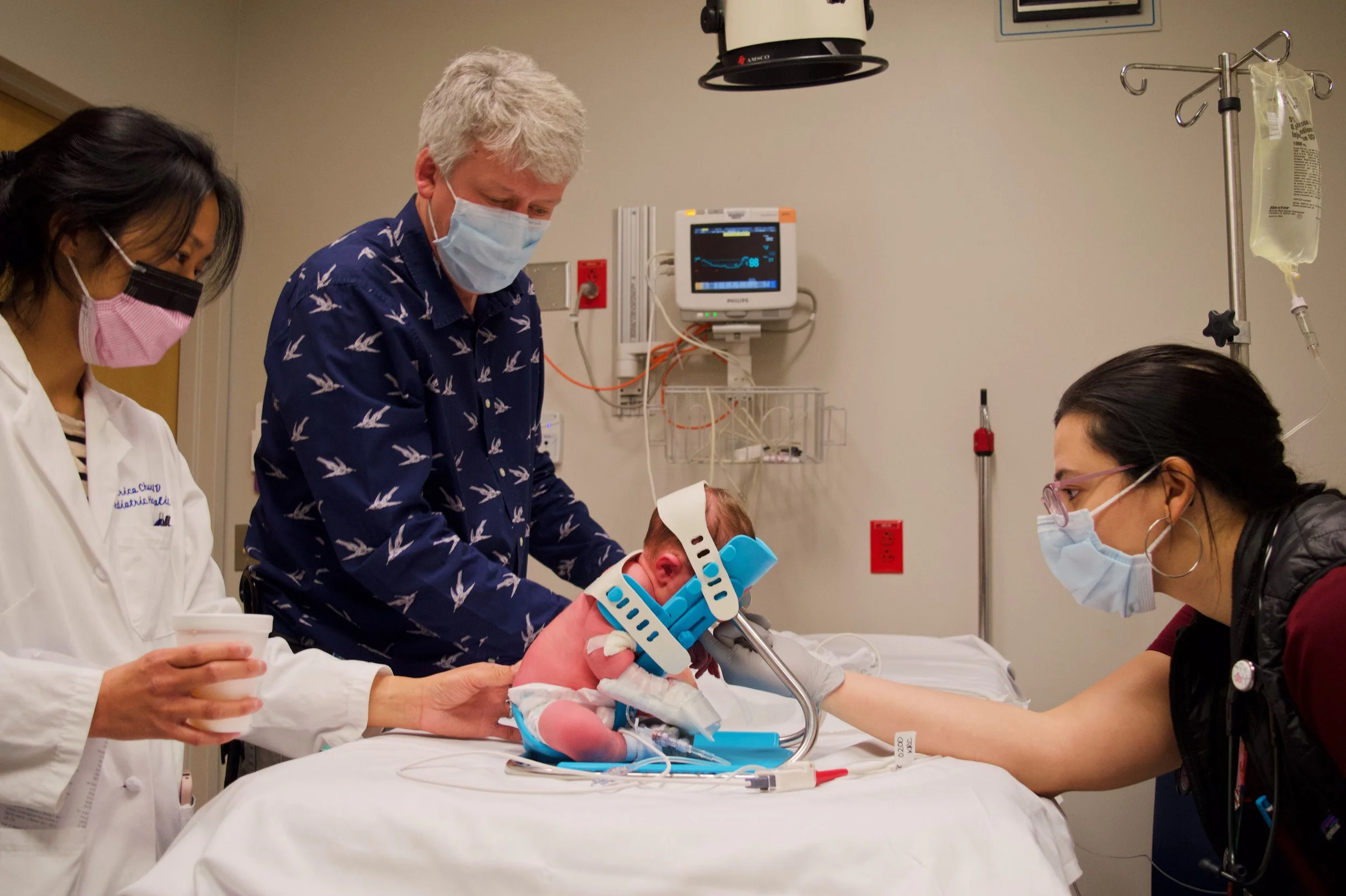
NEMIC pairs ventures with advisors whose expertise fits the problem. Its network includes specialists in human factors, intellectual property, reimbursement, regulated software, manufacturing and quality. These are disciplines that can collide inside one product. A founder might understand the mechanism beautifully and still need help explaining who will buy it, which evidence matters, or how it fits into a clinician’s day.
The distinction from a general startup program is practical: healthcare has its own dependencies. NEMIC’s advisory offering covers clinical and IP evaluation, regulatory strategy, market assessment, diligence and fundraising. It also lists tailored US accelerators, immersion bootcamps and expert roundtables for international ventures. Its address is local; the questions arriving there are not.
An editorial map of the questions NEMIC’s services address. Work can move between them.
02 / Twenty thousand dollars, precisely placed
Dom Messerli, founder of Lenoss Medical, became NEMIC’s first coworker in 2018. He attended its inaugural leadership course and later entered the Activate Program. There, a $20,000 award supported setting up a clinical trial site. NEMIC attributes an ensuing $200,000 raise to the milestones achieved through its programming. Here was a concrete use for support: a trial site, followed by evidence of progress that could be shown to investors.
By April 2026, NEMIC was celebrating Lenoss’s $6 million growth bridge financing. The early award and later financing are different events, years apart. The lesson is about specifying what the next expenditure should accomplish. “More runway” is a financial wish. A clinical trial site is a piece of work.
Messerli subsequently returned as an instructor teaching Due Diligence 101. That detail explains something a list of partners cannot. A founder’s experience can become another founder’s curriculum. NEMIC’s network includes customers who acquire expertise and bring it back into the room.
03 / Free tuition still costs evenings
NEMIC’s Health Innovator Pathways Program, formerly the MedTech Leadership Program, offers more than 55 hours of seminars, workshops, mentoring and individual advice. The curriculum includes commercial viability, financial acumen, regulatory affairs, pricing, business planning and fundraising. Eligible Rhode Island residents, employees and students pay no tuition.
The advertised August-December 2026 cohort has Monday-evening classes and Saturday workshops. Completion requires the whole program, with missed sessions made up through an online portal. That is the participant’s bill: time, attention and homework. People outside Rhode Island can explore the Virtual Classroom or other participation options. The free regional accelerator similarly has eligibility rules; availability depends on the program and application cycle.
The nonprofit has bills of its own. Its foundation’s fiscal 2025 filing reports $724,270 in revenue and $566,690 in expenses. Contributions supplied $624,010 of revenue; program services and rental income supplied the rest. Publicly supported programming sits alongside consulting, education, membership, sponsorship and workspace offerings. Free access rests on someone else financing the infrastructure.
The second figure describes money raised by fellow companies. It measures a different thing from NEMIC’s operating income and should be read that way.
04 / The case study without a victory lap
In its 2023 accelerator recap, NEMIC describes Kidney Stone AI, a venture using machine learning and microscopic imaging to classify stones. The company received advice on regulation and patentability. It encountered more challenges than expected and did not succeed commercially. The account says the founder gained a deeper understanding of the patent landscape and medical-development complexity.
That admission gives the other case studies some necessary weight. Advisory access cannot make every technology commercially viable. The same recap describes Just Breathe developing a proof-of-concept prototype and testing its pricing and business model. BedJet sought guidance on regulation and reimbursement while exploring a prescribable medical-device market. Advice is useful when a team can revise its assumptions. It has less room to help a founder who treats validation as applause.
05 / A wider definition of healthcare enterprise
The EMPOWER program supports underrepresented Rhode Island founders in health and wellness. Its assistance includes incorporation, financial projections, market analysis, intellectual property and website development; selected accelerator participants can access up to $10,000 in support. This reaches beyond inventors with devices. NEMIC features graduates including a health-navigation business and a mental-health provider.
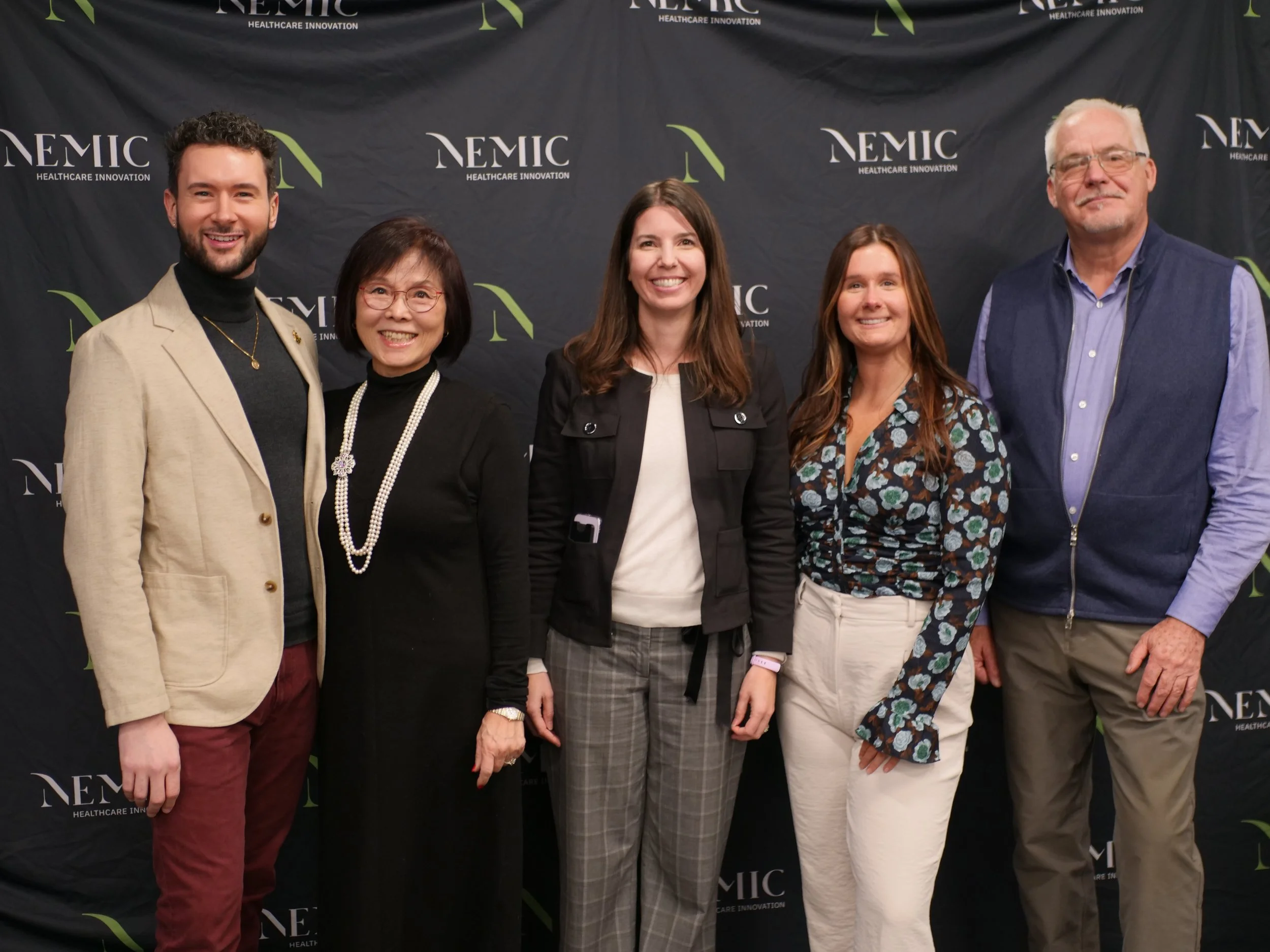
Jennifer Hoffmann became president in June 2026. In October, NEMIC added Lara Zimmerman to lead consulting and innovation programs, along with design-trained intern Lily Badiani. The hires fit an organization extending its work beyond accelerator cohorts.
“Healthcare innovation is an incredibly complex journey.”Jennifer Hoffmann, president
October 2026 appointment announcement
Zimmerman brings experience in early-stage investment and founder support to that work.
For a reader with a healthcare idea, the useful habit to copy is modest: identify the uncertainty that blocks the next step, then find the person qualified to examine it. NEMIC gives that habit programs, specialists and a place to meet. A good idea deserves more than encouragement. It deserves an informed question.