A grain of rice that argues with your heart
Slip something the size of a grain of rice under the skin, and it starts broadcasting. Continuous, medical-grade blood pressure - the waveform, not the once-a-year cuff guess - beamed out wirelessly while the patient gets on with their life.
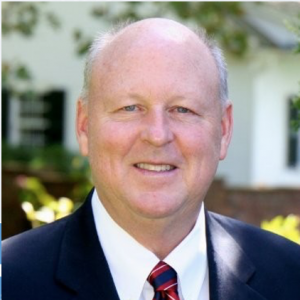
That is the bet William G. Hendren, MD, MBA, is making at QURA, the Duxbury, Massachusetts company he co-founded and runs as CEO. The device is called QSense; the platform around it, QSmart. Together they aim at a target most of medicine has learned to live with: blood pressure that is measured too rarely, recorded too sloppily, and acted on too late.
Hendren's framing is blunt. Hypertension, he says, is "the single leading healthcare threat, not only in the US, but globally." The numbers behind that line are the engine of the whole company. Nearly half the adults in almost every developed economy carry the diagnosis. Only one in five of them are actually controlled. The gap between those two facts is where strokes, heart failure and kidney disease come from - and it is the gap QURA was built to close.
What makes the approach unusual is not the ambition but the indifference it demands from the patient. The cuff, the log book, the dutiful morning ritual - all the points where good intentions leak out of chronic-disease care - are simply removed from the equation. "Patients really don't need to do anything," Hendren says. The sensor does the remembering.
We have developed a proprietary, cutting edge technology platform for disease management that uses implanted biosensors, wireless capability, software and data.
- William Hendren, LSI USA '24Why hypertension keeps winning
The control gap
The point of the graph is the middle bar. Diagnosis is not the hard part. Control is. And control fails for a deeply human reason: it relies on people measuring themselves, accurately, over and over, for the rest of their lives. Hendren's wager is that you cannot coach your way past that. You have to engineer around it.
Catheter-grade data, minus the catheter
Implant
A sensor about the size of a grain of rice is placed beneath the skin in an outpatient setting.
Sense
It continuously captures medical-grade blood-pressure waveform data, around the clock.
Transmit
Readings are wirelessly sent in real time to both patient and physician for action.
Hendren's strongest claim is about fidelity. The readings, he argues, are "absolutely equivalent to having an intra arterial catheter in place" - the gold standard of blood-pressure measurement - without the catheter, the hospital bed, or the limit of a single moment in time. It turns a snapshot into a feed.
Scalpel first, sensor second
Hendren did not arrive in medtech from a coding bootcamp. He arrived from the operating room. A summa cum laude graduate of Dartmouth, he trained at Harvard Medical School and then through some of the most demanding cardiac surgery programs in the country - Massachusetts General Hospital, Emory, the Cleveland Clinic. He held leadership roles in cardiovascular surgery across both multinational and startup companies.
Then he widened the lens. An MBA from USC's Marshall School followed, and a stretch as a strategic healthcare consultant at PwC, where he advised on projects across the US, the Middle East, China and the UK - including standing up healthcare facilities from scratch. Surgeon, strategist, builder: the three skills QURA quietly requires of one person.
General and cardiac surgery at Mass General, Emory and the Cleveland Clinic, after Dartmouth and Harvard Medical School.
MBA from USC Marshall; strategic healthcare consulting at PwC across the US, Middle East, China and the UK.
QURA secures a $1M strategic Series A investment from Santen Ventures for its QSmart wireless platform.
Presents QURA's continuous blood-pressure technology at LSI USA '24; first-in-human feasibility studies planned in Australia.
Driving toward FDA submission and early commercialization of the QSmart hypertension platform.
A family business with a heavyweight board
QURA is, at the top, a family affair: William's brother, David F. Hendren, JD, serves as Chief Business Officer. The clinical and engineering muscle around them is anything but modest. The advisory roster reads like a who's who of cardiovascular medicine and medical-device entrepreneurship - Delos Cosgrove, the former CEO of the Cleveland Clinic; Frederick Moll and John Freund, names behind Intuitive Surgical; MIT's Elazer Edelman; and clinicians from Penn, Monash and beyond. The hardware itself is engineered with Helbling Technik in Bern, Switzerland.
It is a telling assembly. You do not recruit that bench to polish an app. You recruit it to put a permanent electronic resident inside the human body and convince regulators it belongs there.
Nearly half the adult populations in almost every developed economy have hypertension, yet only one in five who carry that diagnosis are actually controlled.
- William HendrenMaking the cuff a museum piece
The aspiration is larger than a single device. QURA frames the implant as the first node in a data-driven approach to chronic disease - cardiovascular first, with hypertension and congestive heart failure as the opening front. Get continuous, trustworthy physiology out of the body and into software, and the questions change. Not "what was your pressure this morning?" but "what has it done every minute since we last spoke?"
That is also the fundraising story. QURA has been raising to fund its first-in-human feasibility work, its FDA submission, and the early commercialization that follows. The company remains preclinical - the hard, unglamorous validation phase where most medtech ambition goes to be tested. Hendren's job now is the least surgical thing he has ever done and possibly the hardest: turning a compelling waveform into a cleared, reimbursed, adopted product.
If it works, the morning ritual disappears. The cuff joins the mercury thermometer in the drawer of things we used to do by hand. And the gap between "diagnosed" and "controlled" - the one Hendren keeps pointing at - finally has something engineered to close it.