A healthcare startup can have a persuasive pitch and still face an awkward question: who inside a hospital will put the product to work? Global HealthX has made that distance its business. The Hyderabad venture platform builds companies, helps them enter India and invests in them. Its proposition is that clinical access, commercial preparation and money belong in the same conversation.
The idea becomes easier to picture at Pulse 2026, an event the company hosted at T-Hub in Hyderabad. Startup teams stood beside their products. Hospital leaders, clinicians, investors and founders circulated. An organiser described devices being applied, tests administered and workflows explained. Anyone could admire a slide. Here, people could also ask what happened when someone actually used the thing.
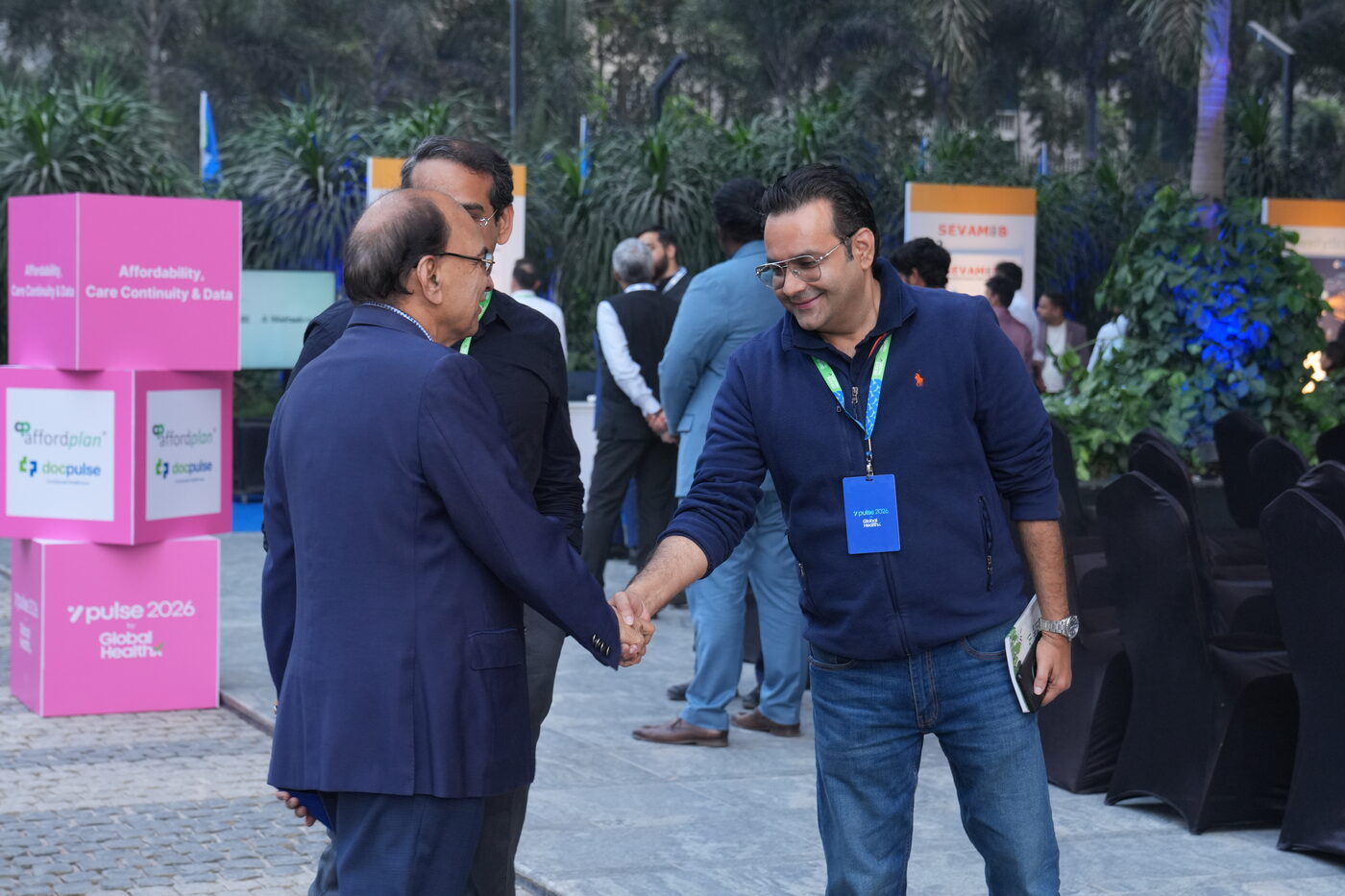
That setting captures the company’s place in the market. Healthcare founders are its immediate audience; hospitals, clinicians and other institutions are essential participants in the route to adoption. Patients sit at the far end of those decisions. The quality of the introductions matters, but so does what founders do once the meeting ends.
The surgeon behind the introductions
Global HealthX’s founder, Dr. Ravindranath Kancherla, comes to this work with a long institutional memory. He founded Global Hospitals in 1996. His career also includes co-founding Rainbow Children’s Hospital and establishing the Global Medical Education & Research Foundation. Global HealthX, whose website dates its founding to 2024, is backed by the Global University Foundation.
The history explains the company’s emphasis on access. A founder who has built hospitals approaches a new product with a different set of questions from someone encountering healthcare through a fundraising presentation. How does it enter a care setting? Who has to trust it? Which existing process must change? Those questions run through Global HealthX’s published approach.
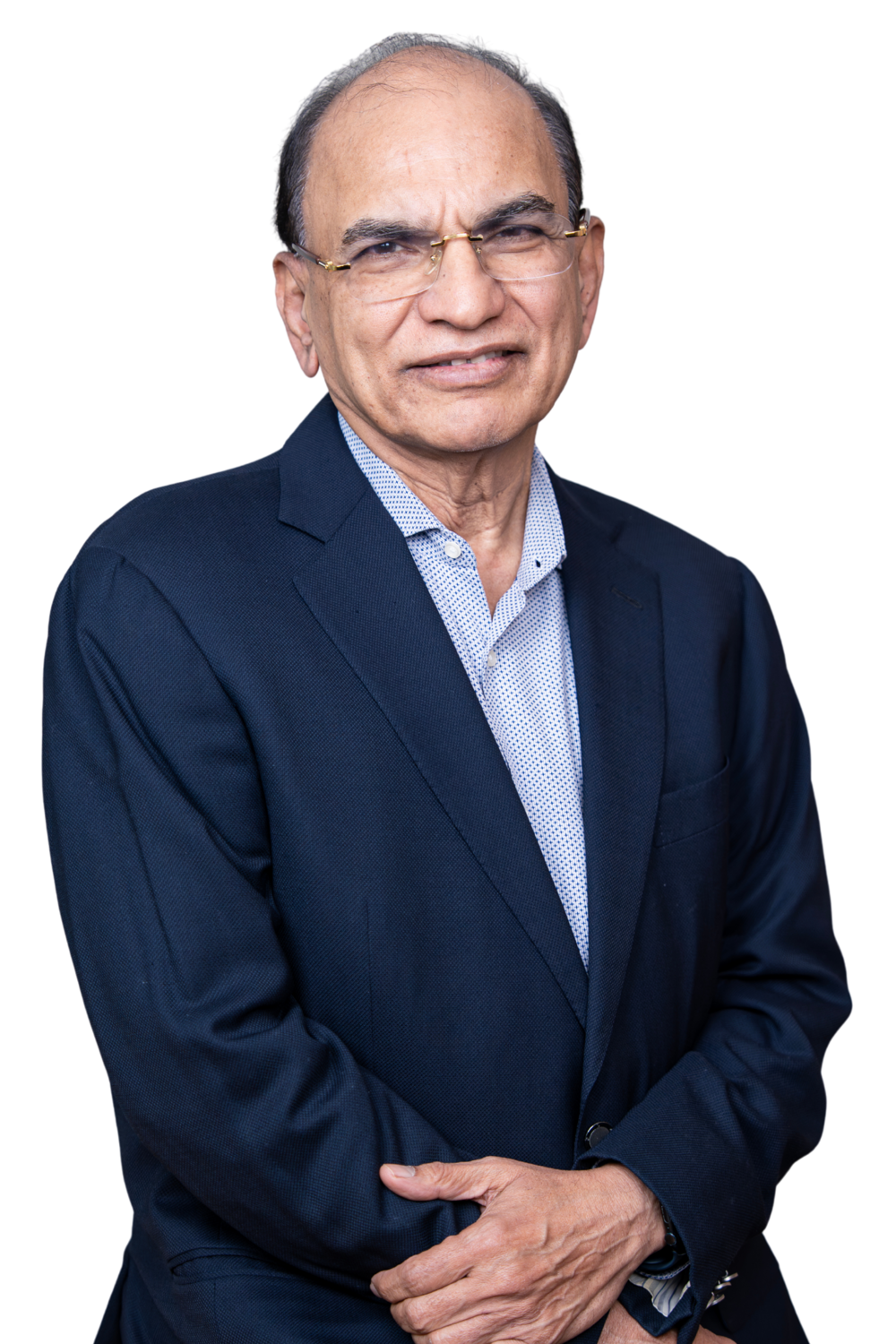
Its stated culture emphasises taking responsibility and learning from people who have built enduring institutions. There is a concrete expression of that preference in its events: the intended conversation crosses professional boundaries. A software team, a clinician and an investor can look at the same product and find three different problems. Getting them together early is part of the offer.
Four weeks to earn a no
The company organises its work into Build, Scale and Raise. Build creates ventures; Scale helps companies assess and enter India; Raise supplies strategic capital. The separation gives founders different entry points. An existing medical-device company does not need the same help as a team still deciding which clinical problem deserves a company.
Scale has the most revealing deliverable. Its Discover track takes approximately four weeks and ends with a “Go / Refine / No-Go” recommendation. The work examines market fit and the regulatory, competitive and distribution landscape. An assessment that can recommend stopping makes the programme more interesting than a promise to accelerate everything that arrives.
DISCOVER
Test the market thesis
Activate, the other track, runs for roughly 12–14 weeks and supports hospital partnerships, pilots and market entry. These are programme timelines, not promises that every product will achieve clinical validation or regulatory clearance on a schedule. The intended applicant has a working product or strong prototype and a serious reason to operate in India.
The practical distinction is between exploring a market and committing to it. For a founder, the first decision is whether the opportunity survives scrutiny. The second is how to pursue it. Mixing the two can turn a market study into an expensive exercise in defending a decision already made.
What the money is meant to do
By February 2026, Global HealthX reported crossing $15 million in investments across startups and studio-built ventures over the preceding two years. It outlined another $8–10 million for deployment during 2026 across 10 additional startups. The first figure describes money already invested; the second describes an intention.
Reported deployed
by February 2026
Planned additional deployment
during 2026
February reporting put typical investments at $250,000–$500,000, with follow-on backing depending on a company’s progress. Published Raise guidance advertises investments of up to $1 million per company. Those descriptions distinguish a typical cheque from a stated upper level; neither makes investment automatic for participants.
The business also includes developing ventures that can become independent companies or license products to industry. An older accelerator offering explicitly described a paid programme with selective scholarships. Founders should therefore treat programme participation, commercial arrangements and investment as separate decisions. A place in an initiative is not the same transaction as a financing commitment.
“We do not do courtesy calls.”
Global HealthX’s Raise pitch guidance
That unusually blunt line fits Raise’s published selection criteria: a consequential problem, a scalable business, a capable founding team and a reason its network can help. For applicants, the useful pitch connects the requested capital to a specific next step. Asking for an introduction is more persuasive when the founder can explain what the intended partner would evaluate.
A portfolio with patients in view
The portfolio makes the breadth tangible. CognitiveBotics develops AI-supported early-intervention tools for neurodiverse children. Makers Hive works on bionic prosthetics and rehabilitation robotics. Affordplan addresses hospital and patient financial infrastructure. These businesses reach different users, yet each depends on fitting into the way care is delivered or paid for.
CognitiveBotics also illustrates the closeness of the studio relationship. Its own leadership page names Kancherla as co-founder, Sudheer Narra as chief technology officer and Global HealthX’s Satish Kottapalli as an adviser. A Global HealthX portfolio account describes its tools extending support into everyday settings, connecting parents’ participation with therapists’ ability to follow progress.
The company announced a patent grant in a post shared by Global HealthX. That is an intellectual-property milestone; it should not be read as proof of a particular clinical outcome. The practical appeal remains the service being attempted: more continuity between a child’s structured sessions and the people supporting learning outside them.
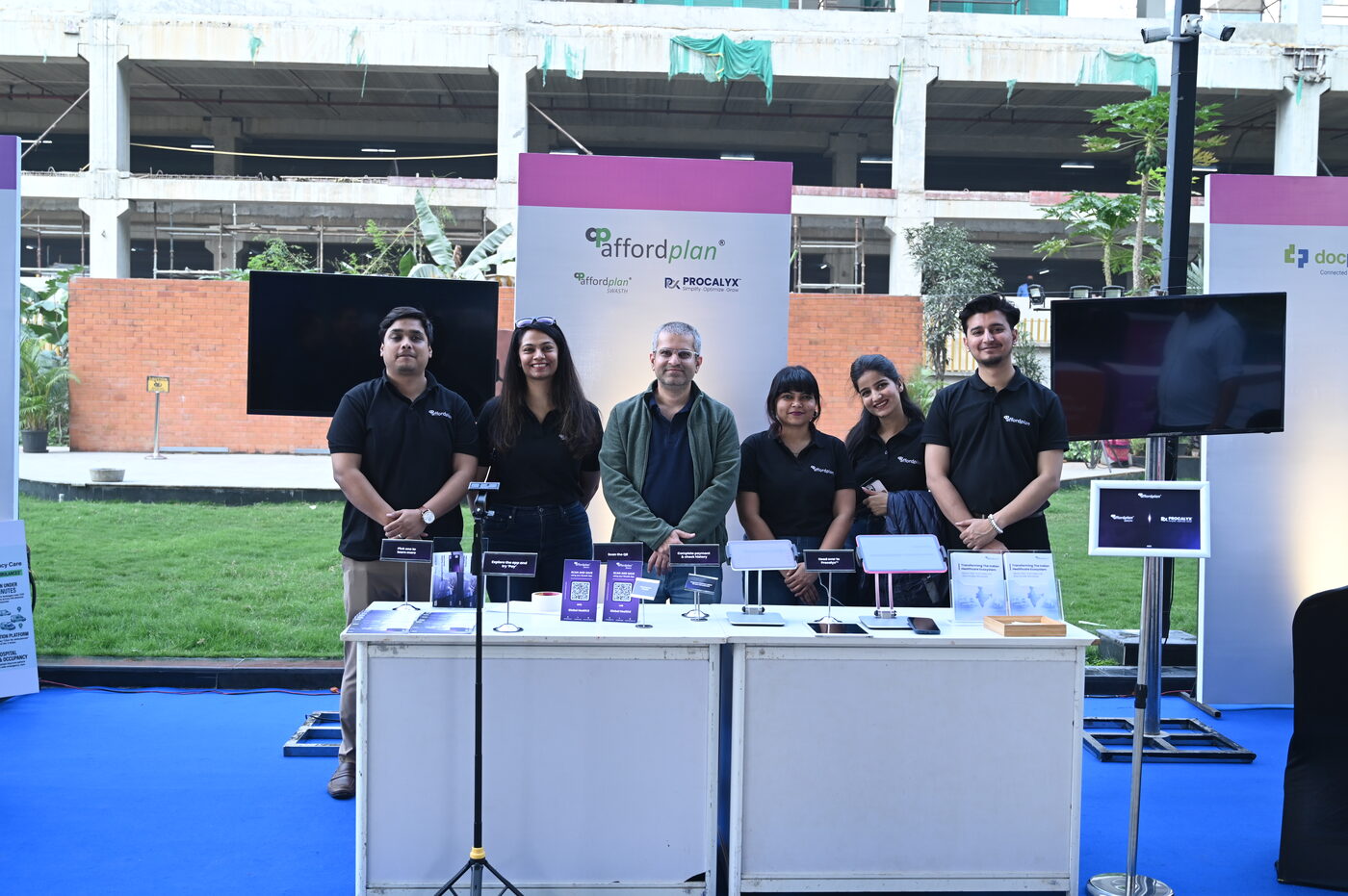
Elsewhere in the platform’s orbit, the market-entry cohort named in February included Monitra Health, TapHealth, Wellytics, Merry Health and Avika. The range covers cardiac monitoring, chronic care, precision health, emergency response and virtual-reality mental-health applications. That variety makes the platform’s commercial task demanding: a hospital evaluates a monitoring device differently from an ambulance service.
Build’s response to repeated technical work is shared infrastructure. Its published architecture includes clinical workflow software, data ingestion and interoperability components, alongside AI tools. The intended advantage is reuse across ventures. The business still has to establish that each product solves its own problem; shared software cannot supply that answer.
There is a more specific engineering account, too. Satya Saridae’s public professional profile describes leading a five-person team that took the patient-engagement product Helix Engage from requirements sign-off to hospital pilots for Deepam and Ramaiah within two weeks. It is the engineer’s account of a bounded development sprint, not a claim that an entire healthcare company was validated in a fortnight. The product covered appointment booking, missed calls and assistance for call-centre staff.
The introductions are becoming institutions
Global HealthX has been adding formal relationships around its model. Its announced partnership with Silverneedle Ventures combines hospital and pharmaceutical access, regulatory guidance and validation support with the investor’s capital experience and mentorship. The logic is straightforward: founders may need both a clinical conversation and a financing conversation, and those conversations influence each other.
More recently, the L V P Eye Innovations Foundation, the innovation arm of L V Prasad Eye Institute, signed a memorandum of understanding with Global HealthX. The announced scope includes workshops, innovation programmes and knowledge sharing. That is a framework for joint work. Its importance will depend on the specific initiatives that follow.
The international activity is similarly worth reading closely. Global HealthX described discussions with Christian Kumar involving CognitiveBotics and Makers Hive, with attention to European expansion. It also reported conversations with Sony’s healthcare team during a Japan visit. These are useful indications of where the company is looking; a conversation and a commercial contract remain different milestones.
Meanwhile, its ThinkLab format brings early ideas into a room with founders, clinicians and innovators. An August 31, 2026 session was promoted around examining a problem from several perspectives. That format gives the company’s broad innovation language a practical shape: participants have something specific to question before a venture takes on more commitments.
Borrow the questions before the network
For another founder, the most portable part of Global HealthX’s approach is the sequence of questions. Define the care problem. Identify the person who would use the product and the institution that would approve its use. Test the market assumptions. Decide what evidence justifies the next expense. A team can do that work before joining any programme.
A founder comparing alternatives can use the same questions to choose the kind of help required. A venture investor addresses financing; a hospital incubator can provide an institutional setting; a market-entry adviser works on launch preparation. Global HealthX combines those functions with company creation. The combination is relevant when a team needs several of them together, and can explain how each will move its particular business forward.
The model has a clear boundary. Hospital access is valuable when the product, proposed buyer and care setting match. It cannot substitute for evidence, a workable business or willingness to revise the product. Global HealthX advertises access to a network of more than 500 hospitals; that describes potential reach, not 500 customers waiting to buy.
At Pulse, the devices and display tables made the proposition visible. Founders had brought something for other people to examine. The useful next step was a question about how it would work. For a healthcare company, learning which question it cannot yet answer may be a very good reason to leave the office.
Follow the work
Explore the programmes, portfolio conversations and company updates.