Hal Paz, M.D., M.S. - the Doctor who Bets on Medicine's Future
// Operating Partner · Khosla Ventures · Menlo Park, CA
Physician. Scientist. CEO. Venture Investor.
The man who ran America's biggest health systems is now funding the startups that want to make them obsolete. He has been on every side of the table - researcher, dean, CMO, CEO - and he shows up at Khosla Ventures knowing where every body is buried.
// Profile
Before Hal Paz started picking healthcare's next unicorns at Khosla Ventures, he was the person that healthcare unicorns needed to convince. He has sat in the CMO chair at CVS Health/Aetna - one of the largest payers on the planet. He has run the $5 billion Ohio State University Wexner Medical Center. He has led the Penn State Hershey Health System through a decade of 90% revenue growth. He has been a dean at not one, but two medical schools. He knows what it looks like when a pitch deck makes promises the real world can't cash.
That history is exactly why Khosla Ventures brought him in. The firm - famous for backing "black swan" companies across AI, clean energy, and deep tech - needed someone who could sit across from a founder selling an AI clinical decision tool and know, intuitively, whether the thing would survive contact with hospital procurement, regulatory review, and physician workflow. Paz is that person.
His path into venture was not a pivot; it was a long-running parallel track. While he was running Stony Brook University Medicine, he was serving on advisory boards for AI-driven health companies like Curai Health and watching Aetna's clinical analytics reshape how millions of people accessed care. At Ohio State, he watched telehealth visits explode from 50 a month to 2,800 a day during COVID - and understood that the pressure was permanent, not a pandemic anomaly.
At Khosla, Paz focuses on digital health, AI applications, and life sciences. He helped support Ellipsis Health's $45 million Series A in 2025, backing their AI care manager Sage - built to handle emotionally complex patient interactions at scale. He helped broker Khosla's strategic collaboration with Cleveland Clinic, creating a pipeline that lets portfolio companies test technologies inside one of the nation's premier medical centers. His value is not just capital. It is the fifteen phone calls he can make that no other venture partner in the room can make.
His research background adds another dimension. Over three decades he ran 19 clinical trials in ARDS and sepsis, published more than 100 papers, and trained at Johns Hopkins under some of the most rigorous pulmonary and critical care scientists in the country. He is not a generalist executive who wandered into medicine. He is a physician-scientist who happened to discover he was also very good at running large organizations - and at spotting the rare technology that bridges the gap between a clinical insight and a scalable business.
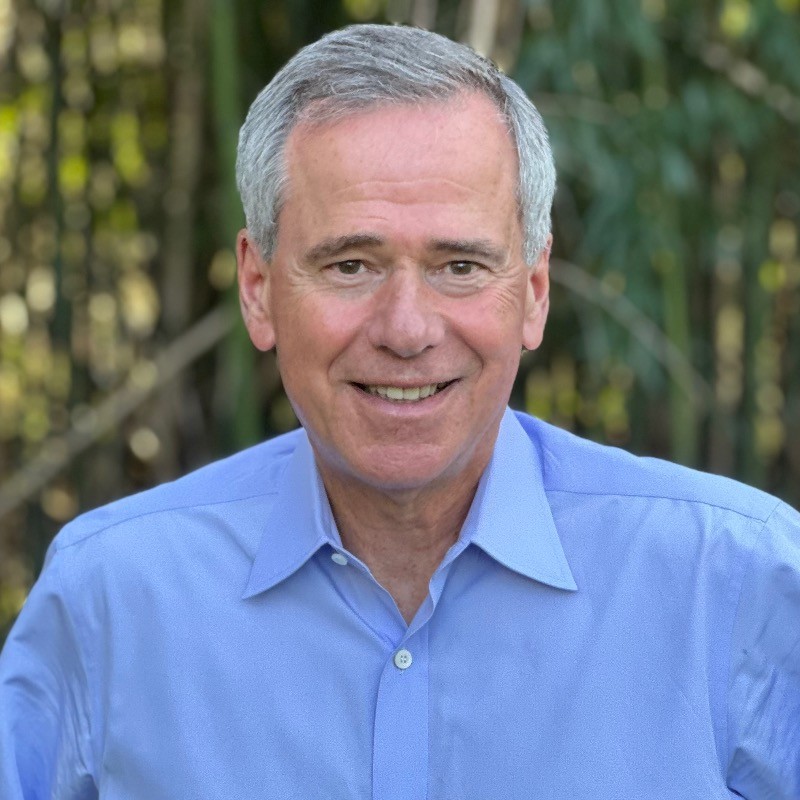
"AI is going to play a really important role going forward in this transformation."- Hal Paz, M.D., M.S.
// Career Timeline
// Deep Dive
There is a specific kind of credibility that Hal Paz carries into a startup boardroom. When a company pitches a tool that predicts sepsis earlier, he has personally run the clinical trials. When a company promises it can cut unnecessary hospital readmissions, he has had to answer for those readmission numbers in front of payers, trustees, and the media. When a company claims its AI can unlock capacity in an overcrowded emergency department, he has managed those departments - and has watched ten previous "solutions" fail to scale past the pilot.
That filter is rare in venture capital, which is crowded with operators-turned-investors who understand SaaS but struggle to model what happens when a healthcare product meets hospital IT procurement, physician skepticism, and CMS billing rules simultaneously. Paz does not struggle with that model. He has lived it on repeat, across four of the country's largest academic medical centers.
His research career shaped his intellectual instincts in a specific way. Critical care medicine - sepsis, ARDS, mechanical ventilation - is a field that rewards pattern recognition under uncertainty. You cannot wait for perfect data; you have to act. That same posture carries forward. Paz is not a "wait for the randomized controlled trial" investor. He has spent enough time at the frontier of scientific uncertainty to be comfortable betting on well-reasoned hypotheses before the evidence is airtight - which is precisely what early-stage venture requires.
His writing offers a window into his thinking. In a September 2024 op-ed for MedCity News, he took on what he called the "demographic time bomb" - a projected shortfall of 200,000 nurses and 124,000 physicians by 2030. His argument was not that AI would replace clinicians. It was that AI could extend what clinicians can do, allowing a system stretched thin to serve more people without proportionally more headcount. That framing - AI as leverage, not substitution - is consistent with Khosla Ventures' broader thesis about technology building what Vinod Khosla calls "doctor extenders."
The Cleveland Clinic collaboration, announced in late 2025, offers a glimpse of the infrastructure Paz is helping build. Portfolio companies get access to one of the most prestigious clinical environments in the world: real patient populations, credentialed physicians, and the kind of validation data that matters to hospital procurement committees. In exchange, Cleveland Clinic gets early access to emerging technology. It is exactly the kind of structural bridge between innovation and adoption that has historically been missing from healthcare venture - and it bears Paz's fingerprints.
Away from the office, Paz is married to Sharon H. Press, Ph.D., a child and adolescent clinical psychologist, with two adult children. He serves on the board of the Whitaker Center for Science and the Arts in Harrisburg, Pennsylvania. He finished a 60-mile sailing race. His Wordle average is 0.98 - which, if you know how Wordle scoring works, is nearly the theoretical maximum, and deeply consistent with the profile of a man who has spent a lifetime building systems that leave no margin for error.
// Investment Thesis
// Recognition
// Snapshot
// Education
"When I got to Ohio State, we were doing 50 telehealth visits a month. We now do roughly 2,800 a day."- Hal Paz, on scaling digital care delivery
// On the Record
"AI is going to play a really important role going forward in this transformation."
"The digital approach is extraordinarily important - including things like autobots, where we have AI embedded in our webpage to guide patients through the vaccination process, to answer their questions in real time."
"The pandemic forced the healthcare industry to rethink processes, workflow, and how to more efficiently care for patients."
"We need to develop and prepare a modern healthcare workforce within an AI-driven environment" - on projections showing 200,000 nurse and 124,000 physician shortfalls by 2030.
// Fun Facts
// Connect
// Latest Writing & Appearances