Consider the distance between making a jar of mustard and getting it onto a supermarket shelf. The recipe is only the beginning. Someone must understand packaging, production, payment terms and buyers. A founder can be excellent at the first task and stranded by the rest. Ecuador’s Alianza para el Emprendimiento e Innovación, or AEI, has built its work around that awkward distance.
- AEI connects entrepreneurs with companies, universities and public institutions.
- Its tools include training, buyer connections, innovation services and recovery programs.
- Access varies: some routes are open; others require a retailer relationship, a referral or a university.
The network dates its founding to 2013. By May 2014, it was presenting a national entrepreneurship strategy to Ecuador’s Assembly, developed through months of consultation with public, private and academic participants. That early ambition helps explain the breadth of its work today. AEI was organizing around the conditions businesses operate in, including policy and institutional cooperation. Its later recovery work would bring that broad approach down to the level of individual enterprises.
The organization’s most revealing work began with a much more immediate obstacle. On April 16, 2016, an earthquake struck Ecuador’s coast. Businesses in Manabí and Esmeraldas needed to restart. The question was practical: what does a small enterprise need when its means of making a living have been disrupted?
Two trusts. One recovery problem.
Re-Emprende, the AEI-led response, divided the work between two complementary instruments. Resiliencia financed lending for investment and working capital through banks operating locally. Junto a Ti supported technical assistance and additional help with access to credit, including partial guarantees. Money and business capability were treated as connected problems.
That distinction matters. Credit can replace equipment or replenish inventory. It cannot, by itself, teach a business to manage costs or connect a producer with a buyer. Conversely, a useful training session cannot pay for materials. Re-Emprende put both kinds of assistance inside the same recovery effort.
The financing required actual contributions. Corporación Favorita’s 2017 annual report described approximately $10 million in program resources and its own $2 million contribution to the investment trust. These were resources for recovery, not a valuation of AEI. Keeping those categories separate is essential to understanding the organization.
An IDB account published in 2023 recorded 8,700 entrepreneurs reached between 2016 and 2022 across 29 cantons. More than 3,800 businesses received $8.7 million in loans. It also described private partners learning that they could pool resources, then applying a similar approach elsewhere. The experience became a model that could travel beyond emergency recovery.
The shelf is part of the service
AEI’s current work stretches from small producers to corporations and universities. It occupies the space between institutions that possess useful resources and businesses that need them. A bank, a retailer and a research center have different strengths. AEI organizes programs around those differences rather than assuming every entrepreneur needs the same course.
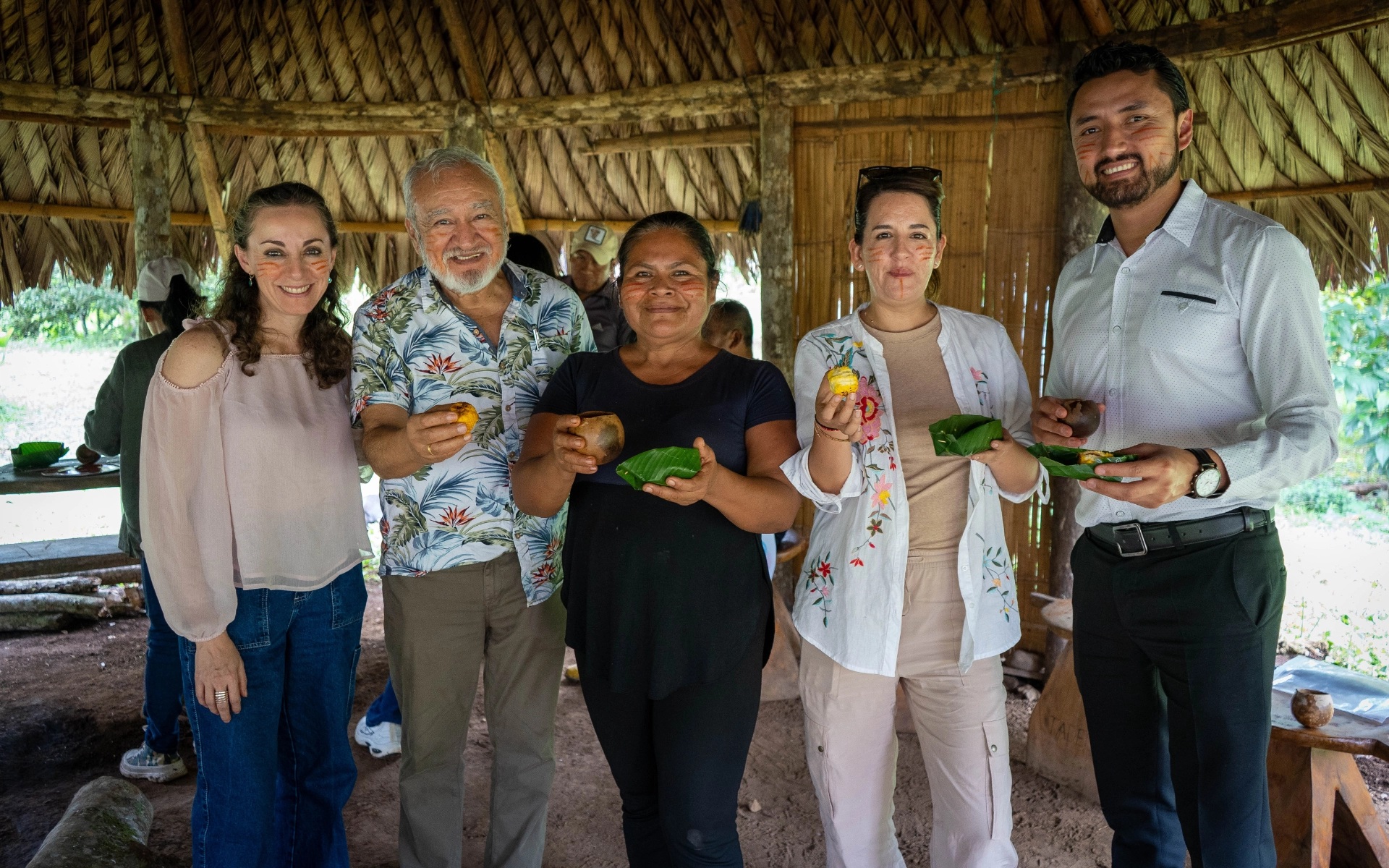
Take Mercado Emprendedor. Its current description is unusually specific: it serves entrepreneurial brands already selling through Corporación Favorita. Training, visibility, fairs and commercial activities help those brands strengthen their presence. For a supplier, that is a different proposition from collecting contacts at a networking breakfast. The retailer relationship is already there.
The restriction is also useful information. A founder seeking a first supermarket listing should read the eligibility rules before assuming this is the right door. AEI’s value comes partly from its connections, but those connections are organized into particular programs with particular entry points.
“CREE, CREA, CRECE.”
AEI’s public company motto
A network with several front doors
GuayaLab, for example, strengthens businesses in Guayaquil referred by participating allies. It does not accept public applications. AEI SciTech works through universities and research centers, helping institutions develop the capacity to support scientific startups, spin-offs and technology licensing. Individual researchers enter through those institutional relationships.
Other routes address different needs. SE PUEDE offers free online learning. Aquí Es works with gastronomic businesses. Corporate innovation services include Innómetro, an assessment of organizational innovation maturity, and TechGrade, which examines university technology-transfer capabilities. The expertise lies in diagnosis, training, applied projects and coordination across organizations.
- 01Find the constraint
- 02Connect the partner
- 03Build the support
- 04Reach the market
This places AEI alongside incubators, municipal entrepreneurship services, university support offices and innovation consultants. Its distinctive feature is the combination: entrepreneurship support, corporate collaboration, research connections and territorial projects under one network. The relevant comparison is which organization can help resolve a particular business obstacle.
The numbers belong to the entrepreneurs
AEI reports $68 million in entrepreneur sales across its programs for 2025, alongside more than 3,300 entrepreneurs supported and 180 active allies. These are reported network outcomes. They describe business activity around the programs; they are not AEI’s own turnover, and they do not establish that every sale resulted from its intervention.
Its operating model brings together sponsored initiatives, jointly developed projects, contributed expertise and services for organizations. An ally can supply knowledge, technology, market connections or resources. A corporate project begins by agreeing objectives, scope and indicators. The organization’s published values emphasize integrity, altruism and confidence in Ecuador’s people - commitments whose practical test is whether partners contribute something useful.

Borrow the sequence
Misión Emprende 593 adds visibility to the mix. For 2025, AEI reports 4,100 applications, 100 bootcamp finalists and 15 selections for the reality production. The funnel is a reminder that publicity is selective. A general expression of interest in AEI is not admission to a competition or a promise of investment.
For readers building their own support network, the useful lesson is sequencing. Identify the constraint. Find a partner that can actually move it. Combine assistance where the problems depend on each other. Then measure what happened. The model depends on capable, participating partners and businesses that fit the available programs. A contact list alone cannot supply those conditions.
For an entrepreneur in Ecuador, the first move is smaller: check the program directory, read the access rules and describe the help needed. The product may be ready. The next step may belong to someone across the table.