In Pillaiappampalayam, a village in Coimbatore district’s Annur block, a startup community opened on 26 November 2025. The partners included StartupTN, GRG Trust and a women’s college. That last detail is instructive. Entrepreneurship policy usually arrives dressed for a conference. Here, it arrived through an institution already connected to the place.
- The proposition: bring funding, expertise and business connections closer to Tamil Nadu’s founders.
- The rural experiment: 100 startups in 100 selected villages, supported through 10 regional hubs.
- The useful distinction: village grants, TANSEED funding and investor introductions have different terms.
The community belongs to Gramam Thorum Puthozhil, StartupTN’s village entrepreneurship programme. Its design starts with outreach, then selection, orientation and incubation. Eligible selected startups can receive ₹1 lakh without surrendering equity. The programme also offers help with business models, legal questions, branding and market validation. It is a small cheque accompanied by a rather substantial to-do list.
A postcode is a business expense
StartupTN is the public-facing identity of Tamilnadu Startup and Innovation Mission, a Section 8 company operating under the state’s MSME Department. The company was incorporated in 2021. Its job is to make entrepreneurship easier to attempt and better equipped to survive, across a state rather than inside a single incubator.
Its users include founders and aspiring entrepreneurs, but also investors, mentors, corporate buyers, universities and government agencies. The agency sits between these groups. An early founder might need an introduction to an incubator; a more established company might need a buyer or an investor who understands its sector. StartupTN builds routes between them.
The village scheme makes that role unusually visible. District administrations, regional hubs, incubators and industry associations share implementation. Villages are selected with local authorities, considering backwardness, potential and diversity. The programme specifically emphasises women, SC/ST communities, people with disabilities and young people. The underlying editorial lesson is straightforward: access needs a delivery plan.
Outreach → selection → incubation → conditional seed support
This offers something a conventional accelerator may not: a route into entrepreneurship through local institutions. The promise depends on those institutions doing the unglamorous work of finding people, assessing ideas and keeping support available after the launch photograph. A hub on a map becomes useful when someone answers a founder’s next question.
The cheque has small print
Money is the obvious attraction, and the easiest part to misunderstand. The village programme’s ₹1 lakh equity-free offer is separate from the larger TANSEED 8.0 terms announced in December 2025. That edition offered up to ₹10 lakh for eligible startups, rising to ₹15 lakh for green-tech, rural-impact and women-led ventures.
In return, StartupTN takes a 3% support stake and supplies a one-year accelerator. The money can support prototypes, market-ready products or small-scale pilot production. Applicants must meet registration requirements, including StartupTN and DPIIT recognition. Selection and application windows matter. A programme announcement is an invitation to compete, not an approved transfer.
Equity-free · conditional selection
3% support stake · one-year accelerator
By December 2025, TANSEED had sanctioned support to 169 startups since its 2021 inception. Its move to a support-equity model began with the fifth edition. That is a documented change in the instrument. It does not, by itself, tell us that the earlier design failed or reveal why individual policymakers preferred the revision.
StartupTN’s broader model is government-backed ecosystem support: public programmes, partner services and investment facilitation. Founders encounter several mechanisms under one name. Keeping their terms separate is essential. A discount reduces an expense. A grant finances a milestone. An investor introduction begins a negotiation.
The bills nobody puts in the pitch deck
StartupTN’s Smart Card, launched in February 2024, addresses an awkward truth about starting a company: much of the spending is magnificently ordinary. Compliance, accounting, software, workspace and marketing may never earn applause, but they still send invoices. The card gives registered startups access to partner offers and discounted services.
MentorTN tackles a different expense: learning everything the hard way. Its portal connects founders and aspirants with subject specialists and structured cohorts. The site displays more than 326 active mentors, 1,169 mentees and 20 cohorts. Those counters describe participation, rather than proving that mentoring produced profitable companies.
The DBS Bank India partnership, announced in January 2024, adds banking support, knowledge sharing and connections to the bank’s accelerator and incubator network. Its emphasis includes Tier 2 and Tier 3 towns. Expertise comes from assembling specialist partners around founders, with the agency acting as the organiser.
An introduction still needs a reason
TANFUND connects startups with financing partners, including venture funds, angel networks and other capital providers. StartupTN also offers pitch refinement and mentoring around that process. This is useful matchmaking, but the investor retains the decision. Being introduced to the right person does not make a weak business persuasive.
The Open Innovation Portal approaches the buyer side: corporate, research and government challenges meet startup proposals through screening, preparation and demonstrations. The process ends with potential support and collaboration. A founder should arrive with a solution that answers the challenge, then establish what a pilot, purchase or partnership would actually require.
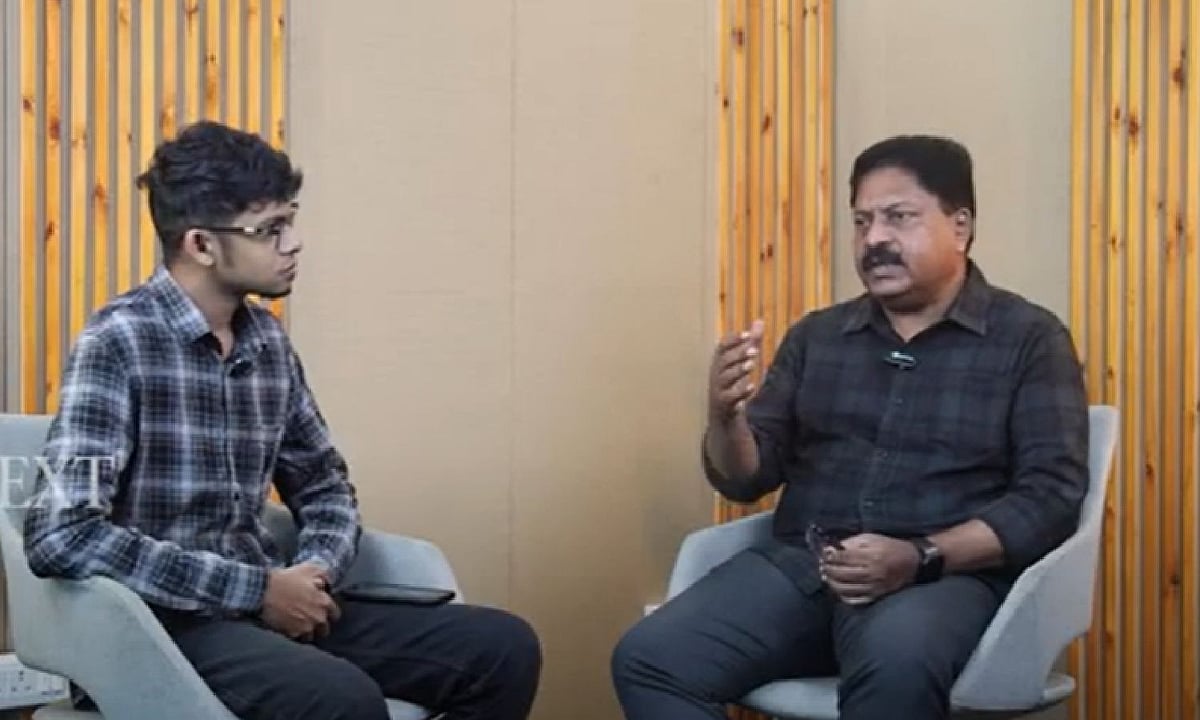
The agency’s events also changed emphasis. In an October 2025 interview, then-CEO Sivarajah Ramanathan described earlier Startup Thiruvizha gatherings as a way to make entrepreneurship credible to students and families. The Global Startup Summit moved attention toward scaling, capital and international connections. That is a change in the job the event was meant to perform.
“Startups are not a separate sector; they are the new generation of business.”Sivarajah Ramanathan · DT Next · October 2025
The practical lesson is to name the obstacle before choosing the programme. Use mentoring for a knowledge gap, partner discounts for operating costs, incubation for an early idea and investor matching when the business is ready for capital. Other ecosystem builders can copy that separation and the local delivery network. None of it substitutes for demand. Eventually, a customer must want what the founder is selling.