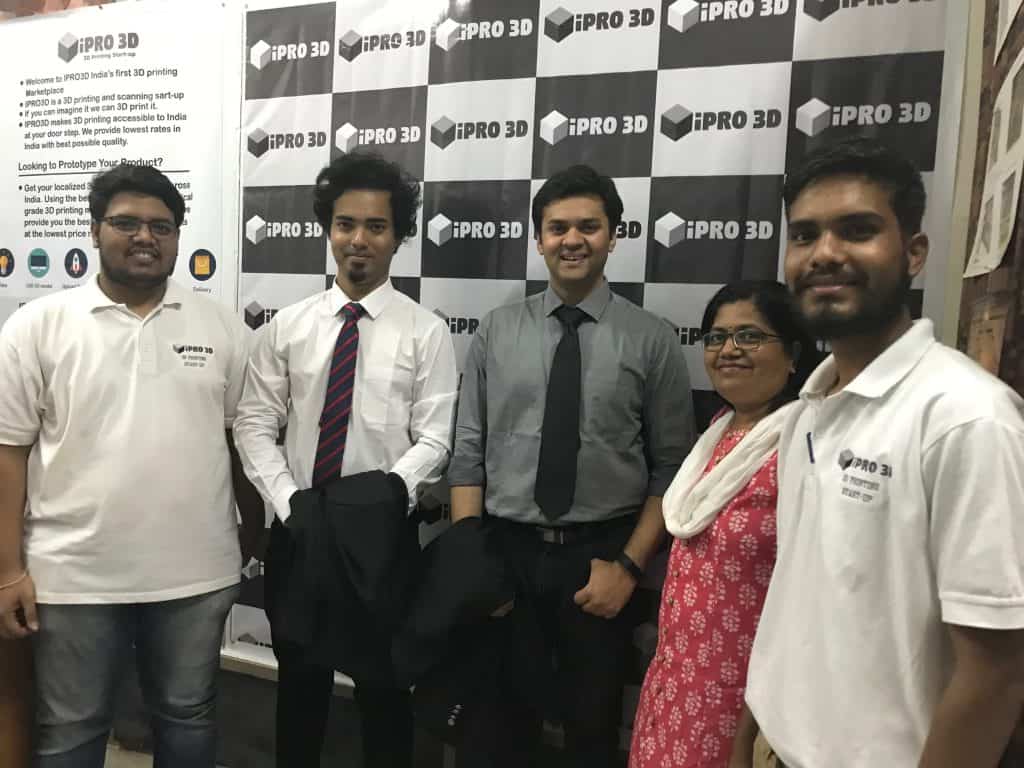
In December 2017, Yogesh Pawar’s 3D-printing startup approached an industry chamber in Aurangabad. IPRO3D wanted help developing a more usable beta version of its online marketplace. By 5 May 2018, it had entered MAGIC’s incubation program as its first reported incubatee. The setting was telling: a young technology business seeking help from an organization representing people who already made things.
- Industry-backed incubation connects founders with experienced operators.
- Support runs from idea validation to prototypes, funding access and markets.
- Students and existing small businesses belong in the same conversation.
A startup meets the people with the machinery
MAGIC expands to Marathwada Accelerator for Growth and Incubation Council. Promoted by members of the Chamber of Marathwada Industries & Agriculture, it combines startup incubation with SME acceleration. Its current website dates its establishment to 2018. Its home city, Aurangabad, is now officially Chhatrapati Sambhajinagar. The older name remains familiar in its public record.
The industrial connection gives the organization its character. Many founders need advice that is embarrassingly specific: which material, which supplier, which customer requirement? MAGIC’s proposition is that regional industry can help answer. The value of that proposition depends on whether a connection produces usable information. A room full of experienced people is a beginning; a better production decision is the prize.
For IPRO3D, the announced package included workspace, technical assistance, legal and HR services, mentoring, market connections and access to laboratory equipment. Industry mentors were drawn from businesses including Sanjay Technoplast, Nirlep Appliances and SS Controls. This was a practical menu for a company trying to develop a product. It also explains why an industry association might be an appealing first stop.
Saturday is for unfinished ideas
The Saturday Mentoring Clinic is a useful clue to MAGIC’s working culture. Its brochure records 215 ideas validated and mentored during 2023-24, alongside 250 mentoring interactions. Those figures describe activity, rather than proof that each idea became a business. Still, a recurring clinic makes room for the stage when an innovator has questions and a business plan would be premature.
MAGIC’s published incubation journey begins with application and screening, followed by idea validation, product development, mentoring and review, funding and market access, then growth. In practice, those stages invite a founder to separate several questions often bundled together: can it be built, does someone need it, and can it be sold? Answering one does not settle the others.
and mentored
MAGIC’s historical brochure tally. A measure of mentoring activity, not startup survival.
The transferable lesson is modest enough to copy. Make experienced operators available regularly. Ask innovators to bring a specific problem. Return to the idea after testing. That is an interpretation of the clinic’s format, not a promise about outcomes. Its usefulness rests on mentors knowing the relevant market and founders being willing to revise their assumptions.
The project has to leave the classroom
MAGIC accepts early-stage startups, students, faculty innovators and MSMEs with innovative ideas. It describes itself as sector-agnostic while naming agriculture, green mobility, defence, health and smart industrial-city services as priority areas. The mix makes sense for an organization joining industry and entrepreneurship: an established small manufacturer may need help developing something new, just as a student may need help making something saleable.
Its named initiatives are agreeably literal. HeadOnn is described as “Project to Product”; LearnNxt offers expert sessions; My Skill My Business addresses ITI students. Bootcamps, exhibitions, innovation challenges and faculty programs provide other entrances. The names reveal an emphasis on finding and preparing innovators, rather than waiting exclusively for polished startups to arrive.
Neo FarmTech offers a more tangible example. A 2025 Free Press Journal report described founder Yogesh Gawande’s engineering project developing into an agricultural product business with MAGIC’s support. It attributed mentoring, financial help, market access and industrial networking to the incubator’s community, and described connections with Social Alpha and CoE FASAL. The interest lies in the sequence: a project acquired business support and routes beyond its original setting.
Different pots of money, different jobs
MAGIC’s nonprofit model combines industry participation, corporate support and government-linked programs. A historical brochure reports ₹1.79 crore in donations and CSR grants from organizations including Tata Technologies and HDFC Bank. That is support received by the incubator. Money raised by its portfolio companies belongs to a separate account. Mixing the two would make a flattering number and an unhelpful explanation.
“from Package to profit and Job seekers to Entrepreneurs”Prasad Kokil, on MAGIC’s aim, 2018
The distinction matters for applicants. MAGIC offers access to funding channels and investor connections. Its MSInS Seed Fund work includes application guidance, evaluation support, mentoring, progress reviews and monitoring. Those are services around a funding process. They do not remove eligibility checks or turn admission to incubation into a guarantee of cash.
In defence, MAGIC is an iDEX partner incubator, supporting challenge participants with technical guidance, mentoring and infrastructure. Here, too, the offer is a route through a particular process. A founder should match the program to the product’s stage and requirements, then establish the relevant terms before making spending decisions.
Manufacturing gives the network a job
In November 2024, reporting described MAGIC’s agreement with DPIIT under the Startup India Manufacturing Incubator Initiative. The stated support included plug-and-play facilities, prototyping labs, pilot-production facilities and technology management. These address an inconvenient feature of manufacturing: development can require physical resources before sales make the bill comfortable.
- 01Validate
demand - 02Develop a
prototype - 03Test
production - 04Seek market
access
Editorial illustration of the work between an idea and a customer.
University incubators, specialist programs and independent accelerators offer founders other routes. MAGIC’s distinguishing feature is the regional industry association behind it. For a team needing manufacturing judgment or industrial introductions, that connection could be especially useful. For a venture whose principal needs lie elsewhere, a different program may fit better. The sensible comparison is the help required for the next decision.
A regional door, opened repeatedly
MAGIC’s 2026 listings include a student entrepreneurship program with MSInS and MGM University, an Entrepreneurs’ Day celebration in Jalna, and an October idea hackathon for Jalna’s ITI and college students. The pattern extends the same invitation to different places and stages: bring an idea into contact with people who can question and develop it.
For a prospective applicant, the useful starting point is a concrete brief: the problem, the intended user, the current prototype and the next obstacle. For someone building a regional incubator, MAGIC suggests another starting point: the expertise already nearby. An industrial town contains people who know how products disappoint. Giving a founder access to that knowledge early may be one of its most valuable services.