Shashikant Naik arrived with something more convincing than a slide deck: a built minimum viable product and the confidence of a local. His business, RentedRide, addressed Goa’s rental market. Being from Goa, he thought he understood it. Then AIC-GIM’s idea-validation program asked him to slow down, put his assumptions on paper and test them. In his published account, that exercise was uncomfortable. It was also exactly what he needed.
That is a revealing introduction to the Atal Incubation Centre at Goa Institute of Management. An incubator can offer a founder somewhere to sit, someone to call and a chance to meet investors. Its harder job is to make the founder’s thinking better before the spending gets serious. Naik’s experience gives that otherwise abstract promise a specific shape: local knowledge met a demand for evidence.
“The program made me slow down and write down my assumptions, testing them instead of just trusting my gut.”
Shashikant Naik · RentedRide
Published PACE participant testimonial
Confidence was the first thing challenged in this account. The lesson was a change in method: write it down, test it, reconsider. A founder can copy that sequence without moving to Goa or applying to any program. The difficult part is deciding, before the interviews begin, what answer would actually cause a change of plan.
A campus with a national job
AIC-GIM was incorporated in March 2018 and began operations that September. It is a Section 8 nonprofit, hosted by Goa Institute of Management and established under Atal Innovation Mission, NITI Aayog. That makes its origin institutional: a business school, a national entrepreneurship initiative and a separate organization charged with helping businesses get built.
The national mission supplies useful context. Atal Incubation Centres were designed to combine infrastructure with business planning, industry connections, training and access to seed capital. The model assumes that an early venture needs several kinds of help at once. AIC-GIM’s particular setting adds a management-school campus to that proposition. For founders, the useful question is how those institutional resources translate into the next customer conversation or operating decision.
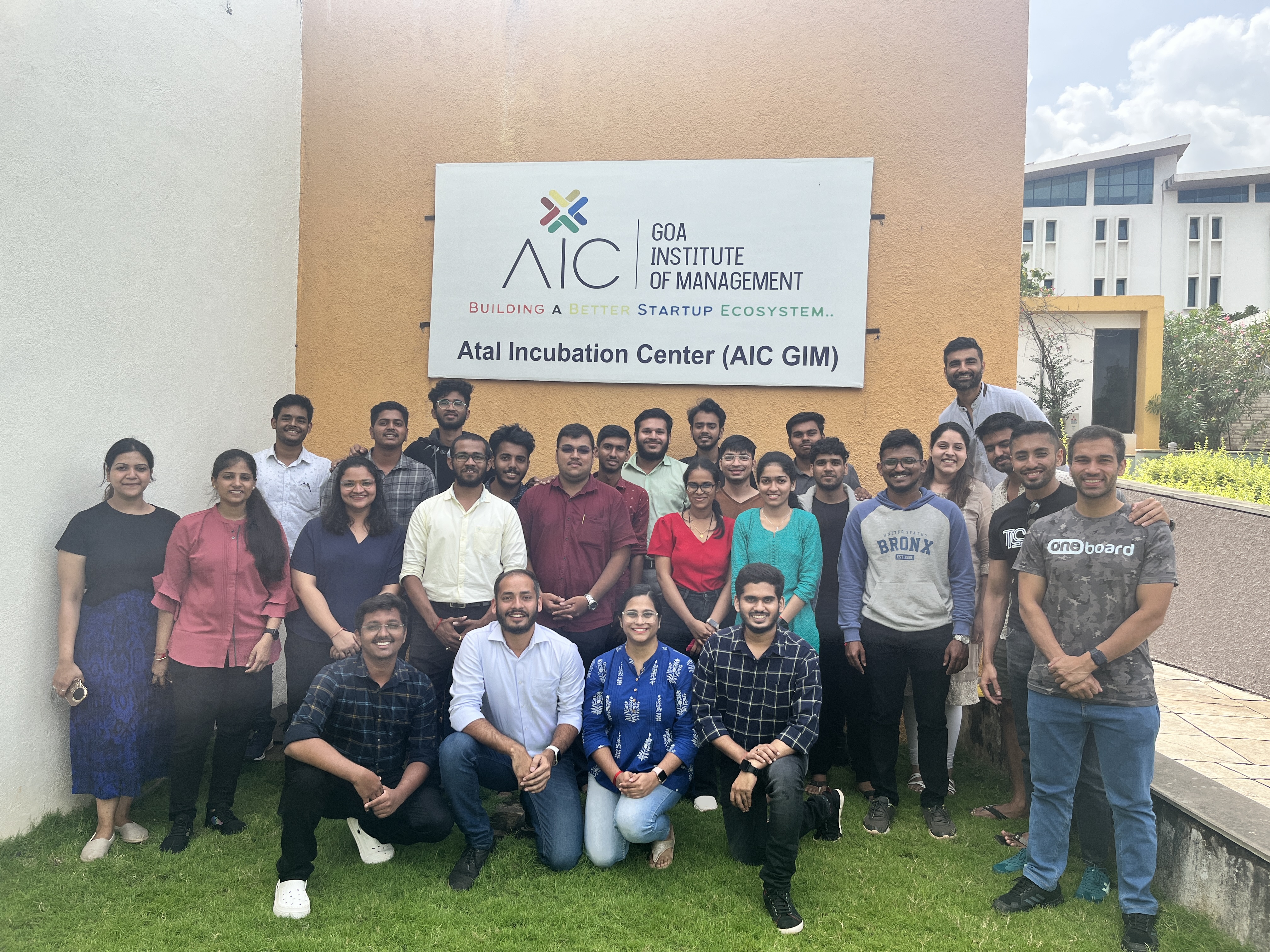
The early operation was compact. GIM’s 2020-21 annual report recorded a three-person team, 16 mentors and more than 22 incubated startups. It also described ventures in fintech, hospitality, education and deep technology. Those categories help explain the organization’s broad remit: founders can share commercial problems even when their products have little in common.
By January 2023, the Times of India reported that AIC-GIM had supported more than 100 startups across the country and that incubated companies had raised over ₹30 crore. The foundation now reports 181 incubated startups and more than ₹100 crore raised externally by its portfolio. These are measures of activity and reach. They do not, by themselves, establish how much value incubation added to each business.
Foundation-reported cumulative figures, viewed September 2026. Portfolio funding belongs to supported companies.
Four weeks before the bigger bet
PACE, the idea-validation offering, serves people near the beginning: aspiring founders and early-stage businesses trying to sharpen a proposition. Its current four-week online structure moves from problem discovery and customer feedback to competitor analysis, customer segmentation and a final pitch. There are assignments between the mentor conversations. The syllabus makes clear that participation involves producing work, then having it examined.
A dated application listing supplies an unusually concrete answer to the cost question. The August 2025 edition charged ₹5,000 including taxes for four online weeks, with mentoring, assignments, recorded sessions and community access. That is a historical cohort price. It gives a reader a tangible example of the transaction without pretending to be a standing tariff for every future intake.
- 01Find the problemCustomer feedback
- 02Test your positionCompetitors & founder fit
- 03Choose the customerSegmentation & story
- 04Make the caseFinal pitch & feedback
The fee is only one part of the commitment. Customer discovery requires access to prospective buyers and enough patience to hear inconvenient answers. A founder who treats the assignments as paperwork may finish with a tidier presentation and the same weak premise. The useful output is a decision: which customer to pursue, which feature to test, or which version of the idea to stop funding.
For a reader borrowing the approach, a simple discipline follows: separate observations from interpretations. “Three shopkeepers asked for this” is an observation. “Retailers will pay every month” is a hypothesis. An interview may support the first statement while leaving the second untouched. This is an editorial lesson drawn from the program’s emphasis on validation, rather than a claim that four weeks can settle every commercial uncertainty.
The money has more than one label
AIC-GIM’s capital role developed through several public schemes. A June 2022 announcement outlined approximately ₹5 crore for seed support, with individual startups eligible for grants up to ₹20 lakh or debt instruments up to ₹50 lakh. It also described SAMRIDH participation for eight Goa startups, with investment up to ₹40 lakh each. These were announced startup-funding pathways, with selection and scheme conditions attached.
That distinction matters when describing the business. Money allocated for startups is different from revenue earned by the incubator. A portfolio valuation is different from the foundation’s valuation. A grant, a loan and an equity-linked investment also create different obligations for a founder. Lumping them together under “funding” makes a better headline than explanation.
The current Venture Growth accelerator advertises up to ₹45 lakh in matching funds across a twelve-week program. Its published sequence examines business finances and unit economics, works on customer acquisition and scaling, then prepares founders for investor presentations. The intended applicant already has a proven MVP and market validation. Someone still searching for a problem has different work to do first.
Advertised matching-fund access
The two enrollment routes reveal part of AIC-GIM’s own business model: one uses a full fee, the other a reduced fee with an equity component negotiated around valuation. Public-purpose incubation can therefore include commercial transactions. For an applicant, the practical exercise is to compare the cost, ownership terms and specific help offered against the business’s next measurable objective.
Women founders get a continuing program
WE-nurture gives the foundation’s broad brief a more focused constituency. GIM documented the initiative in 2021 as support for women micro-entrepreneurs. A government announcement in October 2023 included the AIC-GIM collaboration with the Women Entrepreneurship Platform. A subsequent WEP newsletter dated the Award to Reward cohort’s kickoff to April 29, 2024, with 25 women entrepreneurs.
The current general WE-nurture page describes a twelve-to-sixteen-week hybrid format, combining individual mentorship, masterclasses, peer connections and investor access. It reports more than 70 women-led ventures supported across over three completed cohorts. The structure offers repeated contact rather than a single encounter: a founder can return to a mentor after trying a suggestion and bring back the result.
That repetition is the interesting design choice. An introduction may open a door, but founders still need to work out what to ask for and what to do afterward. A cohort can make those follow-ups easier to sustain. Its usefulness depends on the relevance of the mentors and peers to the business being built, as well as the founder’s ability to act on their advice.
Music rights meet the management school
Hoopr provides a concrete example of where AIC-GIM fits beyond Goa. In January 2026, the music licensing platform announced institutional backing through AIC-GIM under MeitY’s SAMRIDH program, including an undisclosed investment. The announcement connected that support to technology architecture, compliance processes and readiness to work within the wider music economy.
Music licensing is a useful test of the phrase “sector-agnostic.” The product is far from a conventional campus business project, yet it raises recognizable company-building questions: how to serve customers, organize transactions and build systems that can handle growth. The incubator’s contribution has to attach to those actual needs. Being open to many sectors is only valuable when the right expertise can be brought to each one.
AIC-GIM also serves the other side of that relationship through corporate innovation programs. Enterprises can bring a problem, use its startup scouting network and run a time-limited pilot with milestones and go-or-stop decisions. Its published offer includes custom challenges and accelerators. That gives the organization another customer group: established companies looking for outside solutions and a process for evaluating them.
Choose the help by the next decision
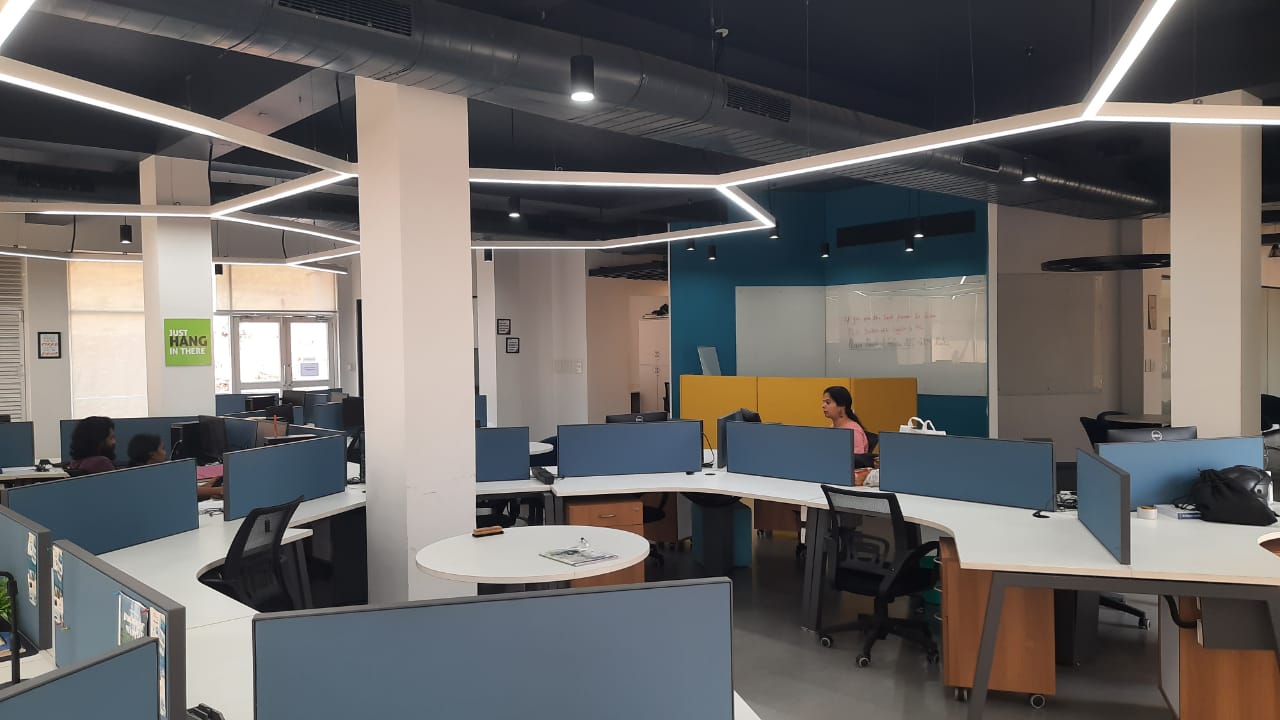
A founder’s alternatives include other university incubators, specialist accelerators, private programs or assembling advisers independently. AIC-GIM’s combination is a GIM campus base, national public-program connections and several stages of founder support. Physical, virtual and on-demand incubation allow different levels of proximity. The right choice depends on whether the immediate need is workspace, sustained feedback, a specialist introduction or investment preparation.
Some businesses need equipment, regulatory expertise or buyer relationships that a general program cannot supply on its own. Others need enough uninterrupted time to sell. A sensible applicant should arrive with a specific bottleneck and ask how the proposed support addresses it. For AIC-GIM, the most persuasive promise is visible in Naik’s account: a founder left with a better way to question what he thought he knew. That is work worth doing before the next cheque gets written.