Consider the founder who has built something useful for a farmer. The product works. The next problem is less obliging: finding a buyer, explaining the business to an investor, or meeting someone who knows how agricultural distribution actually behaves. Action For India occupies that awkward interval between having an invention and having a business that can carry it further.
- AFI supports Indian social enterprises with mentors, market connections and investor introductions.
- Its Agri Cohort 2.0 is free, takes no equity and asks for three to four hours a week.
- The diaspora network brings Silicon Valley expertise into conversations about Indian problems.
- Participation counts measure activity; they do not, by themselves, prove social impact.
A business whose product is access
Sanjay Kadaveru founded the organization listed as established in 2011; AFI dates its public launch to 2012. Its mission is to help social entrepreneurs overcome obstacles to scale. The target is a business serving people whom ordinary markets have served poorly. Agriculture, healthcare, education, livelihoods, energy and financial inclusion all fit that brief. The nonprofit supports enterprises that may themselves seek a profit.
That arrangement places AFI between philanthropy and the startup market. The direct user is a founder; the intended beneficiary might be a patient, a farmer or a student. Donors and foundations support the intermediary. Founders receive help assembling the relationships and knowledge their companies need. An investor introduction belongs to this service, although the investment decision remains with the investor.
The network extends through Silicon Valley and UK chapters. That gives AFI a particular proposition: pair people who understand technology and capital with entrepreneurs who understand a problem on the ground. The usefulness depends on the pairing. A celebrated adviser with nothing relevant to say is still, alas, an adviser with nothing relevant to say.
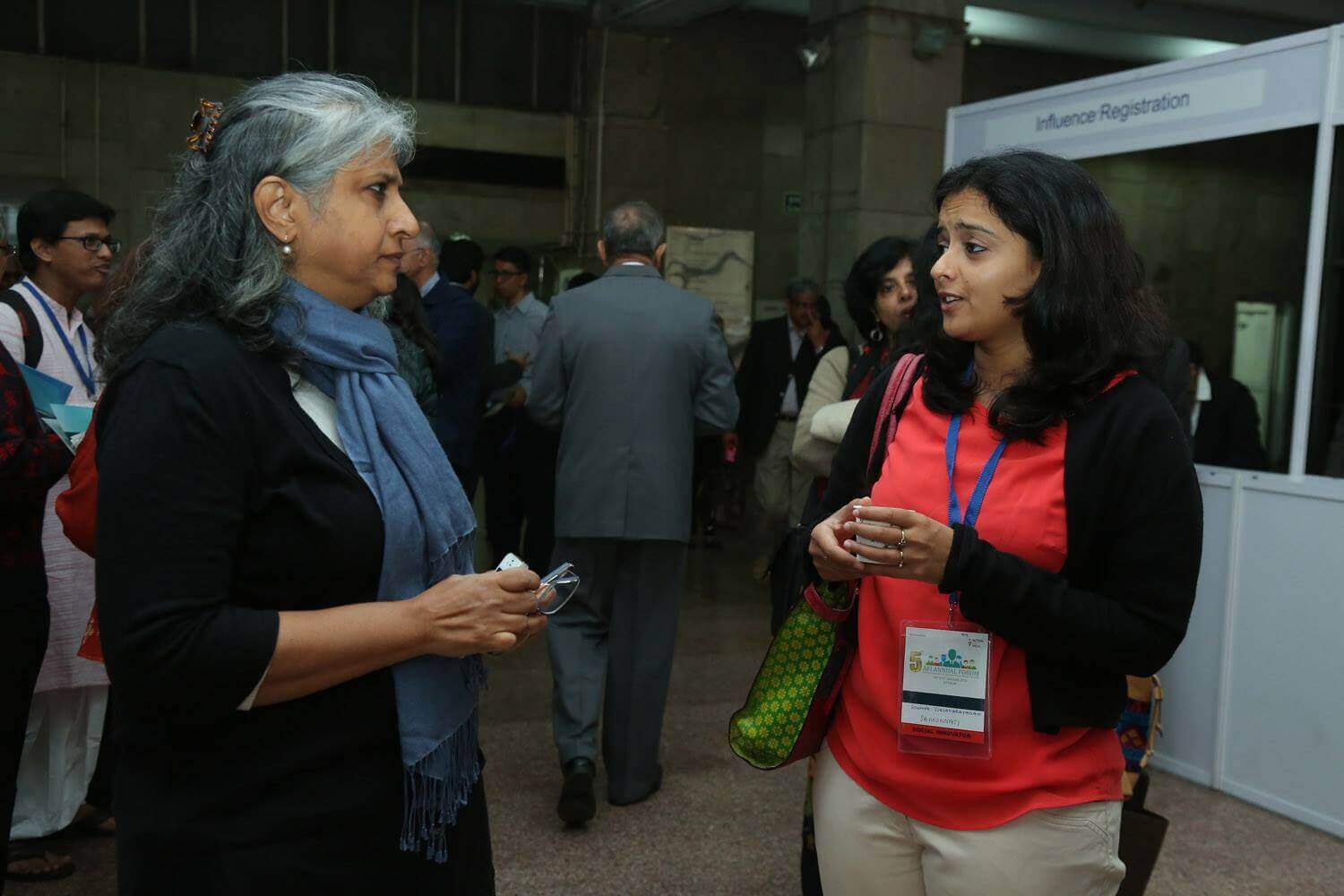
Several mentors walk into a problem
AFI’s six-month Impact Catalyzer combines individually matched mentors with knowledge-building sessions, a learning community and the AFI Huddle. The last puts multiple mentors around an entrepreneur’s challenge. It makes room for disagreement between different kinds of expertise, which can be more useful than a procession of agreeable speeches.
The funding service adds pitch-deck reviews, workshops on choosing capital sources and investor matching. AFI calls the matching exercise “Investor Dating.” There is some welcome honesty in the name. A meeting establishes possible compatibility; nobody should confuse the first coffee with a marriage contract.
Its 2023 update gives the work a little texture: an 18-startup cohort received more than 100 hours of one-to-one mentoring, 25 hours of collective Huddle brainstorming and four masterclasses. These are inputs, rather than proof of outcomes. They nevertheless describe something more substantial than collecting business cards after a panel.
Free admission, a real time bill
The published terms for Agri Cohort 2.0 are unusually easy to understand. The five-month program charges no fees and takes no equity. Founders should expect an average of three to four hours a week. It runs virtually, with optional field immersion, and concludes with a demo day and potential investor or pilot connections.
Published terms for Agri Cohort 2.0 · five months
The cost, then, includes a founder’s attention. For a small team, those hours compete with selling and building. The sensible test is whether a session addresses a live constraint. A founder wrestling with market access can bring a concrete distribution question; one raising money can bring a deck and an explanation of the capital required.
Entry criteria matter. Agri Cohort 2.0 expects a working product or minimum viable product. Impact Catalyzer’s published criteria are more specific: a technology-driven, for-profit social enterprise operating for more than two years, at technology readiness level five or above. An idea scribbled yesterday deserves encouragement, but these programs describe a later stage.
One cohort does not fit everyone
The WISE program, Women in Social Entrepreneurship, named six founders in its first 2021 cohort, including Akshita Sachdeva of Trestle Labs, Pooja Rai of Anthill Creations and Shveta Raina of Talerang. Its design combines tailored support with a community of women running different businesses. AFI’s program page identifies eBay Foundation backing.
“The biggest USP of the WISE program is peer-to-peer learning.”
Shveta Raina · Founder, Talerang
AFI also narrowed its sector focus. Its December 2024 newsletter reports 56 cohort participations: 18 in a group that finished in February, 23 in another beginning in March, and 15 in its first dedicated agriculture cohort. It formed an Agriculture Council that year. The shift suggests a useful lesson: broad networks become more practical when the advice gets specific.
The pause belongs in the picture
The earlier AFI i-TIC Foundation Social Entrepreneurship Accelerator, AISEA, joined AFI with IIT Hyderabad and received support under the government’s NIDHI Accelerator scheme. The institute’s 2020-21 annual report records 15 graduates in one cohort and 14 in the next. It also records the next cohort as paused. Institutional backing does not make a program perpetual.
For founders choosing among AFI, other impact incubators and sector accelerators, the distinction to examine is practical fit: relevant mentors, suitable customers and realistic capital sources. AFI’s account of what it learned emphasizes timely funding access. Mentoring can improve a proposition and introductions can shorten a search. Neither creates customer demand by appointment.
The next room is about AI
AFI’s AI + Agri 2026 schedule runs from July to November, with an October 15 demo day listed. Its offer includes product clinics, farmer-channel support and investor readiness. The announced AI + ClimateTech 2026-27 cohort has an October 20 launch scheduled, followed by work on areas including energy, water, emissions and climate resilience.
The part worth copying is less fashionable than AI: identify a founder’s specific obstacle, match expertise to it, let peers compare experience, and make the next introduction purposeful. AFI calls its ambitions “impact unicorns,” defined around potential reach of a million lives and sustainable revenue. The durable test is whether useful meetings become useful businesses.