A founder can cross an ocean and still be nowhere near a customer. The flight gets you to California. It does little for the harder questions: who will take the meeting, who understands the problem, and who will tell you that your pitch makes no sense? ICON - the Israel Collaboration Network - has built its work around that remaining distance.
Its offer is practical: a community of Israeli technology founders, investors and corporate executives, with programs that put them into conversation. There are talks, individual feedback sessions, shared desks and repeated opportunities to meet. The interesting part is the selection. A room full of people is easy to arrange. A room in which the people have reasons to help one another takes more work.
The invitation is the product
ICON’s membership rules make the intended audience unusually clear. Israeli tech startup founders, venture capital partners, prominent angels and senior corporate executives are the core participants. Its membership page excludes service providers from the application invitation. That helps explain the organization’s place in the market: a focused professional community with a particular cross-border purpose.
The participants bring different needs. A founder wants feedback or a route to a buyer. An executive wants to understand technology that might solve a business problem. An investor wants to meet companies worth knowing. ICON’s proposition depends on finding enough overlap for those conversations to be useful to both sides. The founder’s ambition alone cannot supply it.
Members describe the benefit in everyday terms. Comeet co-founder Omer Tadjer’s published testimonial praises the workspace and support during Bay Area visits. Donna Griffit describes meeting prospective partners, investors and users. These are testimonials, not measured conversion rates, but they identify what people value: somewhere to work and people to speak with when arriving in an unfamiliar business environment.
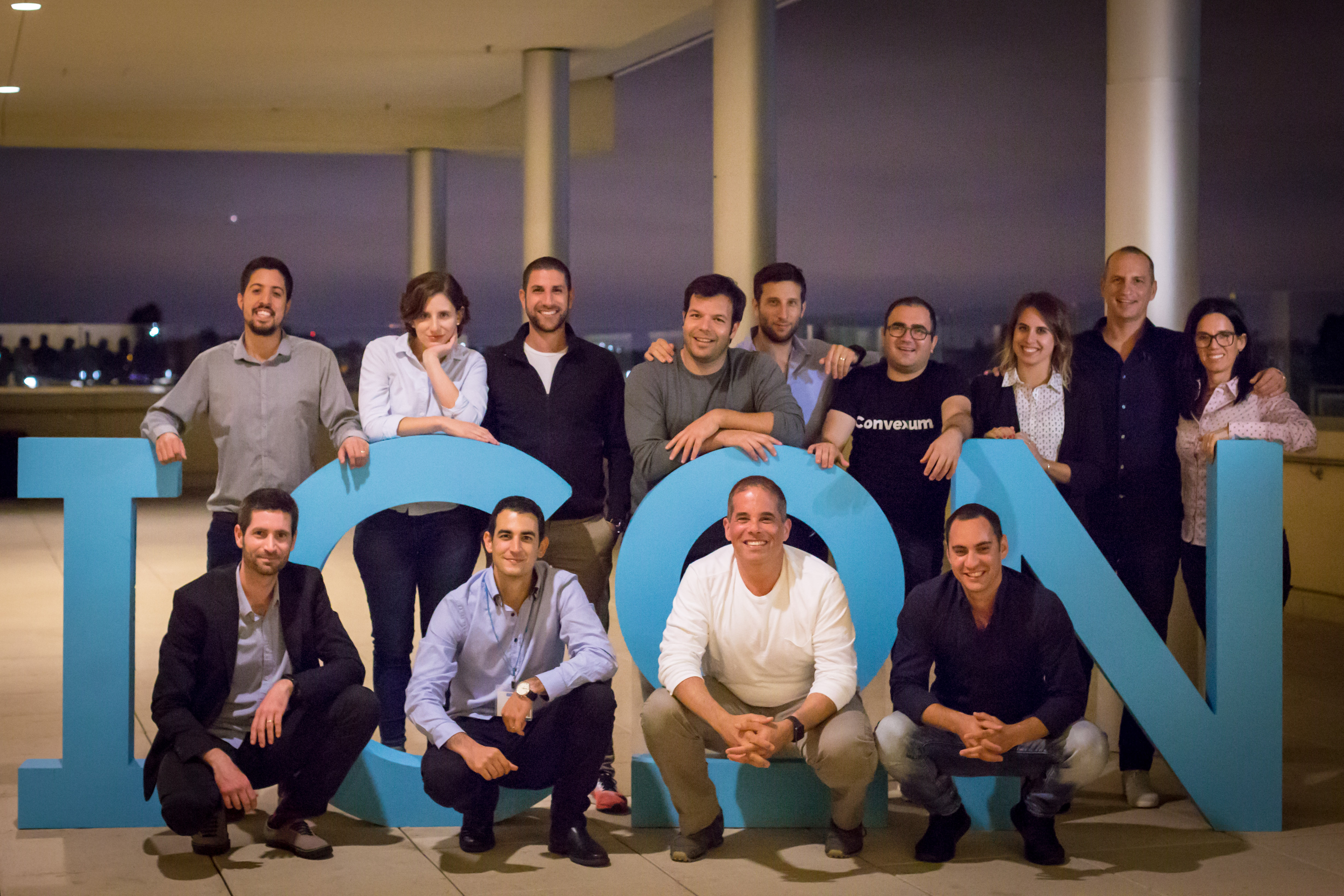
Bring a product. Expect questions.
SV101 is the concentrated version of the idea. Its October 12-22, 2026 immersion targets companies around Series A, with roughly $4 million raised or substantial revenue and a product ready to demonstrate. Participants work through sales workshops, individual meetings and investor panels called “The Grill.” Each startup is assigned at least two mentors.
The name is a useful warning against treating a visit as a victory lap. The sensible preparation is a question that can survive scrutiny: which customer should we approach first, what would stop a purchase, or why does our explanation lose people? That is an editorial lesson from the format. A prestigious audience offers little educational value if the founder uses every minute defending yesterday’s answer.
Traceloop founder Nir Gazit offers a concrete example in an alumni interview shared on LinkedIn. He says the team reconsidered its sales approach through SV101 talks and mentorship. That is a narrower, more credible outcome than claiming a network created a successful company. The changed assumption concerned how to sell. For a reader, the useful question is which part of a commercial plan has actually been tested with someone outside the founding team.
“The real value of SV101 lies in the network it builds.”
Noa Zilberman, founder of Odo, in an ICON testimonial
There is a consequential price distinction. General membership is free. The current SV101 page lists $5,000 per person, plus travel and lodging, while specifying equity-free participation. The homepage’s broader no-fees language conflicts with those terms. For the advertised cohort, the specific program price is the useful figure. Equity-free and cost-free describe different things.
SV101 participation · Travel and lodging additional · No program equity requirement
A desk before the big meeting
There is a less photogenic part of market entry: finding a place to sit. The Oshman Family JCC hosts ICON’s free shared workspace in Palo Alto, with two conference rooms and round-the-clock access for members. The JCC also identifies ICON as a fiscally sponsored organization. Institutional hospitality is part of the operating model.
A desk does not create demand for a product, but it makes the work around a meeting easier. There is somewhere to prepare, take a call and regroup afterward. The arrangement gives a visiting founder a practical base inside an existing institution. It is an appealingly concrete service in a field fond of promising access in the abstract.

Earlier questions, closer to home
SPARK reaches a different moment in company building. The five-day Tel Aviv program is aimed at founders at inception, with validation, team foundations and an American market perspective on the agenda. Its first-batch roster includes Atom in GPU infrastructure, Expect2 in software testing and Walktru in financial controls. These are the participants’ businesses; ICON is not their software vendor.
That timing matters. A founder still deciding what to build can use a conversation differently from someone preparing a US sales organization. SPARK’s design suggests an earlier intervention: put prospective company builders near experienced operators before assumptions become expensive commitments. As of September 10, its website advertises applications for a second batch.
SPARKWhat should we validate?
SV101How do we enter the US?
CommunityWho can help with the next decision?
The buyer belongs in the conversation
ICON’s Cyber Program shows how a broad network becomes useful within a particular industry. It brings security executives, investors and Israeli founders into events and individual office hours, in person and online. A security leader can contribute something a general startup audience cannot: familiarity with the operational setting in which a proposed tool would have to work.
The practical inference is simple. Founders need more than encouragement about technical ingenuity. They need questions about deployment, budgets and the person who would own the problem. A well-matched discussion can help expose those issues. It remains a discussion; participation should never be mistaken for a purchase order.
Innovation Week gives that work a larger stage. The published September 16-18, 2025 program combined a conference with a dedicated Cyber Day. Ali Ghodsi of Databricks and Nikesh Arora of Palo Alto Networks were listed as keynote speakers. The conference described off-the-record discussions, while the cyber schedule included matched founder-CISO meetings.
The appeal is the combination of scales: a recognizable speaker may draw attention, while a smaller meeting gives someone a chance to ask a specific question. That is a more useful way to judge the event than counting famous names on a poster. The itinerary has to earn the time spent away from the company.
Help that survives the name badge
ICON’s Women in Tech program makes the social mechanics explicit. In its Wine and Inspiration format, two members tell their personal and professional stories, followed by organized networking in which participants are encouraged to offer advice, introductions and mentorship. Executive fireside chats provide another setting for professional conversation.
As a community design choice, asking people to offer something is worth copying. “Let’s stay in touch” leaves both parties with an undefined task. An offer to review a pitch, explain a hiring decision or make a relevant introduction gives the relationship a next step. Those examples are practical applications of the format, rather than promised ICON services.
The alumni directory and marketplace extend the connection beyond an event. The directory identifies founders across fields including health, enterprise software and cybersecurity. The marketplace organizes alumni products by industry: its listings include Voltify in rail energy, Native in cloud security and D-ID in digital avatars. It gives prospective users a starting point for discovering what alumni sell.
That breadth can also confuse a casual observer. A page full of AI and cybersecurity companies does not make ICON an AI or cybersecurity product company. Its expertise lies in organizing relationships and founder support around those businesses. The products, customers and commercial results belong to the startups themselves.
What changed when the room grew
Founded in 2014 by Yasmin Lukatz, ICON now lists Noa Topaz as CEO and Lukatz as Founder & President. Lukatz brought experience spanning a consumer startup and large-company operations; her earlier public biography records an MBA from Stanford and legal, accounting and economics studies at Tel Aviv University. The network’s geography has a personal counterpart in that career.
In a February 2026 interview published in collaboration with ICON, Lukatz recalled worrying when satellite events gathered around its conference. She came to see their value for founders making the trip. The same account describes a related $21 million venture fund devised with Oren Zeev in 2021 to recycle profits into the community. That fund figure is not ICON’s operating budget or a funding round for the nonprofit.
The support page routes donations through the OFJCC; the partners page credits institutional backing for programs. Those arrangements help explain how free community services can exist alongside a paid immersion. They also make it necessary to distinguish the organization, its individual offerings and the associated fund when describing the business model.
An introduction still needs a next step
Founders seeking US help have alternatives. UpWest, for example, leads pre-seed and seed investments and supports Israeli founders entering the American market. That makes it relevant to a founder seeking both capital and market support. ICON’s community offer answers a different immediate need: people, perspective and a setting in which to begin a relationship.
The limitation is built into the offer. General membership does not promise direct investor introductions or individual pitches to ICON’s staff. Eligibility narrows the audience, and the current SV101 offering requires both company readiness and a budget. A founder needing a guaranteed cheque next week is asking the network to supply an outcome it does not promise.
The copyable habit is to make each meeting responsible for a specific decision. Arrive with a question, record what challenged your assumptions and follow up with something concrete. ICON can help assemble the room. The founder still has to listen well enough for the next version of the business to be better than the one that walked in.