In Toronto, an old hospital became a proposition about distance. Put researchers near entrepreneurs, entrepreneurs near investors, and everyone near the institutions that might buy their work. Perhaps the journey from discovery to business would become shorter. MaRS Discovery District was built around that proposition. Its history suggests that the most stubborn distances are measured in purchasing rules, financing terms and institutional habits.
- Free core membership helps eligible Canadian science and technology founders.
- Fundraising advice, executive peer groups and buyer introductions serve different stages.
- Laboratories and offices belong to a broader platform with its own financial demands.
The geography of a good idea
John Evans, a physician and former University of Toronto president, helped conceive MaRS in 2000. Legal incorporation followed in 2001; the Centre opened in 2005. The distinction matters. Creating an institution takes longer than naming one, even when the name begins as a file label: Medical and Related Sciences. MaRS now says it is simply its name. Bureaucracy occasionally produces a decent brand.
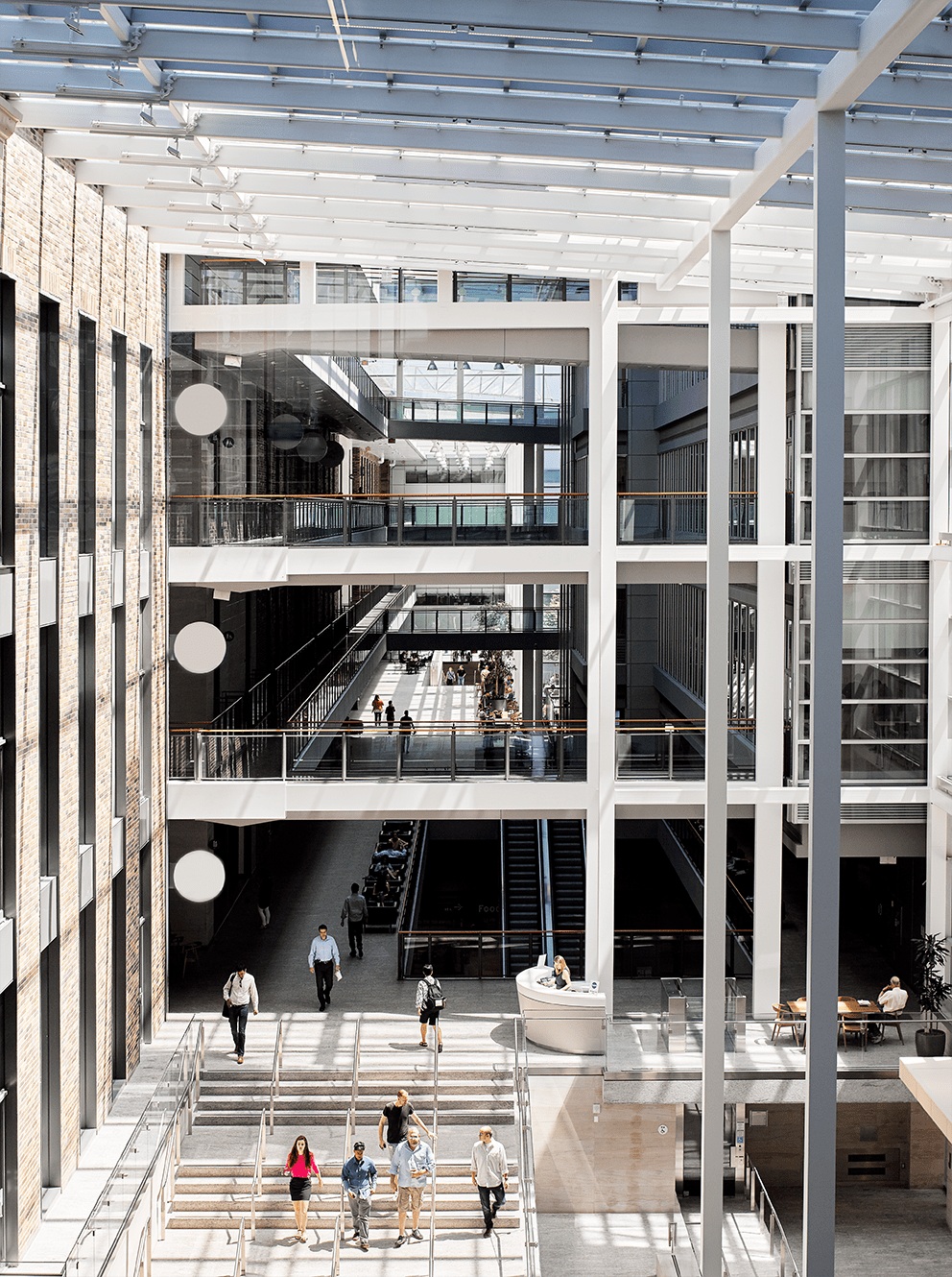
Evans and 12 civic leaders donated C$14 million and gathered support from government, business and the university. They chose the former Toronto General Hospital site, associated with insulin’s first clinical use. Evans had lived there during his internship. Around it stood hospitals, research institutions and the university. The scientific neighbourhood already existed. The missing ingredient was a more dependable route to commerce.
The paperwork behind the promise
Consider a municipal truck. A cleaner powertrain is useful only if somebody can purchase, install and maintain it. In October 2025, MaRS described its work with Toronto, technology developer Effenco and automotive supplier Martinrea. A 2021 council motion had enabled accelerated procurement for ventures in Mission from MaRS. MaRS introduced Effenco to Martinrea, which subsequently acquired the company, and helped convene the discussions that led to deployment.
The announced result was a City purchase of 58 Effenco-equipped systems, with rollout scheduled through 2027. The release reported a successful 2024 demonstration and eight equipped freight vehicles already operating. For those Toronto applications, reported annual fuel savings were nearly 20 percent against CNG vehicles, with maintenance savings around 15 percent. These were application-specific results, rather than a promise for every truck.
The practical lesson is wonderfully unglamorous: work on the buyer’s process. A startup can improve its pitch indefinitely while the purchasing department remains unable to act. Here, introductions connected the technology to industrial capacity, and a procurement pathway connected both to demand. A fleet order makes a rather better souvenir than a conference lanyard.
- 01Effenco
Technology - 02Martinrea
Industrial partner - 03Toronto
Procurement pathway - 0458 systems
Announced purchase
Free at the door, expensive behind it
For founders, MaRS offers ongoing membership with no fixed graduation date. Its core services include market intelligence, mentoring, community events and hiring support. The Capital Program works on seed and Series A fundraising: pitch preparation, investor introductions, data rooms and term-sheet review. It admits 20 to 30 ventures annually, charges nothing and takes no equity. Free advice does not mean automatic investment.
Momentum serves a different problem: managing growth once a business has traction. Executives receive growth planning, market-expansion support and confidential peer groups matched by role and stage. MaRS reports that Momentum companies generated C$2.7 billion in revenue and raised C$3 billion between 2020 and 2024. Those totals describe participating companies; they do not establish how much their success depended on MaRS.
Investors and corporate buyers can use MaRS Connect to explore vetted ventures, company information and demonstration sessions. Its membership is free too. Physical infrastructure is a separate proposition. Laboratory, office, coworking and event spaces are paid offerings. Together, these services place MaRS between a founder-support organization, a specialist landlord and a connector to investment. Communitech and Invest Ottawa are alternative or complementary support networks; which fits depends on the company’s needs.
When the landlord needed a lifeline
That combination has proved difficult to finance. During the West Tower expansion, leasing lagged. Ontario’s December 2014 expert panel recommended buying out Alexandria Real Estate’s leasehold interest and providing secured, repayable financing. Its table put the total financial commitment at C$395 million, including the original loan, acquisition, operating support and floor completion. This was a property financing problem with an innovation mission attached.
By February 2017, MaRS announced that the tower was fully leased. A C$290 million private transaction, led by Manulife, Sun Life and iA Financial Group, would repay most provincial interest-bearing loans almost three years early. Filling the building changed the financing possibilities. The lesson for would-be district builders is severe: an attractive research address still needs tenants and a credible cash-flow plan.
A second reckoning arrived in 2024. BetaKit reported staff cuts and a revised advisory model as CEO Alison Nankivell sought to integrate venture support, investment and real estate. Dependence on government revenue and divisions operating in isolation informed the reset. Her diagnosis was succinct: “Rather than thinking you’re three lines of business, you’re one business.”
Non-consolidated accounts, year ended March 31. Net income after related-entity results: C$2.0m.
The 2026 audited accounts make the funding mix tangible: C$13.3 million in recognized provincial and federal grants, C$3.1 million in other grants and donations, and C$2.1 million in service fees. Revenue totalled C$19.9 million against C$21.0 million in expenses. Related-entity results brought final net income to C$2.0 million. These are non-consolidated figures, so treating them as the whole property platform would mislead.
Copy the meeting, not the building

Under Grace Lee Reynolds, appointed CEO in February 2025, MaRS has continued developing those commercial connections. In September 2026 it announced commitments from more than 20 international partners, with eight memoranda signed at the summit. Commitments are a beginning; customer relationships are the intended result.
“Capital gets a company built, but without customers, it only gets you so far.”
Grace Lee Reynolds / September 2026
Founders can copy the underlying discipline without copying the buildings. Identify the next blocked transaction, then involve people who can remove the obstacle. MaRS applicants need Canadian incorporation, differentiated technology, a feasible prototype or validated science, early customer interest and committed founders. An idea without that groundwork will not meet the core criteria. Nor can introductions replace regulatory evidence or a product people want. The useful promise is access to help with a specific commercial problem.