A startup can borrow a desk almost anywhere. Borrowing the scientific equipment, commercial judgment and industry connections needed to turn a biological discovery into a business is a different proposition. At SmiLe Venture Hub in Lund, Sweden, those needs sit together. Even the lab-coat laundry has a place in the offer. For a founder trying to conserve cash, mundane operating details belong in the business plan.
SmiLe’s central bargain is straightforward: it helps life science and foodtech entrepreneurs build companies without taking an ownership stake for incubation. The hub reports more than 120 startups supported and 21 initial public offerings among its companies. In its September 2026 communications, it put their collective venture capital raised at more than €1.19 billion. These are the companies’ financing achievements, not cash sitting in SmiLe’s bank account.
A regional project with a very practical address
The origin is unusually institutional. In 2007, Innovationsbron Syd, Lund University, Ideon Center, Region Skåne, Lund Municipality and Sparbanksstiftelsen Färs & Frosta agreed to establish Lund Bioinkubator, the predecessor of SmiLe. It was a regional undertaking to help research become enterprise. The university, public bodies and business organizations were involved from the beginning.
Now based at Medicon Village, SmiLe occupies a particular spot in the market: between the researcher with a promising result and the company ready to negotiate with investors, industrial partners and customers. Its users include drug developers, diagnostics teams, medical-device businesses, digital-health founders and food-technology entrepreneurs. They need different scientific tools, but many confront the same commercial problem: explaining who needs the product, who pays and what evidence makes the proposition credible.
The 15-year anniversary account captures the breadth of that remit. SmiLe had already worked with more than 100 companies by January 2023. The operation has grown around repeated company-building problems, rather than a single technology that every applicant must use.
The equipment is part of the business argument
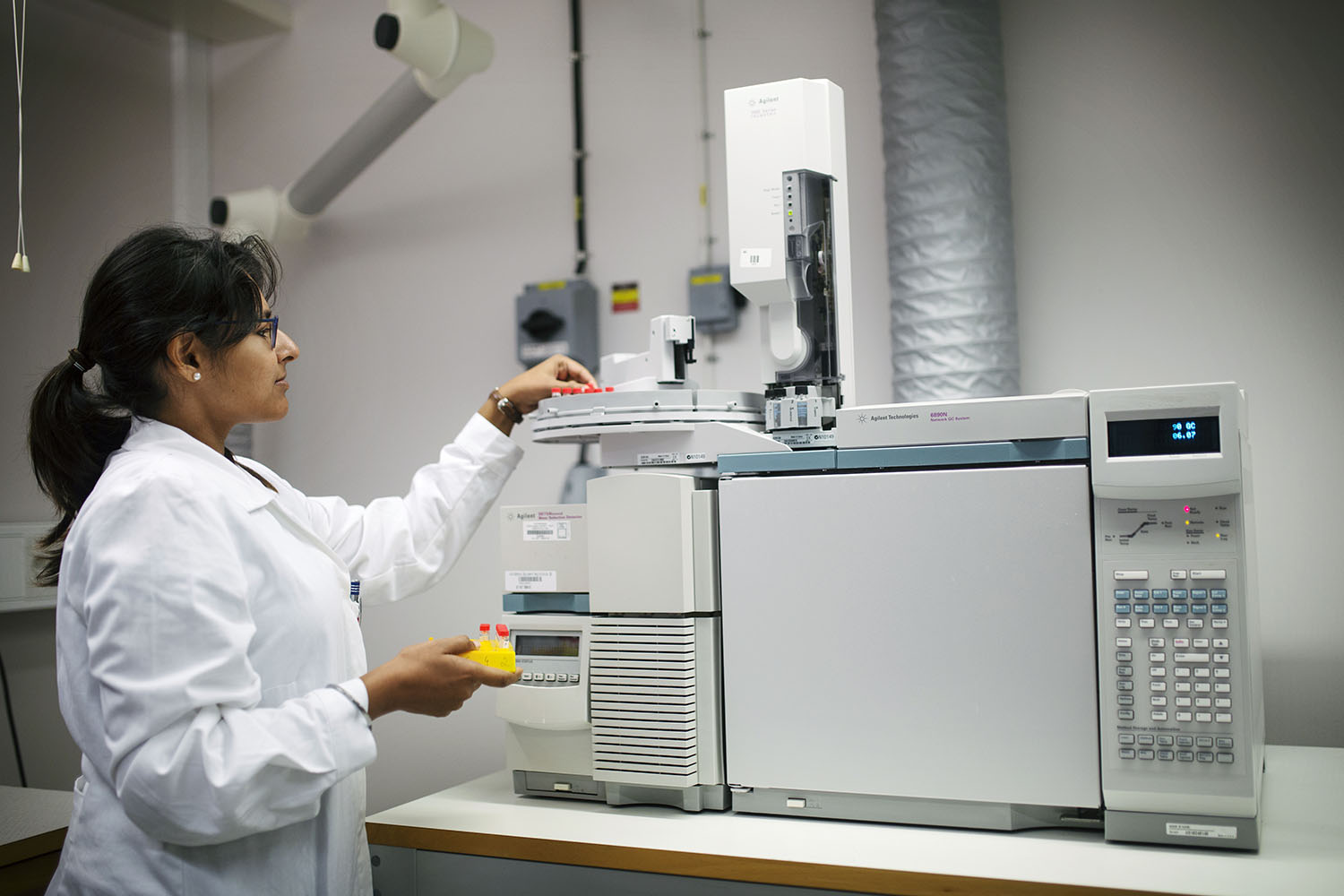
SmiLe advertises a 300-square-meter shared core facility alongside 1,700 square meters of private laboratories. That makes the incubator relevant to companies whose next milestone requires actual experimental work. A promising slide deck cannot do the job of an instrument.
Through Open Lab South, entrepreneurs, established companies and academics can also access equipment and scientific assistance. The collaboration connects SmiLe with capabilities at Malmö University, Lund University and Medeon Science Park. Its scope spans materials and chemistry, food engineering, life science and foodtech. Customers can hire facilities for shorter or longer periods.
The commercial logic is easy to follow. Sharing infrastructure reduces the need for each young business to assemble its own laboratory before it can test an idea. The value depends on the fit between the available equipment and the experiment. A company needing capabilities outside that offer must still arrange them elsewhere; the existence of a lab does not make every development problem solvable inside it.
Two to four years, with awkward questions included
The main incubator program is designed for registered companies developing a product and a scalable business. Its advertised duration is two to four years. Applicants need a health or life science innovation and an entrepreneur or team prepared to develop it. This is sustained business development with a scientific context.
The offer combines a personal coach, a business forum, business education and market access. Expertise covers matters such as intellectual property, licensing, partnering, product development and clinical or preclinical verification. For a scientist learning to run a company, that breadth matters: the experiment and the financing plan must eventually agree about what happens next.
The incubation process begins with evaluation, then verification, development and growth. The verification phase normally lasts up to 12 months. Coaches meet founders every other week, while the business forum brings several specialists together around a company’s specific difficulties. The structure gives a team repeated opportunities to expose a weak assumption before building further plans on top of it.
- 01 / EvaluateBusiness model, team, advantage
- 02 / VerifyTest the product and business idea
- 03 / DevelopBuild with a market and financing strategy
- 04 / GrowKeep access through alumni membership
Free has a timetable attached
There are lighter entry points. SmiLe’s published e-Campus format offers eight weeks of free online education, with 20 expert sessions and an expected commitment of three to four hours a week. It introduces business models, funding, marketing and intellectual property to researchers, graduates and early entrepreneurs. Someone exploring the idea of founding a company can start there without first renting a laboratory.
The published HealthTech Bootcamp format is more demanding: ten weeks, more than 40 training and coaching sessions, and no fees or equity requirement. Its eligibility terms expect a team commitment equivalent to at least one full-time position, with one person available for 60 percent of office hours. Founder time is a substantial contribution, even when the invoice says zero.
The international formats add travel. BioTech Bootcamp, developed with BioM, describes eight weeks split between online work and on-site weeks in Sweden and Germany. FoodTech Bootcamp, with Genopole, describes twelve weeks, including visits to Sweden and France. The published 2024-25 FoodTech terms put travel costs on participants and specify a €500 dropout fee. These are cohort terms, not a promise that an application window is open today.
What the published formats ask of you
- e-Campus
- €0 tuition · 8 weeks · 3-4 hours/week
- HealthTech Bootcamp
- €0 fees · 10 weeks · substantial office-hours commitment
- FoodTech Bootcamp
- €0 tuition · travel extra · €500 dropout fee in 2024-25 terms
- Incubator
- Paid membership packages · reduced first-year fee
For the longer incubator, SmiLe offers membership packages with options for a shared desk, private office or laboratory space. Its stated no-equity policy does not make every service free. The useful comparison for a founder is the package against the cost and effort of sourcing workspace, facilities and advice separately.
Who pays when the hub does not take shares?
Public support is part of the answer. SmiLe receives backing from Region Skåne, Lund Municipality, Lund University and Medicon Village, alongside sponsors and project funding. A concrete example came in July 2020, when it announced SEK 11.8 million from Vinnova for 2021-22, including verification funding. That award supported incubation and startup development; it was not a venture round valuing SmiLe as a high-growth startup.
There is also a separate investment proposition. SmiLe Inject Capital’s published plan envisaged SEK 40 million invested across 10 to 15 early-stage companies over three years. Owned by Saminvest and private life science investors, it has its own selection criteria. The website lists investments including SEK 4 million in Saveggy and SEK 3 million in Acorai. Access to the incubator and selection for investment are different decisions.
Industry sponsorship can buy something tangible. The AbbVie Scandinavia Golden Ticket offers a selected company a year of financed lab space, SmiLe coaching and access to AbbVie researchers and mentors. AAX Biotech was the 2024 winner. Eligibility is specific to therapeutic interests and company circumstances; diagnostics, devices and healthcare IT were excluded from the published call.
A company can be ready in one area and stuck in another
The most useful lesson to copy is to assess progress separately across the business. In its account of the Nordic Life Science Academy for Startups, SmiLe describes a three-year collaboration involving ten organizations and 114 startups. The program assessed maturity area by area and produced 31 training camps and 39 collaborations. Its tools cover customer understanding, regulation, business models and commercialization.
That approach gives founders a disciplined way to change their minds. If customer evidence contradicts a proposed use, the commercial plan needs another pass. If a regulatory strategy lags behind the science, completing another experiment alone will not close the gap. This is an editorial inference from the program’s design: the first assumption to test should be the one capable of stopping the business, wherever it sits.
SmiLe’s company accounts show how varied the work can be. At Speximo, scientists refined stabilization and encapsulation technology while the CEO worked with coaches on the business, before an acquisition. Preactly used remote coaching to develop its digital workplace-health offer. Alumni membership keeps access to facilities and networks, with an expectation that graduates contribute to the community.
“SmiLe has been instrumental for the growth of Acrivon.”
Kristina Masson, Acrivon founder, in SmiLe’s company account
The next test: getting more products to market
Recent activity makes the commercial emphasis concrete. In June 2026, member Emulsi Biotech announced a SEK 7 million pre-seed round led by BSV Ventures, with Almi Invest and angels participating. The money was intended for in vivo validation of its oral drug-delivery platform. It bought a next step in development, not a finished medicine.
That month, SmiLe also announced its participation in a €2.8 million Nordic women’s-health project, with €1.52 million in EU co-funding. Led by Medicon Valley Alliance, the three-year initiative aims to help roughly 45 startups and smaller businesses with commercialization, regulatory guidance, market validation and investor engagement. Its product-launch targets are ambitions to be tested over the project’s lifetime.
In August, SmiLe added board expertise from AstraZeneca and Sweden’s Royal Swedish Academy of Engineering Sciences, alongside a new Lund University representative. The appointments extend its access to people who assess industry transactions, research and international growth.
For an applicant, the decision is concrete. Does the program fit the technology, the stage of the company and the time the team can commit? Can its facilities and contacts help answer the next difficult question? SmiLe’s attraction lies in making those resources accessible together. The founder still has to turn the answers into a business.