A laboratory bench is an unglamorous place to begin a story about entrepreneurship. It has none of the theatre of a pitch stage. Yet for a biotechnology founder, the bench can decide whether there is a company to pitch. Before the sales forecast comes the experiment. Before the experiment comes the equipment. Someone has to pay for it.
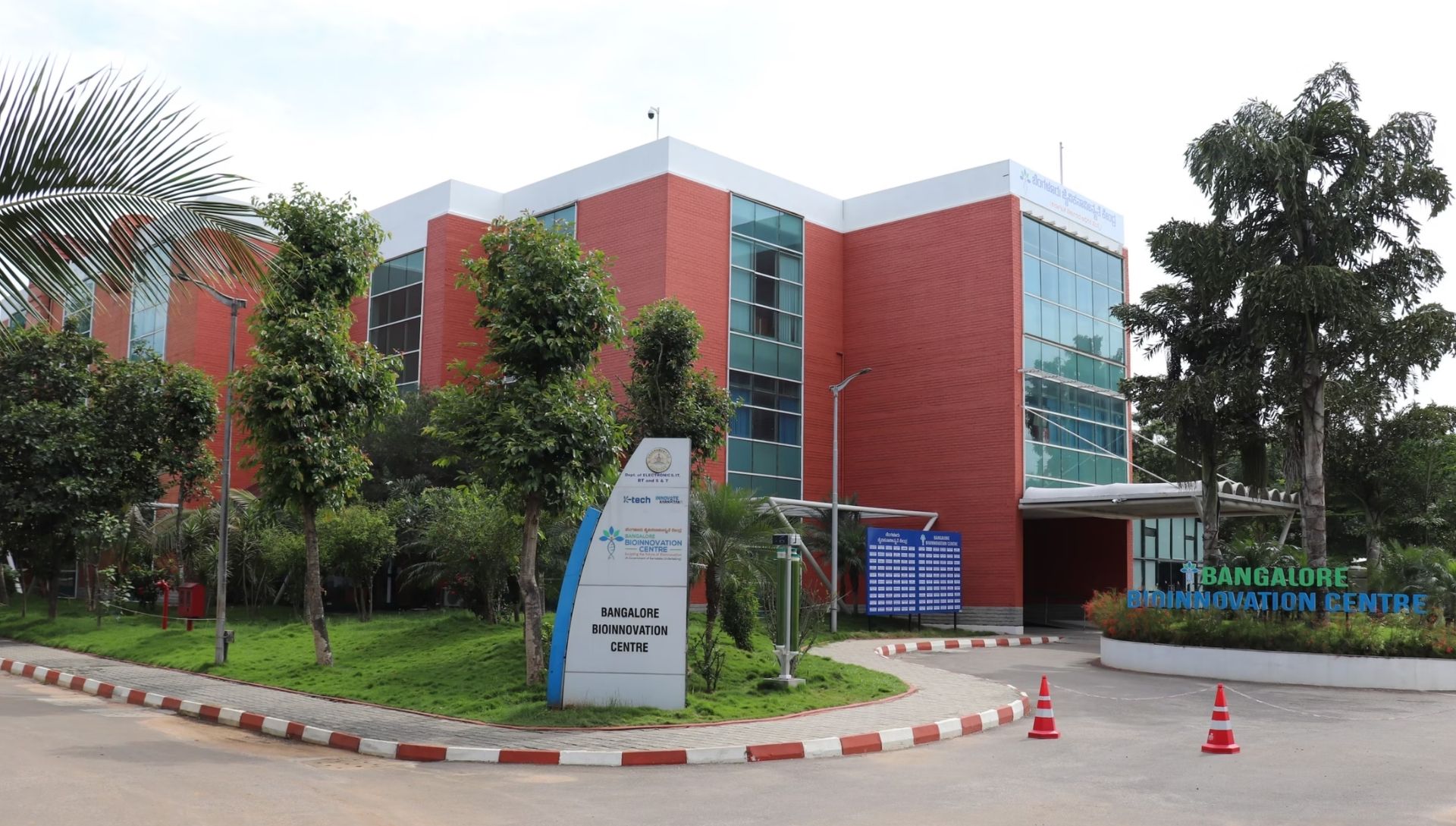
At Bangalore Bioinnovation Centre, in Bengaluru’s Electronic City, that problem becomes a question of access. The government-backed, not-for-profit incubator puts laboratory infrastructure, technical help and business support within reach of young life-sciences companies. Its proposition is practical: founders can develop a product without first constructing an entire research establishment.
- Shared labs and instruments reduce the infrastructure a startup must buy.
- Support spans healthcare, agriculture, food and environmental biotechnology.
- A 2025 fire exposed the risks of concentrating research in one facility.
The expensive part comes first
BBC was incorporated in 2015 and was functioning as an incubation centre in 2016. Its institutional origins matter. Karnataka’s technology administration and India’s Department of Biotechnology backed a facility built around research that takes physical space, specialist instruments and time. This is infrastructure for companies whose products must survive experiments before they survive customers.
The campus sits within Helix Biotech Park, alongside scientific institutions including the Institute of Bioinformatics and Applied Biotechnology. BBC’s central instrumentation model makes the neighbourhood useful. Molecular biology, microbiology, fermentation, imaging and analytical work can sit within a broader support system, rather than becoming separate procurement problems for every incoming team.
The distinction from an ordinary coworking office is wonderfully literal. A desk cannot grow a cell culture. BBC offers incubation suites and bench space, with research facilities and a MedTech centre covering electronics, software and mechanical prototyping. A founder making a medical device may need several of those capabilities in sequence. The business problem is getting them to connect.
A bench has a price. So does independence.
There is a useful clue in BIRAC’s July-September 2021 newsletter: BBC listed a rental of ₹6,000 per bench space. The entry does not establish today’s tariff or specify a billing period. It does make the underlying transaction visible. Access to a working research environment can be purchased in smaller pieces than an entire laboratory.
Public funding supplies the other side of that bargain. A Department of Biotechnology annual report recorded a sanctioned biotechnology-park project cost of ₹32.26 crore. BBC also reports a ₹440.58 lakh BIRAC BioNEST grant for its MedTech facility. These are different project commitments, not a venture funding round or a valuation.
The operating model combines public backing with paid access to space and equipment. Mentorship, funding connections and regulatory guidance support that infrastructure. BBC’s funding page lists seed and proof-of-concept schemes; admission to an incubator should not be read as a promise of a grant. The money still has eligibility rules and decisions attached.
The building became the bottleneck
On January 14, 2025, a fire damaged BBC’s laboratories and common infrastructure. No injuries were reported. Contemporary reporting described damage spreading through interconnected heating, ventilation and air-conditioning lines. Equipment and research materials belonging to multiple startups were caught in the same incident. The convenience of sharing had acquired a painful counterpart: shared exposure.
The state department attributed the outbreak to improper management of flammable solvent in a startup laboratory. That was its reported explanation, rather than an independently established final finding. Preliminary estimates put startup losses at ₹80-110 crore and damage to BBC property at approximately ₹42 crore. The numbers describe early assessments, not audited settlements.
In March 2025, Karnataka announced ₹57 crore for reconstruction, with ₹20 crore earmarked for FY26. The sequence is revealing. Funding a shared facility means accepting responsibility for its continuity as well as its construction. For a young company, replacement space and working equipment can matter as urgently as the next investor meeting.
The lesson for anyone copying this model is operational. Shared instruments need shared rules that people follow. Solvent storage, backup arrangements and continuity planning belong inside the business model. A lower entry cost helps only if the research can keep going.
The next laboratory might be in Melbourne
BBC’s second useful move is to treat market access as something that needs infrastructure too. In September 2024, it signed a Bio Innovation Corridor agreement with La Trobe University. The arrangement connects Karnataka and Victoria through research capabilities, networks and opportunities to test technologies, pursue regulatory pathways and explore customers in both places.
By July 2025, the India-Australia LaunchPad programme had produced a PitchFest involving 12 Indian biotech startups, according to La Trobe. Three were selected for an Australian immersion programme. In November, the university reported BBC’s co-location at its Eagleworks innovation centre. A memorandum had acquired a programme, a selection process and a physical address.
“creating employers than employees”
Dr. Mohamed Adil A.A, BBC Managing Director, describing its entrepreneurial purpose in 2024
That gives BBC a place between scientific institutions, specialist incubators and commercial development. C-CAMP in Bengaluru and Venture Center in Pune are other options founders can investigate. The sensible comparison is specific: which facility has the equipment, expertise and route to validation that this particular product needs?
Copy the access, keep the discipline
The model travels best where expensive capabilities can serve several teams and where someone can maintain them reliably. It offers less advantage to a company that needs little laboratory work, or one whose specialised process cannot fit shared facilities. Access removes a capital hurdle; it cannot establish clinical benefit or persuade a customer to buy.
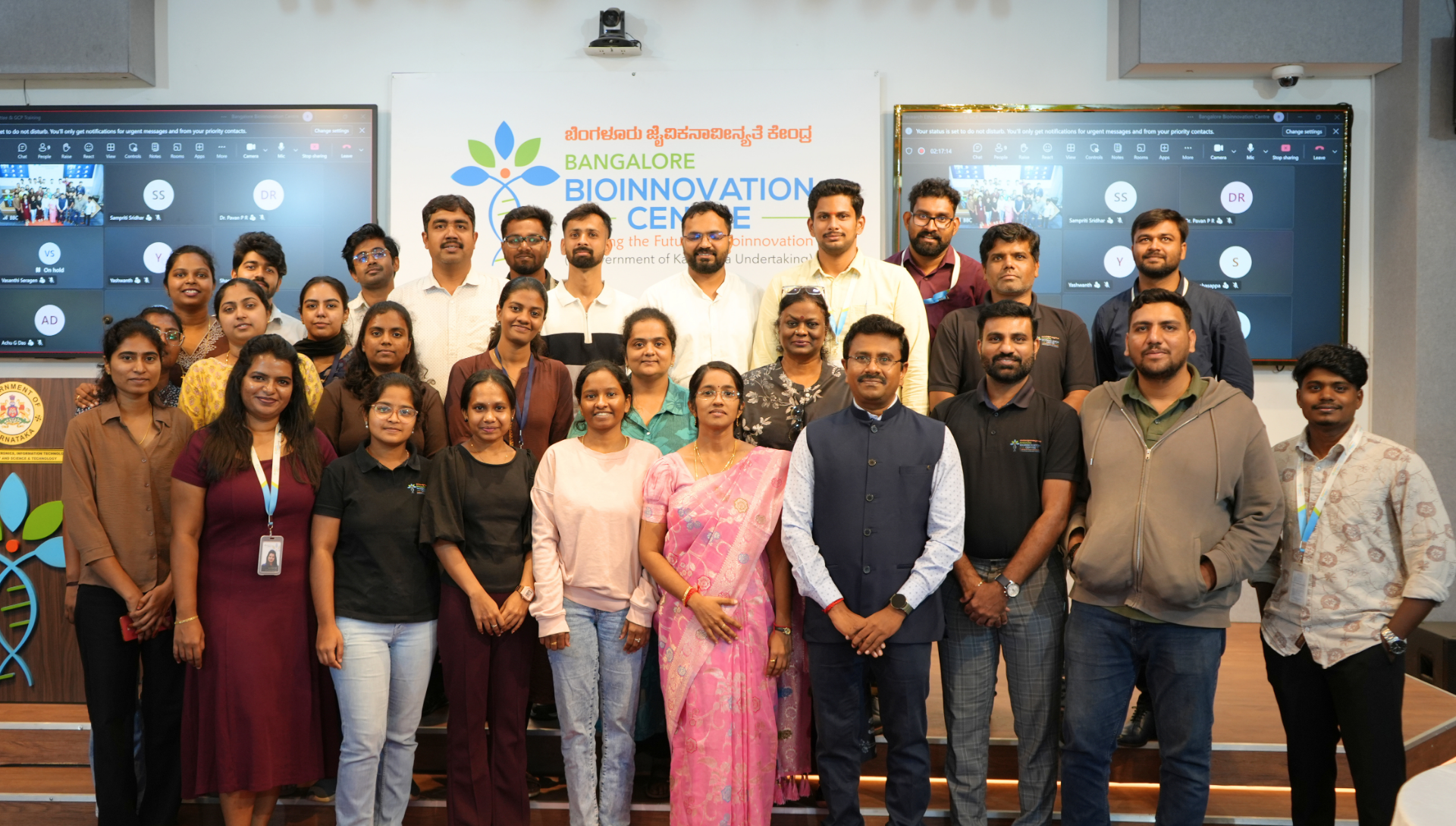
BBC’s October 2026 notices supply a grounded picture of its work: welcoming pharmaceutical-ingredients startup Biovirexa and running research-ethics and Good Clinical Practice training. The latter covered consent, participant safety and a mock ethics-committee review. These are the everyday obligations behind a healthcare product.
For founders, the move to copy is precise: identify the expensive capability needed for the next credible experiment, then find a way to access it before owning it. BBC makes that proposition tangible. The breakthrough may belong to one company. Much of the machinery that makes it possible can be shared.