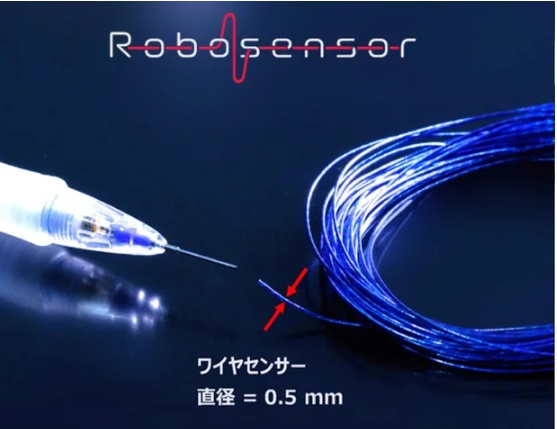
The robot was supposed to help with rehabilitation. Instead, it helped its inventor discover what customers actually wanted. In Hamamatsu, engineer Masayoshi Ohmura developed a massage robot after caring for his son, who was born with a disability. Sales disappointed. Money became tight. Then inquiries about the robot’s tactile sensors pointed toward a more promising business.
Ohmura’s company, Robosensor Technology Research, shifted its attention to the sensing technology. That account, published by the Central Japan Startup Ecosystem in March 2024, offers a useful introduction to the consortium. Here, the startup story gets interesting when an invention meets a buyer, a production line or an awkward commercial reality.
The consortium brings together local governments, universities, economic organizations and companies around Japan’s industrial heartland. It helps founders navigate research facilities, demonstrations, corporate introductions, education and international programs. Its central proposition is geographical and practical: a business developing industrial technology can benefit from being close to the people who manufacture things.
A startup pitch with machinery behind it
Aichi, Nagoya and Hamamatsu joined forces to secure one of Japan’s four Global Startup Ecosystem Hub City designations in July 2020. The organizing structure combined the Aichi-Nagoya startup consortium with Hamamatsu’s startup strategy council. Nagoya hosts the secretariat. The founders of this undertaking were institutions with regional responsibilities, and its ambitions were correspondingly regional.
That structure matters. A researcher looking for commercialization support, an overseas company seeking Japanese customers and a manufacturer hunting for new technology have different needs. The consortium provides a shared route into organizations that can respond. Its website sorts support by purpose, including subsidies, mentoring, collaboration partners, workspaces and overseas expansion.
The local industrial mix gives that directory substance. Automotive businesses sit alongside machinery, chemicals, materials and electronics. The consortium identifies Nagoya University, the National Institute of Advanced Industrial Science and Technology, and the Fine Ceramics Center among the region’s research institutions. These are useful neighbors for founders whose products need equipment, engineering expertise and a demanding first test.
New collaborative business creations annually, as reported on the consortium’s deep-tech page. The figure measures reported activity, not proven commercial success.
The customer wanted the sensor
Ohmura’s initial idea grew from a specific family problem: providing rehabilitation massage at home. His robot’s weak sales exhausted the funds he had set aside. He entered an acceleration program and won business contests backed by two local banks, but financing further robot-hand development remained difficult.
Interest in the wire sensors changed his priorities. The company began concentrating on the component, with potential applications in industrial, medical and robotics settings. In his account, Hamamatsu’s machinery businesses and automotive plants made the location valuable; JETRO Hamamatsu also helped with overseas expansion.
The sequence is instructive: a difficult product launch, financial pressure, outside support and a narrower commercial focus. The robot’s disappointing sales exposed the problem; inquiries identified a possible direction. Readers can copy the habit of tracking which part of a demonstration attracts serious customer questions. That is a more useful signal than applause for the complete machine.
The introduction is the service
For a founder, the network’s value appears in quite ordinary requests. Who can test this? Which company has this problem? Where can we find someone who knows how to sell it? Quastella, a Nagoya University venture developing cell-quality management technology, supplies a concrete example.
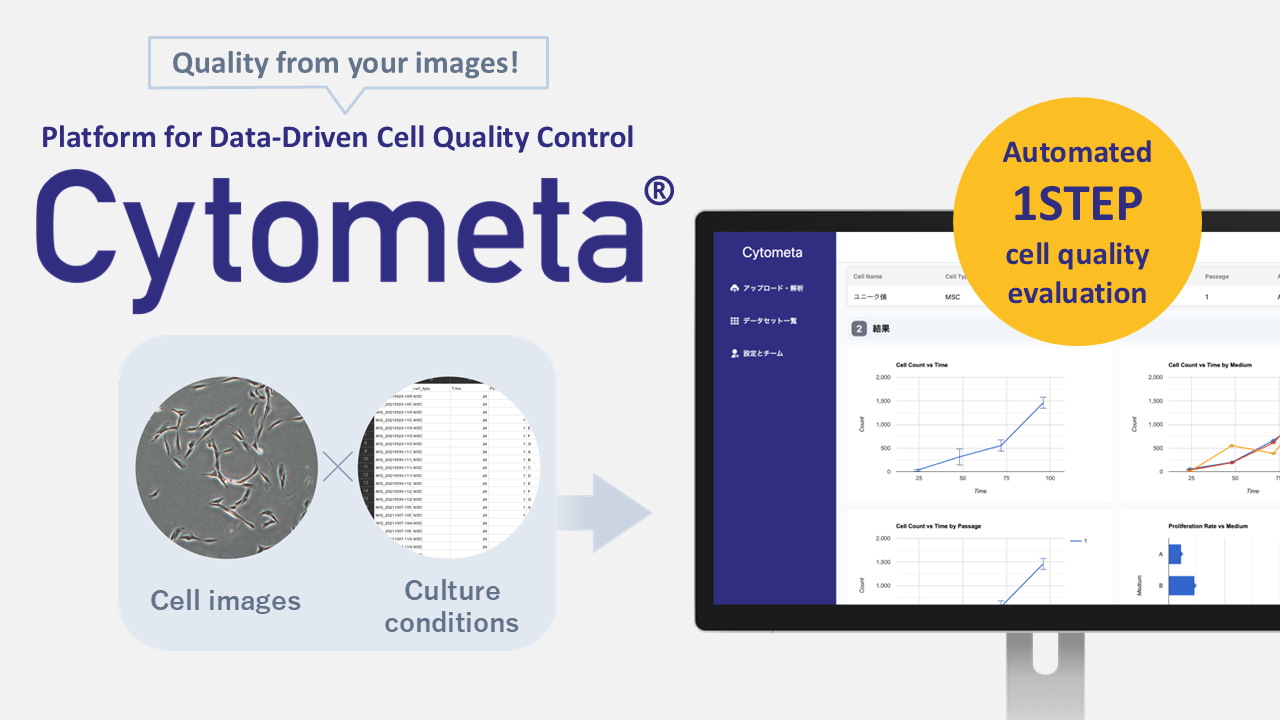
Its Cytometa product uses AI and image analysis to quantify cell counts and morphology, helping turn visual assessments into data. In a December 2024 interview, CEO Yuto Takemoto described support from Aichi subsidy programs and DeepTech Launchpad, alongside university and local startup communities. He also recalled receiving specific recommendations soon after asking for help finding sales personnel.
The lesson extends beyond biotechnology. Commercialization requires people who can explain a product’s relevance, recruit colleagues and reach buyers. Takemoto credited local entrepreneurs with encouraging clearer communication about real-world problems. In that telling, the region’s contribution included both money and conversations that made the business easier to explain.
Several doors, each with its own rules
J-Startup CENTRAL is the consortium’s selective support program for promising companies seeking international growth. Its published eligibility covers headquarters in Aichi, Gifu, Mie or Shizuoka, generally within 20 years of founding. Selection considers vision, originality, growth potential, international prospects and business progress. The first cohort was selected in January 2021.
Benefits include business matching, active promotion and specified advantages within government support schemes. In March 2026, the sixth cohort added 12 companies, including Quastella, medical-AI business nonat and materials company FiberCraze. This is a way to concentrate attention on selected businesses; each still has to persuade buyers and investors.
Other routes address different stages. The consortium points to A-IDEA for corporate collaboration and to NAGOYA CITY LAB and HATCH TECHNOLOGY NAGOYA for demonstration support. Entrepreneurs can use the portal to identify a program that matches their immediate task, then examine the operator’s application requirements and timetable.
Put technology into a real setting
Find a relevant problem owner
Investigate another market
Illustrative routes through separate programs. Participation and selection vary.
What the trip costs
The economic arrangement is spread across public agencies, corporate partners and program operators. Founders encounter specific services with specific conditions. A useful example is JETRO’s Global Startup Acceleration Program, or GSAP, which connects Japanese startups with overseas acceleration support.
For its 2026 program, JETRO describes participation as equity-free and covers the program participation fee. Companies pay flights, transportation, accommodation, relevant visa and insurance expenses, and other listed costs, including travel for domestic bootcamps. A subsidized place therefore still requires a travel budget and time away from daily operations.
The program also asks for business-level English, participation by someone with decision-making authority and commitment to the program schedule. Those conditions shape who can benefit. A founder preparing for overseas sales may find the investment sensible. A team still struggling to define its domestic customer should first decide what evidence an international trip would help collect.
Program participation fee
Travel, accommodation, visas, insurance and other listed expenses
A building, a parking lot, a wider market
STATION Ai gives the region’s startup activity a substantial physical address. Operated by a SoftBank subsidiary, the Nagoya facility opened to members on October 1, 2024. Its seven floors contain 23,000 square meters of space, with coworking, fixed desks and private offices alongside publicly accessible amenities. The building was designed to accommodate robot demonstrations.
At the time of opening, SoftBank expected about 500 startup members and 200 partner companies by the October 31 grand opening. Those were opening-period expectations for STATION Ai. They describe one facility within the wider ecosystem, where introductions and shared working space are intended to support commercial relationships.
UrbanChain shows why an overseas founder might choose this region. The Hong Kong-origin mobility business had already trialed smart parking in Fukuoka. It subsequently joined the 500 Global & Aichi Landing Pad program and described receiving potential-client introductions through STATION Ai and SoftBank. Its CEO pointed to Central Japan’s automotive culture and mobility market as reasons to expand there.
Location, in this case, followed the product. Parking technology benefits from access to property operators and a car-oriented market. The same reasoning is useful when weighing Central Japan against Tokyo, Osaka-Kyoto-Kobe or Fukuoka: identify the customers and technical partners that matter, then compare the networks that can bring them within reach.
A pilot needs somewhere to go
The proximity to corporations carries a familiar commercial risk. In an interview published in January 2025, AlchemistX’s Laurent Rains described startups securing proof-of-concept relationships that could stretch into long consulting engagements. His concern was whether the underlying product could scale beyond that relationship.
“The biggest danger to Japanese startups is staying in the theory zone.”
Laurent Rains / AlchemistX / January 2025
The criticism comes from someone working with the region. AlchemistX accompanied four Central Japan startups to Chicago’s International Manufacturing Technology Show in 2024. Its support included overseas market understanding and customer discovery. The point of leaving a comfortable local relationship is to learn whether other buyers recognize the same need.
That suggests a practical discipline for founders: agree on what the pilot will establish, who will judge the result and what a purchasing decision would require. A relationship becomes less useful when every new request produces custom work without clarifying the repeatable product. Industrial access pays off when a team can convert what it learns into something another customer can buy.
The next founders are still in class
The consortium also works further upstream. Its entrepreneurship agenda spans schoolchildren through working professionals, and its English-language overview describes Tongali as a university platform encompassing 26 institutions. The purpose is to help students, researchers and faculty develop entrepreneurial skills alongside technical expertise.
The work continues beyond the original hub designation. Central Japan received second-phase global hub selection in June 2025. By September 9, 2026, its portal was advertising recruitment for Aichi’s technology commercialization program and the AiVoyage student internship initiative. Research commercialization and talent development remain visible parts of the offer.
For someone considering the region, the useful first move is a specific request: a pilot site, a manufacturing partner, a sales introduction or a route overseas. Bring a clear customer problem to the relevant program. Then pay attention when the people across the table ask about the small sensor instead of the impressive robot.