In a university report from 2016, tucked among grants and contracts, sits an unusually modest entry: $6,300. Wright State University would provide Ikove Capital Partners with access to Twitris, a social-media analytics technology, and support for evaluating its commercial potential. The sum would barely furnish a startup office. Yet the line item captures something essential about Ikove: before there is a company worth financing, somebody must work out whether an invention can become one.
- Ikove builds businesses around research institution technologies.
- Its Startup Nursery supplies commercial teams, early capital, and market support.
- The examples stretch from factory monitoring to tissue-repair materials.
A $6,300 clue
The contract’s language is revealing. It promises access and support so Ikove can evaluate the technology and potentially run commercialization trials. Evaluation comes first. Investment headlines come later. There is no suggestion that a promising algorithm automatically deserves a sales department, or that a patent supplies its own customers.
That is a useful distinction for anyone who has watched a research demonstration and thought: surely somebody will buy this. “Somebody” is doing heroic work in that sentence. Finding the buyer, deciding what to sell, and assembling people who can deliver it are separate problems. Ikove has made those problems its business.
The invention needs colleagues
Founded in 2014, Ikove describes itself as a venture development company. Its Startup Nursery scouts research, vets technologies, and builds independent businesses around intellectual property. The arrangement puts it upstream of a conventional venture round, when the operating company may still need to be invented.
For a researcher, the attraction is practical. A technology-transfer office can help license an invention; an investor can supply capital. Ikove adds company formation and team assembly. Those are different jobs, requiring commercial judgment alongside scientific expertise. The inventor does not have to possess every skill simply because the idea began in their laboratory.
Rodolfo Bellesi, Flavio Lobato, and John D’Orazio are identified as co-founders in Ikove’s 2018 fund announcement. Bellesi’s background includes engineering and Ohio State. Lobato’s includes investment management. The company’s public values emphasize collaboration and relationships, a sensible creed for an enterprise whose work requires researchers and business operators to cooperate.
- 01ResearchFind the intellectual property
- 02EvaluateTest a commercial application
- 03AssembleBuild the operating team
- 04LaunchFund the path to market
The phone case that found a factory
Consider Nikola Labs, the first company launched by the Nursery. Ohio State’s account of its early student team describes technology developed in the ElectroScience Laboratory that harvested radio-frequency energy. The initial application was a phone case. In June 2015, Nikola announced a Kickstarter campaign for iPhone 6 and Galaxy S6 cases.
It was an appealing demonstration: a familiar object attached to unfamiliar science. But a demonstration is a starting point for choosing a market. In a later interview, Lobato described the decision to move beyond phone cases toward powering connected devices and, specifically, industrial maintenance. The original application gave way to a different commercial ambition.
By April 2018, Nikola was announcing a predictive-maintenance system that tracked equipment vibration and temperature with wireless sensors. The customer had become a manufacturing facility, with maintenance teams trying to avoid unplanned downtime. The value proposition could be discussed in the language of production, repairs, and equipment availability.
Now called AssetWatch, the business announced a $75 million Series C in April 2025, led by Viking Global Investors. Its August 2026 partnership with Oden Technologies seeks to connect equipment-health information with production data. That is a considerable journey from a handset accessory, and a reminder to distinguish an invention from its first packaging.
“Ikove brought an infrastructure of support and partnership”Will Zell · testimonial on Ikove’s website
One material, four doors
ParaGen offers another view of the model. It was formed as a joint venture between Nanofiber Solutions, which developed the core scaffold technology, and the Ikove Startup Nursery, which supplied funding and go-to-market strategy. The underlying science had already received more than $5 million in grant funding over more than a decade of development.
Four businesses tailored the platform to distinct clinical markets: RenovoDerm for wounds, Atreon Orthopedics for orthopedic applications, Vascular Genesis for peripheral vascular uses, and Tarian Medical for hernia repair. A common material could support several commercial paths. Each path still needed its own product decisions and evidence.
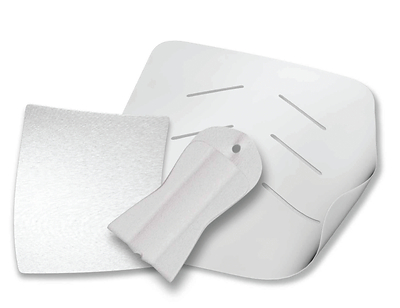
In May 2026, Atreon and RenovoDerm announced a merger, bringing their synthetic biomaterials and commercial operations together. The development gives the branching strategy an interesting second act: technologies separated by market can later share an organization again.
What the money actually bought
Keep the financial buckets separate. ParaGen announced $4.1 million in seed funding in December 2017, led and organized by Ikove. A $3 million bridge round followed in November 2018; its announcement said 70 percent of the funds came from ten countries. That was capital for a portfolio business.
Different purposes, different recipients. These figures are not additive.
Ikove’s $10 million SUN Fund, announced in December 2018, was a vehicle for launching more companies and allowing outside investors to co-invest. Ikove participates at founder-level equity. Its economic interest therefore follows the companies it helps build. The fund’s size describes available venture-building capital; it does not describe a price for using the Nursery.
Borrow the sequence
A researcher can approach Ikove about commercialization. An operating executive can consider the team-building opportunity. Investors can inquire about the Nursery and portfolio financing. Across these groups, the useful question is what capability is missing between the technology and a customer.
The transferable lesson is to test an application before making it your identity. Give scientific and commercial work clear owners. Choose a buyer with a concrete problem. This approach depends on usable intellectual property, credible validation, and people willing to build together. A venture studio cannot manufacture those conditions by naming itself one. The $6,300 contract remains a pleasing place to begin: pay for the chance to learn what deserves the next cheque.
Follow the work
Explore Ikove and its Startup Nursery process. Follow on LinkedIn, X, Instagram, and Facebook.
Read AssetWatch’s updates or Ikove’s essay on early funding. Listen to Flavio Lobato’s commercialization interview and Rodolfo Bellesi on Investor Connect. Watch the 2015 Nikola student-team demonstration, linked by Ohio State.