A student project has a familiar life cycle. It begins with a deadline, acquires wires, slides and a hopeful acronym, survives a judging panel - then disappears into a cupboard or a résumé bullet. SU Knowledge Hub Foundation was built to interrupt that ending. From a dedicated centre in Hyderabad, the nonprofit academic incubator tries to carry ideas through the less photogenic work after applause: customer discovery, prototype repair, intellectual property, business models and the first small cheque.
The foundation belongs to the orbit of the Sultan-Ul-Uloom Education Society and is based at Muffakham Jah College of Engineering and Technology, or MJCET. It was founded in 2022 and its physical centre was inaugurated on February 8, 2023 by Jayesh Ranjan, then Telangana's principal secretary for industries, commerce and information technology. Its brief was deliberately wider than engineering. Pharmacy, law, business and education students were invited in, as were founders from other colleges.
“40% of the students in the hub would be outsiders, and from various campuses.”Zafar Javeed, Sultan-Ul-Uloom Education Society, at the 2023 launch
That outside share is the telling detail. College incubators can become handsome rooms serving an internal accreditation exercise. SU Knowledge Hub positioned itself as porous: rooted in one education society, but useful to a city full of students. Its stated users include students, faculty, researchers, alumni and early-stage entrepreneurs. Its sector list is cheerfully undisciplined - AI and IoT sit beside healthcare, agritech, drones, smart manufacturing, renewable energy and ecommerce.
The funnel, not the fireworks
Six hundred people entered the shallow end
The clearest view of the operation comes from MJCET's submission for India's 2026 innovation ranking. In financial year 2024-25, it reported 600 participants in pre-incubation activity and 37 participants incubated. Two years earlier those figures were 200 and 10. The widening top of the funnel matters: the hub is recruiting curiosity at campus scale, while moving a much smaller group into the resource-heavy part of company building.
From campus curiosity to active incubation
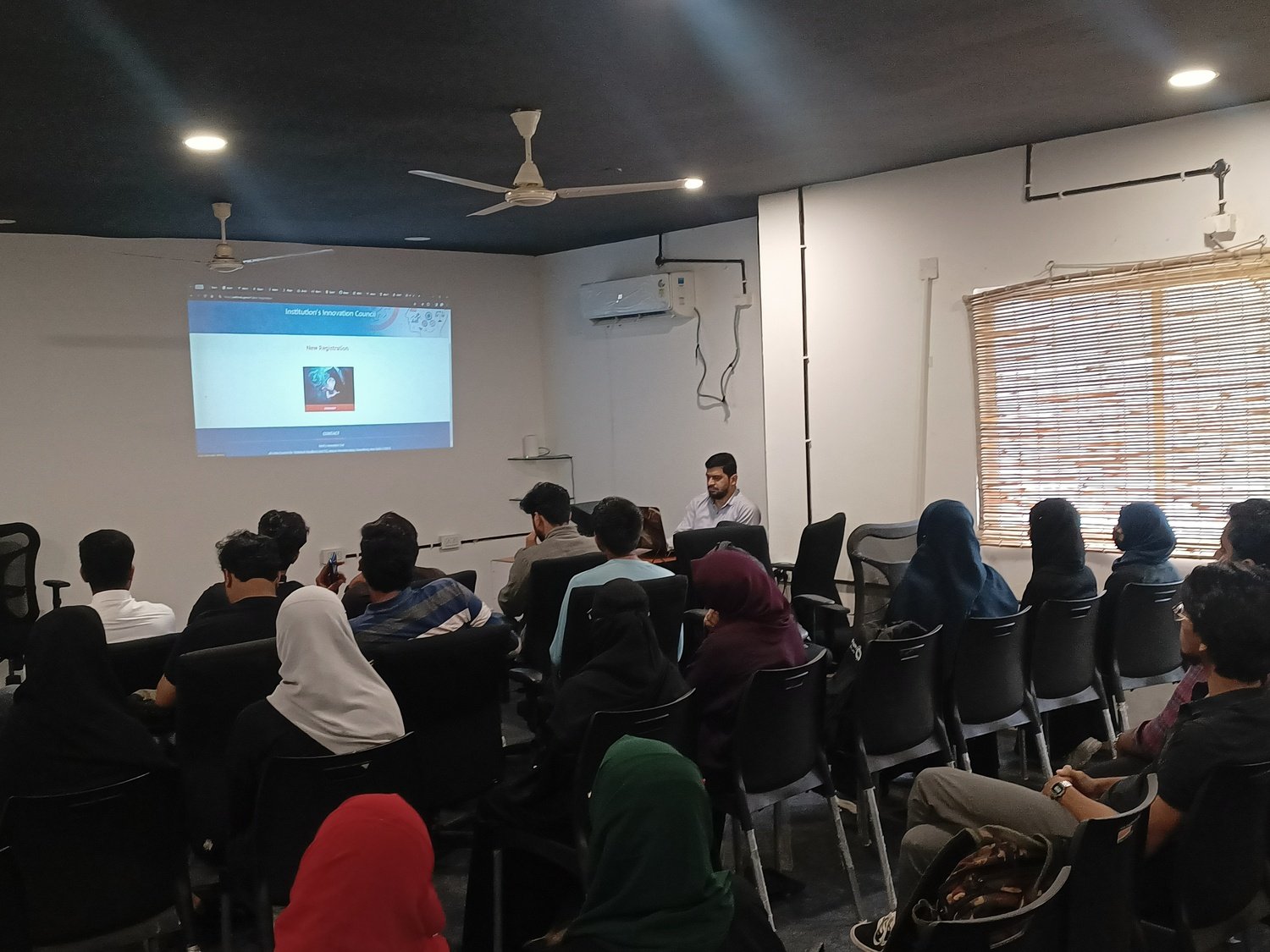
Pre-incubation is where an idea gets interrogated before anyone pretends it is a company. SU Knowledge Hub describes personalized guidance, workshops, experts, mentors, peer support and access to funding opportunities. The incubator proper adds hardware and software labs, coworking, prototype and MVP development, intellectual-property facilitation, business development, investor readiness and go-to-market planning. In plain English: build the thing, find out who needs it, and learn whether they will pay.
For a prospective founder, the menu is practical. A student with a rough concept can enter pre-incubation, use workshops to define the problem and lean on mentors for market research. A team that survives those questions can use technical guidance and lab infrastructure to assemble an MVP, then work on intellectual property, registration, a route to market and an investor-ready account of the business. Researchers can use the same pathway for technology transfer; faculty can bring applied work closer to industry; an existing early-stage startup can plug gaps in prototyping or business development. The offering is a chain of interventions rather than a single course.
Its customers are therefore not the eventual users of all these products. They are the builders before the product has settled: the engineering student with a detector, the pharmacy student thinking about remote care, the alumnus testing a property service, the researcher holding a patent without a sales plan. Industry partners and investors sit on the other side of the platform, supplying expertise, problems, connections and capital. The foundation's job is to make those two groups easier to introduce.
The portfolio refuses to pick a lane
The hub's public startup roster is less a thesis than a tour of problems its students can see. Emiratiyo Estate uses virtual reality in property. Henceprove Education is developing an AI-based adaptive-learning platform for competitive exams. Spectrumpure is working on an AI-assisted UV-Vis-NIR sensor intended to detect impurities in edible oil. All three appear as DPIIT-recognized ventures in MJCET's innovation filing for 2025.
NEX-I
A public-safety prototype that watches CCTV feeds for firearms and sends alerts when its detection model finds one.
PharmaBot
A medication-reminder device with vital-sign monitoring and remote data access for patients and physicians.
Bestbuddy
A one-stop home-services marketplace that says it began with three electricians already onboarded.
SmartPlan
An AI and augmented-reality toolkit intended to automate repetitive layout work for architects and engineers.
Then come steam-based mobile car cleaning, a dermatology marketplace, smart-home ideas and a networking product for builders. The mix would make a specialist venture capitalist twitch. For an academic incubator, it is logical. The common asset is not a sector monopoly; it is access to students from different disciplines, shared labs and mentors who can help an early team discover whether a technically possible project deserves to exist.
A generalist in a city of famous specialists
Hyderabad does not lack startup infrastructure. T-Hub is the conspicuous scale player; T-Works gives hardware builders serious fabrication capacity; WE Hub focuses on women entrepreneurs; AIC-CCMB and other life-science programs offer domain depth. University-linked incubators such as J-Hub and CIE at IIIT Hyderabad create their own pipelines. SU Knowledge Hub is not a substitute for all of them. It occupies the earlier, messier layer where a multidisciplinary student team may not yet know which specialist door to knock on.
Its advantage is proximity. The engineering lab, pharmacy classroom, law college and business faculty are part of the same education-society network. That can shorten the walk between “we built it” and “is this safe, protectable and sellable?” Its public network includes T-Works and WE Hub, while its programs point participants toward government routes connected with MSME, the Ministry of Education, DST, AICTE and Startup India. The sensible competitive position is connective tissue: prepare young ventures locally, then help the promising ones reach deeper pools of machinery, expertise or money.
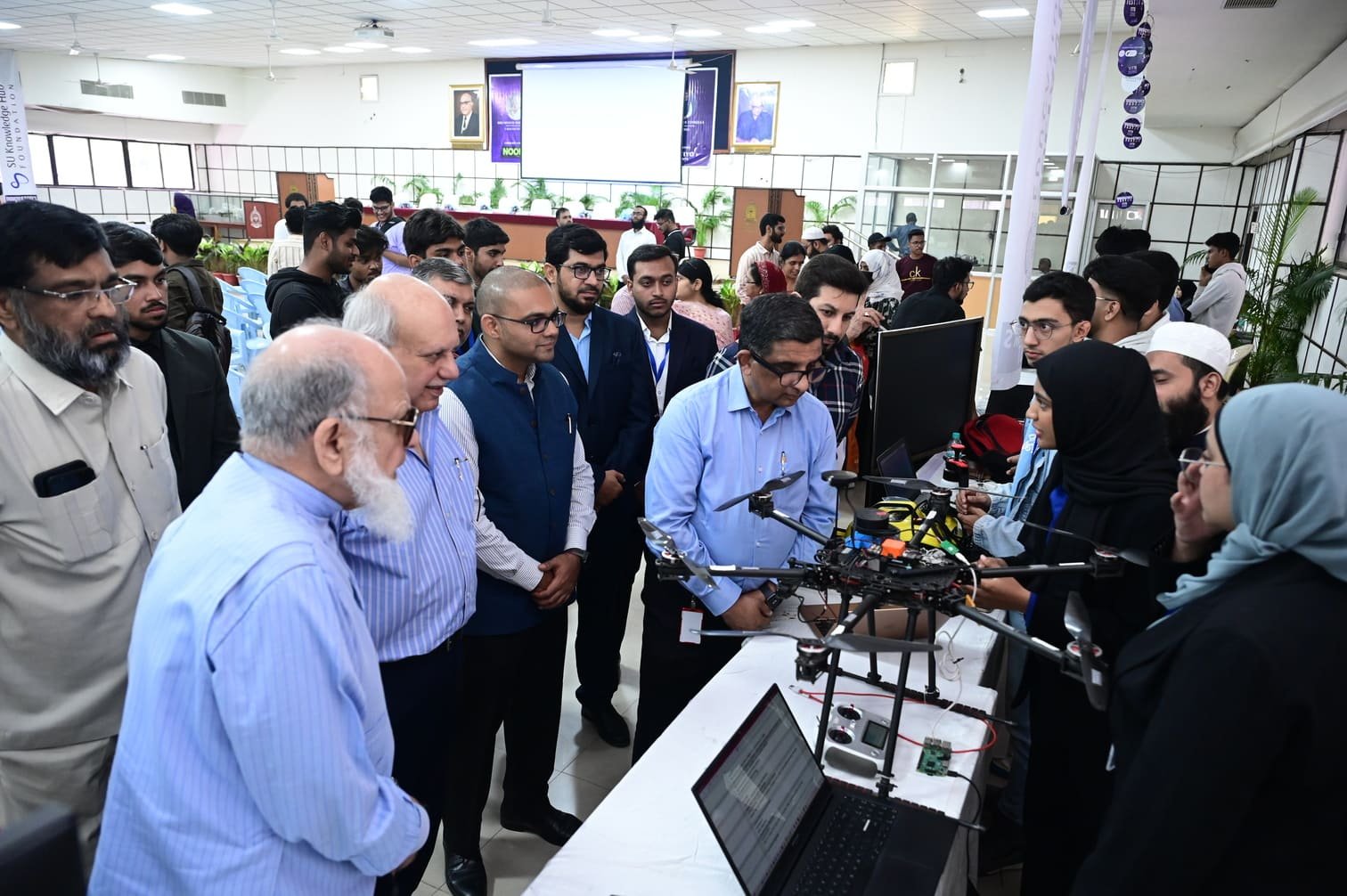
Innovator's Fest 2024 made that range visible. Held at the SUES campus with Emiratiyo Investments as associate partner, the event assembled 82 models across software, hardware, LawTech, EdTech, AgriTech and DroneTech. Students arrived from CBIT, MGIT, Methodist, Lords and several law, pharmacy and education colleges around Hyderabad. Food and business stalls shared the program with prototypes - a useful collision between invention and the ancient discipline of getting a stranger to open a wallet.
The cost of the middle
Not every useful cheque needs six zeroes
The MJCET filing puts numbers on work that incubators often describe only in nouns. For FY 2024-25 it recorded ₹300,000 of pre-incubation expenditure and ₹2.4 million of incubation expenditure, alongside ₹2.11 million in income generated through incubation activities. That is roughly ₹500 of reported pre-incubation spending per participant and about ₹64,865 of incubation spending per incubated participant. They are institutional ratios, not prices charged to founders; SU Knowledge Hub's public program material does not advertise a standard fee.
Incubation activity for 37 participants.
A nonprofit operation with a measurable revenue stream, not a disclosed valuation.
Total disclosed across Emiratiyo, Henceprove and Spectrumpure.
MoE Innovation Cell support reported for Spectrumpure.
The direct investments are almost comically small beside mainstream venture rounds: ₹41,800 each for Emiratiyo and Henceprove, and ₹16,800 for Spectrumpure. But “small” is not the same as pointless. At idea stage, money for a sensor component, a test, a registration or a customer visit can move a project to its next piece of evidence. Spectrumpure later received ₹500,000 through the Ministry of Education Innovation Cell. The sequence illustrates the incubator's place in the market: earlier than a seed fund, more applied than a classroom, and more generalist than Hyderabad's specialist biotech or hardware centres.
Government schemes add leverage beyond those foundation cheques. The same institutional filing records five innovation grants in 2023-24 and 2024-25 under MSME hackathons and the Ministry of Education's YUKTI initiative, together worth ₹4.95 million. The entries are reported at institution level, so they should not be mistaken for SU Knowledge Hub's own funding round. They do show the environment in which the incubator operates: public innovation money can follow a team once the campus has helped turn an idea into a legible proposal.
The hub's real product is not a startup. It is a sequence: problem, prototype, evidence, company.
The useful parts are boring enough to copy
For another college, the replicable lesson is not the festival backdrop. Start with a broad, cheap pre-incubation layer; reserve expensive lab and mentor time for teams that keep showing up; bring engineering, pharmacy, law and business students into the same room; and expose the work to outsiders. A property platform needs contracts and sales, not only code. An oil-testing device needs calibration, regulation and manufacturing. A health bot needs clinicians and a sober conversation about data.
There is also value in modest funding tied to a concrete next step. The hub's disclosed investments would not bankroll a launch campaign, but they can buy proof. Pair that with public showcases, government programs and industry connections, and a campus gains a ladder rather than a single annual event. The model depends, however, on patient institutional backing, real laboratories, mentors who answer after demo day and a dense local network. Strip away those conditions and the program risks becoming workshops without follow-through.
SU Knowledge Hub is still young. Its portfolio companies are early, its cheques are small and its outcome data describe prototypes, registrations and modest turnover rather than exits. That is precisely why it is worth watching. Most university entrepreneurship happens before the metrics venture investors prefer. The foundation is operating in that uncertain interval, where a student stops calling something “my project” and begins asking the more dangerous question: could this be my company?
Keep exploring