Alex Arevalos began with an invention built largely at his kitchen table and a decision to start a company. He was beginning a doctorate. He had also recently watched The Social Network, a film that makes company formation look rather more cinematic than a spreadsheet usually permits. The details of running the venture would follow. That was the wager.
The career that followed took him through Saranas, Alleviant Medical and Starling. It also took him through an education in the parts of entrepreneurship that survive after the excitement of an idea: explaining the work, finding collaborators, organizing a team and keeping a company moving. His academic training gave him a discipline for investigating problems. Running companies supplied additional problems, often without the courtesy of an examination schedule.
Today, Arevalos leads UBiosis Health. Starling remains a substantial chapter in his story, including its place in Y Combinator’s Winter 2022 batch. Look across those chapters and a useful question emerges. What does an inventor have to learn to become the person responsible for the whole enterprise?
The inventor learns to run a company
His public professional biography supplies a surprisingly broad answer. Arevalos describes experience in fundraising, business development, value analysis, operations and regulatory strategy, alongside leading technical teams. There is enough work in that list to interrupt anyone’s original job description. It explains why a founder’s career can be difficult to summarize with a single occupation.
An engineer can spend a day asking whether a design works. An executive must also ask whether the organization can deliver it, whether the budget holds and whether the people involved understand the same goal. Those questions occupy different columns of the same business. Being technically capable does not make the other columns disappear.
Arevalos’s interests on his F6S profile include engineering, fundraising, storytelling and team management. Storytelling sits comfortably in that company. A founder must translate: from the language of a design to the language of a colleague, a customer or an investor. The work changes with the listener. A pitch cannot simply be a technical description wearing better shoes.
“you are not your startup”
Alex Arevalos
That brief reminder appears among the advice he offered other founders. It leaves space between a person and an organization, a useful distinction in a career where titles keep changing. A company can absorb immense attention. A biography should still leave room for the person learning how to run it.
Rice, then a room full of different minds
Rice University supplies two firm points in the chronology: a bachelor’s degree and a doctorate in bioengineering. In April 2012, the university also named Christopher Alex Arevalos among its National Science Foundation Graduate Research Fellowship recipients. The longer name in that announcement belongs to the founder generally known as Alex.
The fellowship recognition places him within the research side of Rice’s community. The later entrepreneurial record shows him returning in a different capacity. Universities can appear on résumés as places people leave. In Arevalos’s story, Rice keeps appearing as a place where work is recognized, ventures are presented and collaborators’ careers intersect.
He joined TMC Biodesign’s 2016-2017 class. The program brings people with different backgrounds together around a shared process of identifying problems and building ventures. Its founder roster places him in the same cohort as Jacob Kriegel, Albertien Greijdanus and Avni Patel, who became his Alleviant colleagues.
The shape of that team matters. Different experience gives people different questions to ask before they agree on a solution. A technical lead does not have to supply every perspective. The fellowship setting made collaboration part of the structure, rather than a pleasant addition once the invention was finished.
Rice University
Rice Launch Challenge
Winter cohort
The audience gets a vote
In 2017, Arevalos and Kriegel presented Alleviant at the Rice Launch Challenge. The company won Best Alumni Team, worth $6,000, and Audience Favorite, worth another $2,000. A pair of awards makes a tidy milestone. The two labels also preserve something more interesting: the venture received recognition through two different decisions.
The alumni award placed Alleviant within a university competition. The audience prize registered the response of people listening. That second verdict is particularly appropriate for a founder who lists storytelling among his interests. The work had to travel from the team’s understanding into a room full of other people’s attention.
Prizes cannot settle every question about a company. They do mark occasions when a team has to make its case in public, within the constraints of a competition. Arevalos’s appearance with Kriegel gives this stage of the career a concrete scene: two colleagues representing a venture, rather than a solitary inventor accepting a destiny.
Best Alumni Team
Audience Favorite
A company with more than one beginning
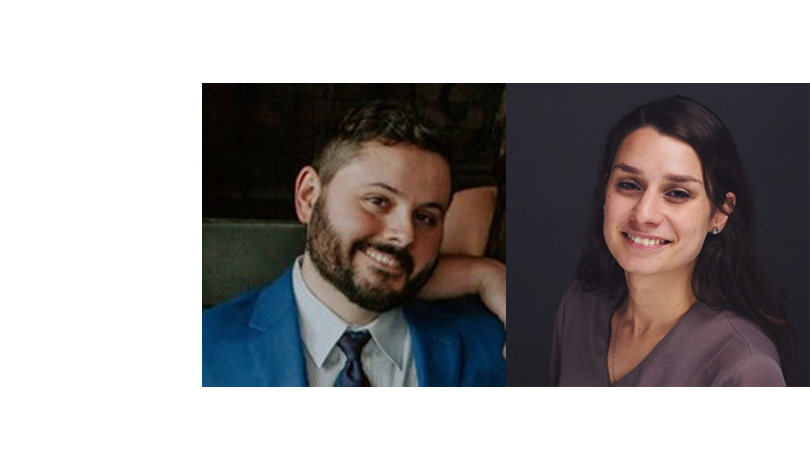
Starling’s story began with a Rice research project involving Sylvie Kalikoff, Hannah McKenney and Drew Hendricks. The three engineers were members of the same small master’s cohort. Arevalos’s leadership entered a venture with that history already attached. Rice’s account of the company’s progress distinguishes the original student founders from the experienced entrepreneur leading it.
This is a more useful origin story than one that forces every person onto the same starting line. The engineers brought the project’s beginnings. Arevalos brought experience from earlier company building. Their paths met around a venture, and the resulting team had more than one kind of knowledge to draw upon.
Y Combinator records Starling’s founding year as 2019 and its accelerator batch as Winter 2022. Those are company milestones. For Arevalos, they sit within a longer career, after Saranas and Alleviant. Starling gave his accumulated experience another setting, with a new team and another set of decisions.
He also expressed an unusually practical view of competition: “In our case, our competition is one of our best assets.” The observation treats another company’s progress as something to learn from. A market can supply evidence as well as opponents. For a founder, watching closely may be more useful than rehearsing indignation.
A different room, a different scale
Arevalos later described Y Combinator as an experience that changed his sense of what a company could become. His comparison involved food: encountering a different quality of steak and reconsidering what beef could be. The metaphor is memorable because it makes an abstract change in ambition seem like an ordinary, slightly expensive discovery.
His account connects that change to spending time around founders building software companies at a different pace. By then, he had years of experience. The experience did not prevent a new environment from making him reconsider timelines and scale. A founder can arrive with a substantial history and still find that the room changes the question.
His later work with AI included using a custom assistant to organize interviews and help sort possible directions during a venture-building process. He described shortening that process from nine months to three. It is his account of a particular project, rather than a universal timetable. Its significance here is the change in how he approached the work of discovering what to build.
Houston gives the experience back
By 2023, Arevalos was appearing in Houston as someone with experience to share. The Greenlight Guru True Quality Roadshow included him on a founder panel with Joanna Nathan and Larry Lawson. The event brought discussion of leadership, company culture and the local entrepreneurial community into the same room.
There is a pleasing change of position in that appearance. Earlier parts of his career placed him among fellows and competitors. Here, he was helping provide the conversation. A founder’s accumulated experience becomes useful to a community when it can be discussed beyond the walls of the company that produced it.
He also spoke at the Ion in March 2023, announcing that he would share his story and lessons from his years of entrepreneurship in Houston. Rice, TMC Biodesign and the Ion are distinct institutions, but they give the career a recognizable geography. Houston repeatedly supplied places to study, form teams, present work and compare experiences.
Those connections keep the biography from floating into a succession of company names. A venture is built somewhere, among particular people. Arevalos’s story carries a local record of those encounters even as accelerator programs and later companies bring him into other circles.
The next company keeps the education
UBiosis is now the company attached to Arevalos’s current professional profile. Rice Nexus has also identified him as its leader, linking his newest work to the university community that appears throughout his career. The venture changes. The connection to Rice continues.
His recent public activity includes an announcement that he has moved to San Francisco. That adds a new location to a career long associated with Houston. It also makes the earlier chapter easier to see as a chapter: formative and substantial, with room for a different setting afterward.
There is a personal thread running through the professional changes. In his writing about entrepreneurship, Arevalos turned to Albert Camus and Sisyphus to think about persistence. He was interested in how a person responds when effort has to be repeated, and in finding some satisfaction within the work itself.
That is a modestly demanding aspiration. It requires returning to the task without assuming the task owes you a happy ending. The kitchen table, the fellowship, the competition and the next company are all places where the work resumes. Arevalos’s education as a founder continues with the next problem and the people who join him in trying to solve it.