In January 2026, TYBR Health announced a small event with a rather large question attached. In Lubbock, Texas, hand surgeon Hanna Tammam had applied its B3 GEL System during a complex flexor tendon reconstruction. He reported that the gel set within minutes and allowed smooth tendon gliding. The repair had a new companion: a temporary layer intended to keep healing tissue from becoming too attached to its neighbors.
Attachment is usually a virtue. Inside a healing hand, it can be a nuisance. Scar tissue can tether a tendon that needs to slide, restricting movement after the structural repair. TYBR has made that interval between a successful operation and a useful recovery its commercial territory.
- The problem: healing tissues can stick together and restrict tendon movement.
- The product: a blue, flowable, bioresorbable collagen-based gel.
- The milestones: FDA clearance in 2025; first U.S. use announced in 2026.
- The next test: turn early use and clinical studies into persuasive evidence.
Blue is a working color
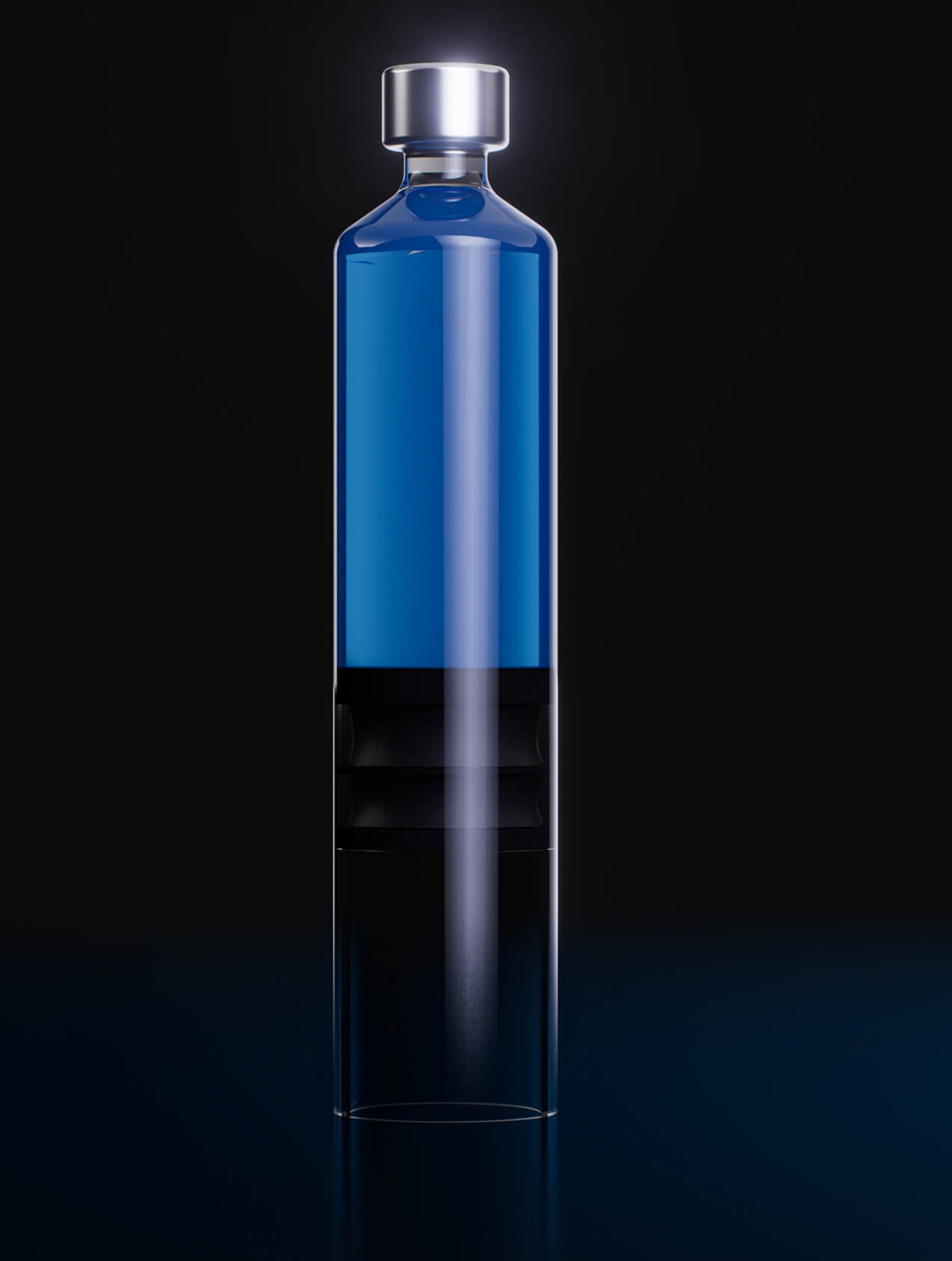
B3 GEL combines a collagen-based extracellular matrix hydrogel with a proprietary delivery system. The material conforms to the application site. Its applicator controls delivery, and its blue additive helps the surgeon see coverage. In a crowded anatomical space, a substance that announces where it has landed has an obvious practical charm.
The intended job is separation during healing. The FDA summary describes a semi-permeable barrier that degrades within 30 days. The product therefore has a departure date built into its assignment. It occupies the space temporarily while the tissues recover.
That assignment has boundaries. The cleared indication covers management and protection of tendon injuries without substantial loss of tendon tissue, plus surrounding tissues such as skeletal muscle and ligament. B3 GEL is a surgical tissue protector. A missing length of tendon still presents a different repair problem.
*Degradation period described in the FDA device summary. Conceptual sequence, not a patient outcome forecast.
Two kinds of expertise, one awkward space
The company was founded in 2020. Its two co-founders, Tim Keane and P. Alex Smith, appear in Texas Medical Center’s 2019-2020 Biodesign cohort. Keane, the CEO, brought a bioengineering doctorate from the University of Pittsburgh and postdoctoral work at Imperial College London. His background centers on regenerative medicine and biomaterials.
Smith, the CTO, brought biomedical engineering degrees from Texas A&M and a mechanical engineering doctorate from the University of Houston. His experience included dialysis access devices, vaginal dilators, and ventricular assist pumps. His YC biography describes responsibility for delivery-system prototyping, studies, manufacturability, and cost control.
The pairing is useful to understand: material science and the machinery for placing a material are separate engineering problems. TYBR had to address both. It subsequently joined Y Combinator’s Winter 2022 batch and MedTech Innovator’s 2024 cohort.
 Tim Keane / CEO
 Alex Smith / CTO
The evidence has several jobs
The FDA cleared TYBR Collagen Gel, the regulatory name for the product, on June 6, 2025. The submission included biocompatibility, sterilization, shelf-life, and simulated-use testing. Cadaver finger tests examined whether under- or over-application interfered with tendon gliding. Animal testing used a chicken flexor tendon repair model.
Those tests supported substantial equivalence to existing devices. They address a regulatory question about safety and effectiveness for the stated use. Establishing how much a product improves human recovery across procedures requires clinical evidence.
A separate, company-affiliated paper published in Science Translational Medicine in October 2025 examined an ECM hydrogel in mouse and rabbit abdominal surgery models. Researchers reported reduced adhesion severity and effects on early inflammation. The finding gives the material a scientific rationale worth investigating. It remains preclinical research in a different surgical setting.
Free the tendon. Keep it free.
TYBR’s Australian clinical study makes the problem particularly vivid. Announced in September 2025, it evaluates B3 GEL in flexor and extensor tendon tenolysis: procedures that release tendons from scar tissue. Having freed the tendon, the surgeon would rather avoid watching the same difficulty return.
“whether a flowable extracellular matrix barrier can reduce tethering”
Professor Randy Bindra, principal investigator
Professor Bindra of Gold Coast University Hospital leads the multicenter study. Its stated purpose is to evaluate safety and performance, including the possibility of improving early movement.
The first announced U.S. cases followed in January 2026. Tammam reported favorable early movement, little stiffness, and no complications in his initial cases. Encouraging observations from a few procedures carry a different evidentiary weight from controlled results. TYBR also announced continued post-market surveillance and evidence gathering.
A gel still has to win a place in the tray
The commercial audience is surgeons and the healthcare facilities where they operate; patients are the intended beneficiaries. TYBR sells a surgical device, and adoption depends on whether it earns a place in an existing procedure. By July 2026, the company reported use in hand, wrist, shoulder, foot and ankle, and sports medicine cases.
Competition is concrete. Alafair Biosciences’ VersaWrap was TYBR’s primary FDA predicate. Alafair now offers a hydrogel sheet and VersaCoat, a flowable product, using hyaluronic acid and alginate. Flowability alone cannot carry TYBR’s entire competitive argument. Its collagen-based ECM, blue visibility aid, delivery system, and accumulating evidence provide more specific grounds for comparison.
For a hospital buyer, the useful question is whether those differences justify adding the product. Potential savings from fewer complications are a proposition to test through patient outcomes and purchasing economics.
$30 million for the next set of questions
Commercial access · Clinical studies · Broader indications
TYBR announced a $30 million Series A on July 21, 2026, co-led by Vensana Capital and Mutual Capital Partners, with Neovate Capital Partners and existing investors participating. The announced priorities were commercial expansion, broader indications, and clinical studies.
The lesson other builders can copy is practical: design the delivery alongside the science, make placement visible, and progress through evidence that answers increasingly demanding questions. For patients, the relevant conversation is whether tissue protection fits their particular procedure. For surgeons and buyers, handling, indication, and demonstrated outcomes belong together. TYBR’s wager is that preserving the space between tissues will eventually earn it more space in the operating room.