On a bathroom counter, a test strip poses a deceptively simple question. Is this the day? For someone trying to conceive, the answer can organise an entire week. Yet a hormone signal that forecasts ovulation leaves another question hanging: did ovulation follow? Inito has made a company out of the distance between those two answers. Its product turns a urine sample into a sequence of measurements, giving customers something more revealing than another date circled on a calendar.
- Four hormone markers measured on one urine strip.
- Fertile-day prediction plus PdG-based ovulation confirmation.
- A reader purchase, recurring strips and a free app.
- $29 million raised to pursue broader home diagnostics.
01The clue comes after the surge
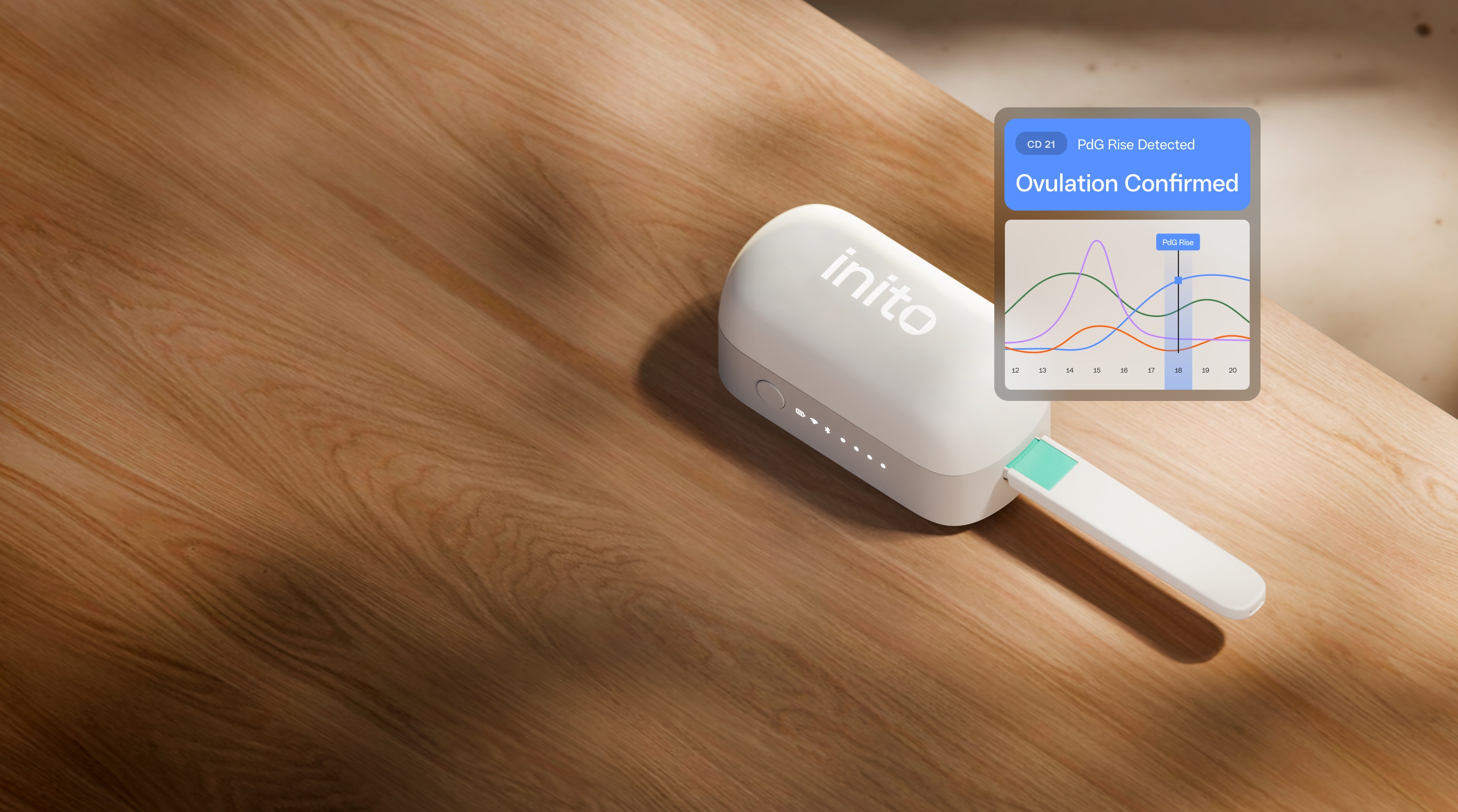
A conventional LH strip looks for luteinizing hormone, whose rise helps predict approaching ovulation. Inito adds other information. E3G, an estrogen metabolite, helps identify the opening of the fertile window. FSH contributes another view of reproductive hormone activity. PdG, a urinary progesterone metabolite, provides the later clue: a sustained rise supports the app’s conclusion that ovulation occurred.
The distinction matters because a forecast can be mistaken for a completed event. Inito’s app translates measurements into ratings such as High Fertility, Peak Fertility and Ovulation Confirmed, while preserving the numerical charts. Customers can inspect trends, follow testing reminders and export cycle reports. The audience is people trying to conceive who want to understand the sequence unfolding in their own bodies.
02The laboratory they chose to leave
Founders Aayush Rai and Varun AV were engineers at Siemens before starting Inito in 2015. Their ambitions surfaced during kayaking conversations. They wanted diagnostic information to travel beyond expensive clinical equipment and into ordinary homes. That meant building across several disciplines at once: chemistry for the strip, optics for reading it, and software for interpreting the result.
The early difficulties included building the team and learning the funding ecosystem, Rai recalled in a 2020 interview. He recruited through college networks. Y Combinator’s Winter 2019 programme then helped change the scale of his thinking. “We didn’t go to YC for funding,” he said. The company was already funded; the attraction was learning how to grow globally.
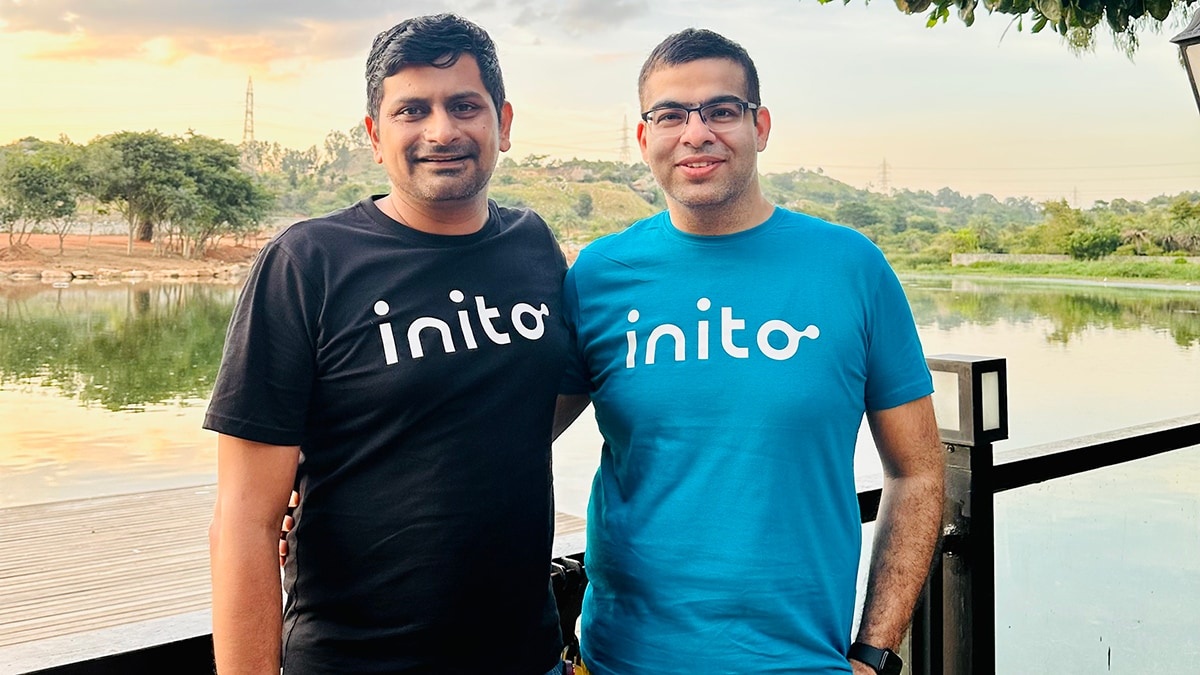
The revealing decision came before that global expansion. In a 2019 interview, Rai explained that Inito had intended to move from ovulation testing into other conditions. Incoming fertility data and perceived unmet demand persuaded the team to concentrate on fertility instead. It was a change in the order of operations. A broad home laboratory remained the ambition; a particular customer’s recurring problem became the immediate business.
03The reader is only the first receipt
The current InSight Wireless Reader sits independently of the phone and sends results over Wi-Fi to an iOS or Android app. Earlier hardware mounted onto a smartphone. Users dip a strip in urine for 15 seconds, insert it into the reader and receive results in about ten minutes. The phone can get on with being a phone.
At the October 2026 price check, the US starter kit was advertised at $119 on promotion, against a $169 reference price, with 15 strips included. Another 15 cost $49. App access carries no required subscription. The economic engine is repeat consumables: measuring another day consumes another strip. Longer monitoring can therefore change the budget even when the reader remains the same.
15 included strips. No extra packs.
Illustrative US purchase cost at the checked promotional price; excludes tax. No refill discount applied.Inito occupies the space between inexpensive ovulation strips and clinic-based investigations. Mira is a direct rival, and its Ultra4 product also measures four markers in one test. Inito’s older single-strip exclusivity claim has consequently aged out. The useful comparison now includes reader design, refill spending, interpretation and the effort required to keep testing.
04Read the small print on the science
A 2023 Scientific Reports paper evaluated an earlier smartphone-connected Inito reader measuring E3G, LH and PdG. It compared measurements with laboratory assays and examined hormone patterns across cycles. The study supports the case for quantitative home monitoring, but its boundaries deserve the same attention as its results.
The laboratory-comparison component used urine samples from only three subjects. Participants had regular cycles; several medications and reproductive circumstances were excluded. Authors had company affiliations. Those details matter when considering users with different circumstances or newer hardware. A measurement study also cannot establish that buying a reader will produce a pregnancy. The product supplies information about part of a much larger biological process.
05The next bet is inside the strip
In November 2023, Fireside Ventures led a $6 million Series A. In December 2025, Inito announced a $29 million Series B led by Bertelsmann India Investments and co-led by Fireside, bringing reported total equity funding to $45 million. The company also reported more than 30 million hormone data points.
“We have always believed that healthcare should start at home.”
Aayush Rai and Varun AV / December 2025
The expansion proposal centres on AI-engineered antibodies, the biological components that recognise a test’s target. Inito wants computational protein design to improve their sensitivity and consistency, opening possibilities beyond fertility. Testosterone, vitamins and thyroid testing figure in that ambition. These are development plans. The fertility monitor is the retail product established by the current evidence.
06The sequence another founder can copy
For another founder, the useful lesson is the sequence: tackle a specific recurring uncertainty, make observation convenient, and let customer evidence decide what deserves attention next. That is an interpretation of Inito’s history, rather than a universal recipe. It depends on reliable measurements and a problem people will repeatedly pay to understand.
For customers, the boundary is equally practical. Consistent testing takes time and strips, and hormone trends do not explain every cause of infertility. Inito’s most persuasive offer is a clearer record of a cycle. Its broader laboratory ambitions will have to earn their place one test at a time.