In Apodaca, an industrial city near Monterrey, Intercam installed two cash machines that spoke Korean. When South Korea’s ambassador visited in September 2021, he found a service center with a Korean lounge and staff connections to the community. A Mexican bank had made room for a very particular customer. The machines explain the company’s ambitions more clearly than a glossy photograph of a trading floor ever could.
- Intercam specialized in the practical friction of moving money across borders.
- It added banking, investments and property finance around existing customers.
- In 2025, regulatory intervention led to significant operations transferring to Kapital.
The cash machine that spoke Korean
The center served Korean businesses operating in northern Mexico and the Bajío. These customers needed commercial credit, letters of credit for imports, foreign exchange and somewhere to invest spare cash. Language mattered, but so did recognizing the sequence of problems a manufacturer encounters. A company establishing itself abroad needs considerably more than an account number.
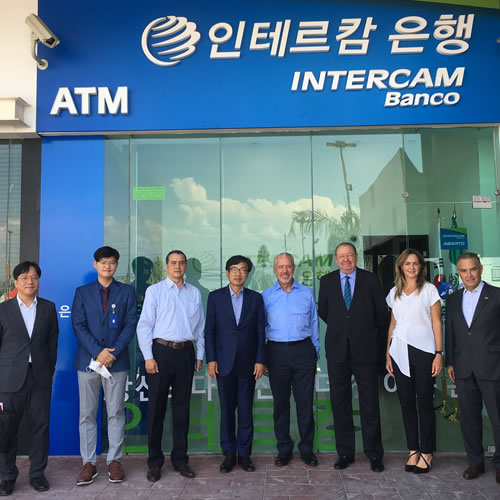
Intercam’s historical customers also included foreign residents, travelers, Mexican savers and investors. The industrialist and the retiree might look like an odd pairing. Both, however, had financial lives spanning countries. Intercam positioned itself around that shared inconvenience, offering personal attention to people whose money did not fit neatly inside one national system.
A banking license for the next problem
The company’s roots reach back to a currency-exchange venture led by Eduardo García Lecuona in 1987. The Intercam-branded exchange business began in 1996. Its opportunity grew with Mexico’s expanding trade: businesses needed to pay foreign suppliers and receive export proceeds, while foreigners settling in Mexico needed their money to arrive reliably.
Success created another problem. Customers who trusted Intercam with payments also needed deposits and credit. In 2011, after a year of negotiations, the group bought Banco Regional de Chihuahua, a Banregio subsidiary, for more than 474 million pesos. The acquired business became Inter Banco, the banking operation later known as Intercam Banco. This was an acquisition of a specific subsidiary, rather than Banregio itself.
“Fue una joyita en el desierto.”
Eduardo García Lecuona, 2011
“A little jewel in the desert” - his description of the acquired bank.
There were less poetic expenses, too. The 2011 financial statements record 12 million pesos for a SIBAMEX banking software license. Buying the institution meant acquiring the machinery to run it. The sequence is instructive: build relationships around a narrow job, then acquire the capabilities needed for the customer’s next request.
One customer, several currencies
Intercam’s menu followed that logic. Foreign exchange and international payments sat alongside working-capital finance, investments and trusts. Separate group companies handled brokerage, investment funds and other services. Its iCambiosPro platform offered real-time trading in six currencies against the peso, including dollars, euros and yen. Behind the assortment was a recognizable customer: someone managing cash across currencies and deadlines.
Same invoice. Different peso bill.
A hypothetical US$10,000 payment, before fees.
A currency forward addressed one part of that uncertainty by agreeing a future exchange transaction. Intercam’s published historical terms required a contract, a guarantee deposit and a minimum transaction of US$10,000 or €10,000. Terms ranged from three days to two years. This was a tool for a defined obligation, with conditions that made it a poor fit for tiny, casual transfers.
Foreign homebuyers presented another bundle of needs. Intercam marketed Dream Loan mortgages alongside currency services and property trusts. A buyer could need financing, a payment from abroad and help with the ownership structure. The appeal was coordinating those tasks. Its stated philosophy, Humanismo Financiero, put long-term relationships and tailored advice at the center of the sale.
The economics were recognizable banking economics: lending margins, foreign-exchange income and service commissions, with investment businesses adding their own fees. The differentiator was the customer problem and the attention around it. For alternatives, the relevant comparison included currency specialists such as Monex and Banco BASE, as well as larger banks offering business accounts and trade services.
The connection that became the crisis
Then came June 25, 2025. The U.S. Treasury’s Financial Crimes Enforcement Network identified Intercam as a primary money laundering concern connected with illicit opioid trafficking and ordered restrictions on certain fund transfers. These were regulatory findings and measures, not a criminal conviction. Mexico’s finance ministry said at the time that it had not received evidence proving the alleged illicit activity.
Mexican authorities intervened, replacing the bank’s administration. The immediate break was in the institutional conditions supporting the service: management continuity, confidence and access to international financial connections. A relationship executive could understand a customer perfectly and still depend on other institutions agreeing to move the money. The crisis made that dependency impossible to overlook.
U.S. order and Mexican intervention
Kapital announces an asset transaction
Operating businesses move to Kapital
In August, Kapital announced a proposed acquisition of brokerage, asset-management and operational banking assets. It said K2 Integrity would review the assets and pledged US$100 million for its banking operations after closing. That announcement described an investment commitment; it should not automatically be read as the purchase price. Kapital also said Intercam’s compliance personnel would not join its bank.
By September, the transfer of assets, liabilities, branches and trusts was reported, with client communications moving to Kapital. An official Mexican notice subsequently documented Intercam Banco’s separation from the financial group and the incorporation of Kapital’s bank. The familiar shorthand, “Intercam became Kapital,” hides a more specific restructuring. Separately, StoneX acquired the U.S. advisory and brokerage affiliates in October.
The useful idea that survives
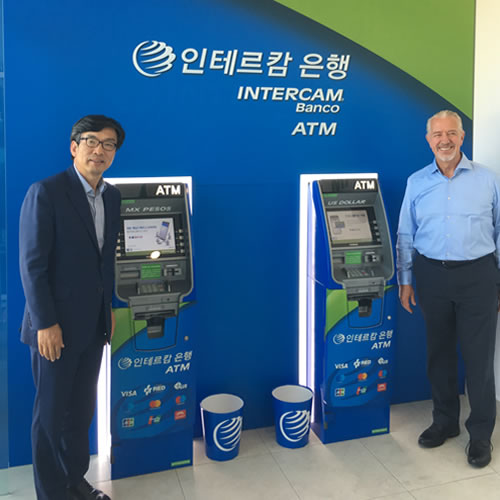
Intercam leaves a practical business lesson: choose a customer’s recurring difficulty, learn it closely and expand into the adjacent work. The Korean service center made that approach visible. It works best when those customers need coordination and advice; a simple transfer shopper may care more about the delivered amount and fee than a relationship.
The same story also sets a boundary. Personal service cannot carry an international bank without dependable controls and counterparties. For former Intercam customers, the next step is to identify the institution now servicing the account and confirm its current channels and product terms. The sign above the door tells only part of the story. The institution behind the payment tells the rest.