product-engineering
(48)
Wizeline Quit Selling Software. Now It Teaches Enterprises How to Ship It
Wizeline began with a dashboard that told product managers what to build. Its more valuable discovery was that big companies needed help doing the building - and now it is betting the same lesson can drag enterprise AI out of pilot purgatory.
The 48-Hour Engineering Bench: How FullStack Turned Nearshore Talent Into an AI Delivery Machine
FullStack says it can put vetted AI engineers inside a client in 48 hours. The more interesting story is how a 2013 software shop turned transparency, nearshore economics, and tightly scoped proofs of value into a credible enterprise sales pitch.
MindK’s Bet: The Best Outsourcing Shop Thinks Like a Product Company
MindK started as one developer in Ukraine. Now it sells a harder promise: bring the judgment of a product team to the messy software that healthcare providers, sustainability consultants and growing SaaS companies cannot buy off the shelf.
Taazaa’s Bet: The Best Software Partner Is the One That Makes Risk Boring
Taazaa built a 400-plus-person software business by taking on the work that internal teams postpone: brittle systems, scattered data and promising ideas that cannot survive production. Its playbook is refreshingly practical - start narrow, prove the economics and earn the right to expand.
ISHIR Survived the Dot-Com Crash. Now It Wants to Be Your AI Co-Founder
A $1,000 outsourcing experiment nearly died with the dot-coms. Twenty-six years later, ISHIR is betting that the next valuable tech vendor will look less like a code shop and more like an accountable co-builder.

Peter Kuhar Still Makes the Thing Himself
Long after co-founding a mobile software company, Peter Kuhar is still soldering, printing, coding and packing. His career is a case study in what happens when an engineer never outsources curiosity.

Kishore Pallamreddy Spent 18 Years Making Travel Software Behave. Now He Wants AI to Earn Its Boarding Pass.
The Zapcom founder built his career inside the invisible machinery of travel. His next wager is that enterprise AI needs the same discipline: product judgment, durable architecture, and an unforgiving eye for the customer.

Seb Poole Is Teaching the Help Desk to Finish the Job
After a decade inside startups, Seb Poole has developed a particular dislike for software that records a problem and leaves a human to solve it. His new company, Modern, is an attempt to make enterprise IT software do the work hiding behind the ticket.

Pradeep Elankumaran Keeps Building the Errand Away
Three YC companies, one enduring habit: find the recurring annoyance, test it in public, then engineer the repetition out of everyday life.

Andrew Chung Is Building an AI That Starts With Your Voice
He left Seoul National University to build, entered Y Combinator after a run of LLM experiments, and turned a founder's recurring blank-page problem into Typa. His wager is simple: the future of AI-assisted content begins with a conversation, not a prompt box.

The $1 doorway Norman Wanto built into Wall Street
A scholarship student became a software builder, then turned a three-person coding sprint into a cross-border investing platform. His quiet advantage was never finance theatre - it was systems thinking.

Raj Velagapudi Keeps Building for the Moment After the Pitch
Across three decades, Raj Velagapudi has returned to the same operating idea: make technology answer to outcomes, then build the team that can carry the promise across borders.

Punkaj Jain Has Spent Four Decades Turning New Technology Into Useful Work
Before AI became every company’s favorite noun, Punkaj Jain had already spent decades doing the less glamorous work: turning new technology into products, teams and businesses that could survive contact with customers.

Eleazar Vega-Gonzalez Keeps Changing the Layer
He started with a wearable memory machine, helped rethink the clock inside a chip, challenged the credit card, and now builds choose-your-own-adventure AI. The industries changed; his obsession with invisible complexity did not.
The 36-Year-Old Engineering Firm Turning Enterprise AI Into Actual Work
Xoriant spent three decades doing the unglamorous engineering beneath enterprise software. Now a private-equity-backed acquisition run is turning that foundation into a broader bet on applied AI, modern platforms and the testing required to trust them.
The Software Team You Hire Without Hiring
Clarion Technologies has spent 25 years turning offshore development into something that feels less like outsourcing and more like adding a desk to the team - only the desk happens to be in Pune.

The 1,000-Person Engineering Company You May Already Be Using
Dev.Pro rarely puts its own name on the software it builds. Instead, more than 1,000 specialists work inside the products, payment systems and cloud platforms of companies that need to move faster than their hiring plans allow.
The 30-Year-Old IT Firm Making Enterprise AI Grow Up
Marlabs spent three decades doing the unglamorous systems work behind big companies. Now it is packaging that muscle into AgilityAI - a bid to turn stalled experiments into governed, measurable operations.
EPAM Built a $5.5 Billion Business in the Gap Between the Slide Deck and the Shipping Code
EPAM sells something large companies routinely struggle to buy: advice that survives contact with the codebase. Its global teams pair consulting, design and industry knowledge with the engineers needed to ship and run the result.

Trinetix
Trinetix does not sell enterprises another AI demo. Its 1,100-plus practitioners redesign the stubborn workflows around the technology - and stay long enough to make the new system useful.
L&T Technology Services
It is not the household name behind your car, your MRI machine, or your factory floor - but the outsourced engineering brain that helped design them just might be.
BayRock Labs
BayRock Labs sells something harder to package than software: a distributed engineering bench that can move from a sketch to a cloud migration, an AI workflow or a rebuilt product. Its wager is that four specialist labs can make outsourced development feel less outsourced.
Audax Labs
The Seattle-area technology company pairs consulting muscle with a shelf of homegrown products - betting that enterprise transformation works better when the people drawing the blueprint can also build the machinery.
apptomate Digital
From Chennai, Apptomate sells the unglamorous but essential work of turning aging systems, AI experiments and software ideas into production platforms. Its pitch is less about one magic product than becoming the engineering bench a client does not have in-house.
AB Soft
AB Soft spent more than two decades doing something unfashionably durable: building the engineering bench behind another company's communications platform. Its narrow focus is both the business's advantage and its biggest dependency.
Fcode Labs
Fcode Labs is a Sri Lanka- and Singapore-based software engineering firm that builds AI-first digital products and provides dedicated remote engineering teams. Founded in 2018 by three University of Moratuwa graduates, it delivers digital transformation, machine learning, product engineering, cloud, and Web3 work for clients ranging from the Singapore Ministry of Health and University of Auckland to Sri Lanka's largest conglomerates. In 2026 it launched Forevate, a real-time market-intelligence product.
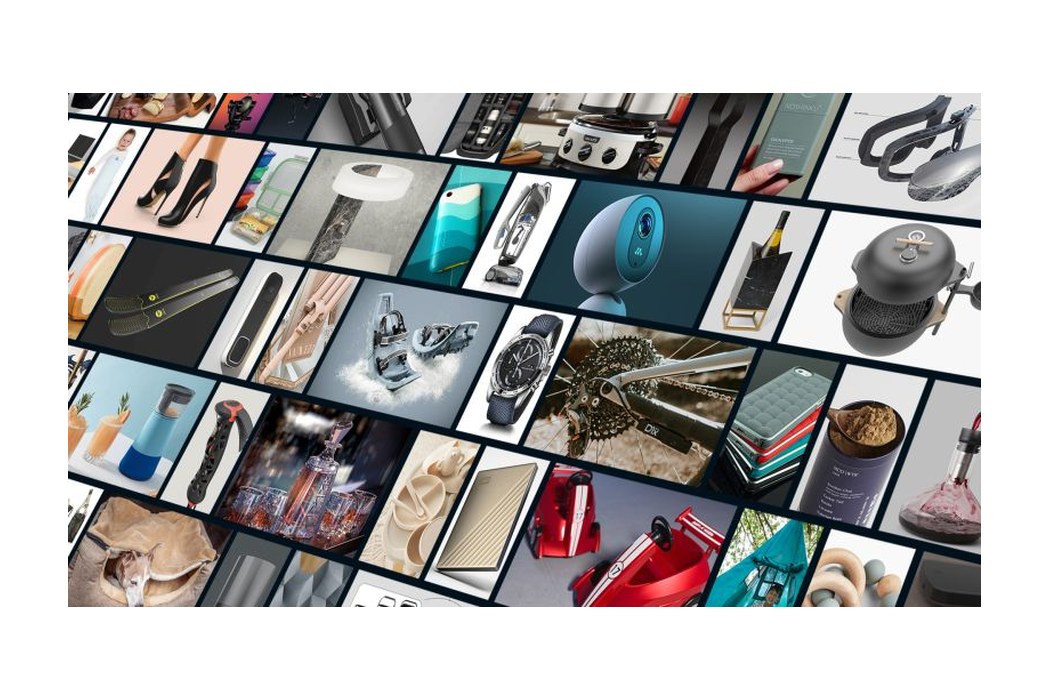
Gembah
Gembah is an Austin-based product development platform and marketplace that helps entrepreneurs, e-commerce sellers, and small-to-midsize businesses take physical products from idea to shelf. It connects creators with a global network of vetted designers, engineers, and supply chain specialists, and manages design, prototyping, factory sourcing, and production across regions including China, Vietnam, India, Mexico, and Eastern Europe - aiming to demystify and democratize the process of bringing new consumer products to market.
Reveal HealthTech
Reveal HealthTech is a New York-based AI transformation partner for U.S. healthcare and life sciences organizations. Founded in 2023 and incubated by W Health Ventures and 2070 Health, the company pairs clinical expertise with engineering and design to turn AI concepts into deployed products for hospitals, pharma, and digital health innovators. Its flagship products include BioCanvas for clinical trial recruitment, Prism AI for workflow automation, and CareIQ for care coordination. Reveal raised a $7.2M Series A led by Leo Capital in September 2025 and runs teams across the U.S. and Bengaluru, India.

CLOUDSUFI
CLOUDSUFI is a Silicon Valley data-driven digital transformation company that helps enterprises turn raw, siloed information into decisions - a mission it captures in the phrase 'we make enterprise data dance.' Founded in 2019 and headquartered in San Jose, California, the firm pairs data engineering, advanced analytics, and generative AI with a Google Cloud Premier partnership to modernize data platforms, automate supply chains, and unlock data monetization for customers across manufacturing, retail, financial services, energy, and digital-native industries.
EffectiveSoft
EffectiveSoft is an AI-enabled software engineering company that builds, modernizes, and scales digital products and enterprise systems. Founded in 2000 and headquartered in San Diego, California, with development centers across Poland and other locations, the firm delivers full-cycle custom software development, AI and generative AI integration, cloud engineering, and data services. It is best known for deep, long-running engagements in highly regulated industries - healthcare, financial services, and fintech - and for pairing more than two decades of engineering experience with modern AI practice.