Pulitzer Prize Winner 2014 NSA Surveillance Exposed Oscar-Winning Documentary CitizenFour System Update - Live Nightly on Rumble Edward Snowden Revelations Author of No Place to Hide Co-founder of The Intercept Press Freedom Advocate 1.6M+ Twitter/X Followers George Polk Award 2013 Pulitzer Prize Winner 2014 NSA Surveillance Exposed Oscar-Winning Documentary CitizenFour System Update - Live Nightly on Rumble Edward Snowden Revelations Author of No Place to Hide Co-founder of The Intercept Press Freedom Advocate 1.6M+ Twitter/X Followers George Polk Award 2013
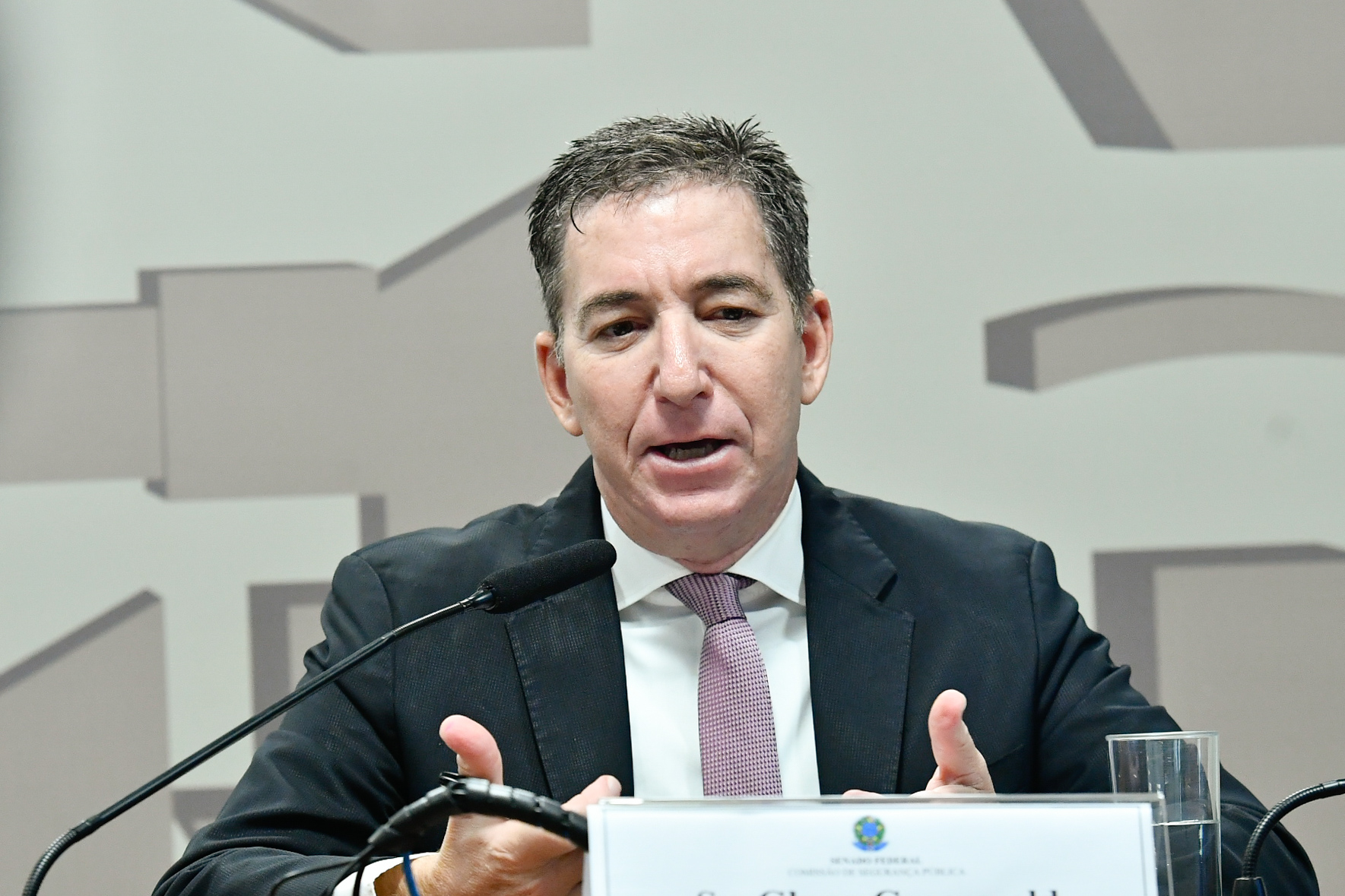
Glenn Greenwald - journalist and author
Journalist - Author - Activist

Glenn
Greenwald

The Man Who Made the NSA Sweat - and Never Asked for Permission

Constitutional lawyer turned investigative journalist. Broke the Snowden story. Won the Pulitzer, the Polk, and an Oscar proxy. Got prosecuted in Brazil. Still broadcasting every night at 7.

Pulitzer Prize Oscar Documentary System Update Rio de Janeiro
4 NYT Bestsellers
1.6M+ X Followers
20+ Rescue Dogs
2013 Snowden Year

The Journalist Who
Won't Be Managed

Glenn Greenwald is 59, lives in a house in Rio de Janeiro with two adopted sons and somewhere north of twenty rescue dogs, and broadcasts a nightly show that no editor on earth can touch. That last part is the point. Everything in his career - the law firm he founded at 29, the Guardian columns that made him famous, the media outlet he co-founded and then had to leave - was a rehearsal for the thing he's actually building: journalism that answers to no one except the story itself.

He arrived in journalism the way most disruptors do: sideways, with a grudge. After nearly a decade defending First Amendment cases in court - including, controversially, the free speech rights of neo-Nazis - he started a blog in 2005. He was furious about the Bush administration's surveillance programs. He didn't have a press pass. He didn't need one. Within two years he was at Salon. By 2012 he was at The Guardian. And on June 5, 2013, the world changed.

The first Snowden story dropped that day. The documents were extraordinary - a window into a global surveillance architecture that swallowed billions of people's data without their knowledge. But the framing was Greenwald's. The story spread not just because of what it revealed, but because Greenwald knew exactly what it meant. He'd been arguing the civil liberties case for a decade. He was ready.

What followed was a year of sustained, consequential journalism that earned his team a Pulitzer Prize for Public Service. The documentary about those events - "CitizenFour," directed by his collaborator Laura Poitras - won the Academy Award for Best Documentary in 2015. That's two of the most prestigious prizes in two different fields, for a single story. Not many journalists can say that.

But Greenwald didn't become a figure of comfort and establishment esteem. He became a figure of permanent controversy - which, if you understand his worldview, is exactly what success looks like. He co-founded The Intercept to publish more Snowden documents and pursue accountability journalism. Then, in October 2020, he resigned from the outlet he built because editors tried to block a story he'd written about Hunter Biden's business dealings. He published his resignation letter publicly. He did not soften it.

He moved to Substack, then to Rumble, where "System Update" now runs every weeknight at 7pm ET. The show is what you'd expect: long-form, combative, opinionated, and structurally incapable of being killed by an advertiser's phone call. Whether you find his current politics exhilarating or maddening may depend on when you started reading him. The principles, at least, have been consistent since page one: power should be transparent, privacy is a civil right, and the press exists to challenge authority, not befriend it.
"The true measurement of a person's worth isn't what they say they believe in, but what they do in defense of those beliefs."
- Glenn Greenwald

June 5, 2013: The Day Everything Changed

An encrypted email from someone calling themselves "Citizen Four" landed in Greenwald's inbox months before anyone had heard of Edward Snowden. The message described a surveillance system of a scale that strained belief. Greenwald flew to Hong Kong with filmmaker Laura Poitras and Guardian reporter Ewen MacAskill. What they found in a Miramar Hotel room was a 29-year-old contractor who had walked out of the NSA with the most damaging intelligence leak in American history. The first story ran the next morning. The Pulitzer followed. The Oscar followed that. The American surveillance state was never quite the same again.

A Record That Speaks

🏆
2014
Pulitzer Prize for Public Service
Awarded to The Guardian team for NSA surveillance revelations drawn from Edward Snowden documents. The most prestigious award in American journalism.
🎬
2015
Academy Award - Best Documentary
CitizenFour, directed by Laura Poitras and featuring Greenwald's central role in the Snowden story, won the Oscar for Best Documentary Feature.
📰
2013
George Polk Award
One of journalism's oldest honors, awarded to the NSA reporting team for work that defined a generation of debate on surveillance and civil liberties.
🇧🇷
2019
Vladimir Herzog Institute Prize
Brazil's premier human rights journalism award for The Intercept Brasil's exposure of judicial misconduct in Operation Car Wash - reporting that contributed to Lula's release from prison.
📚
2014
NYT Bestseller: No Place to Hide
First-hand account of the Snowden revelations and the global surveillance state. One of four New York Times bestsellers by Greenwald.
🌍
2013
Foreign Policy Top 100 Global Thinkers
Recognized among the hundred most influential thinkers shaping global affairs - an unusual honor for a journalist operating entirely outside institutional media.

From Queens to Rio - The Long Way

1967
Born in Queens, New York. Raised in Lauderdale Lakes, Florida. Already trying to run for city council at 17. Loses. Tries again at 21. Loses again.
1994
Graduates NYU School of Law with a JD. Joins a firm, then founds his own. Spends nearly a decade defending First Amendment cases - including, on principle, neo-Nazi speech.
2005
Starts a political blog out of rage at Bush-era surveillance programs. No journalism degree. No press pass. Just anger and a law background. Meets David Miranda on Ipanema beach. Moves in with him five days later.
2007-2012
Joins Salon.com, then The Guardian. Builds a national security beat from scratch. Becomes one of the most-read political columnists in the English-speaking world.
2013
Flies to Hong Kong. Meets Edward Snowden. Publishes the NSA surveillance files. Wins the George Polk Award. Co-founds The Intercept with Laura Poitras and Jeremy Scahill.
2014-2015
Pulitzer Prize for Public Service. Oscar win for CitizenFour. Publishes "No Place to Hide." Is denounced by members of Congress. Doesn't apologize.
2019
The Intercept Brasil publishes leaked messages exposing Operation Car Wash corruption. Brazil's prosecutors charge Greenwald with cybercrime. Federal judge dismisses the charges. Greenwald keeps publishing.
2020
Resigns from The Intercept in a public letter after editors try to kill his Biden story. Launches on Substack. Independence, finally and fully.
2022
Launches System Update on Rumble - a nightly live show, seven days a week, answering to no board, no advertiser, no editor.
2023
Husband David Miranda dies at 37 after nine months in the ICU. Miranda had been a Federal Congressman in Brazil, the first LGBTQ councillor elected in Rio, a friend of Marielle Franco, and the person Greenwald built his life in Brazil around.
2026
Still broadcasting. Still in Rio. Still arguing. System Update runs every night at 7pm ET.

What He Actually Believes

"Surveillance breeds conformity."

On Privacy & Power

"Privacy is a core condition of being a free person."

On Civil Liberties

"If you're not acting on your beliefs, then they probably aren't real."

On Integrity

"Stability was suffocating and deadly. When I read that the kids I went to law school with have stayed at the same firm, I feel like I'm reading an obituary."

On His Career Choice

"We're supposed to know virtually everything about what they do, while citizens are supposed to know virtually nothing about what we do."

On Government Transparency

"You're imposing judgments on me and condemnations, but I don't accept them. I'm going to turn the light on you and see what your flaws are."

On Critics

What Makes Him Tick

Confrontational97%
Principled95%
Independent99%
Anti-Establishment100%
Action-Oriented92%
Comfortable with Controversy98%

Greenwald is a genuine contradiction: a left-wing civil libertarian who now platforms on the same channels as the American right. He'd say that's consistency. His critics say it's drift. Both are probably partly right.

What's not debatable is the pattern: he has spent his entire career picking institutional fights he could have avoided, and winning most of them. The city council races lost at 17. The neo-Nazi defenses that cost him friends. The Snowden decision that made him a target of the U.S. intelligence community. The resignation letter that burned a bridge he'd personally built.

His personal life follows the same script. He met his future husband five days before moving in with him. He adopted children. He moved his entire life to Brazil. He built an animal shelter for homeless people's dogs. The public adversary is also, quietly, someone who rescues strays and raises kids in a foreign city.

The Details That Don't Make the Headlines

01

He ran for city council in Lauderdale Lakes, Florida at age 17. Lost. Ran again at 21. Lost again. Most people would take the hint. Greenwald went to law school instead and spent a decade fighting in courts what he'd failed to win at the ballot box.

02

He met David Miranda in February 2005 when Miranda knocked over his drink on Ipanema beach. Greenwald had traveled to Rio on a break from his law practice. They moved in together five days later. Greenwald never really left Brazil.

03

As a constitutional lawyer, he defended the free speech rights of neo-Nazis in court. Not because he agreed with them - emphatically not - but because he believed the First Amendment meant what it said. His clients' speech was repugnant. Their right to it, he argued, was absolute. He won.

04

Brazilian federal prosecutors charged him with cybercrime in January 2020 for publishing leaked communications. The charges were dismissed the following month on constitutional press freedom grounds. He described the prosecution as a confirmation that the reporting had hit a nerve. Then he kept reporting.

05

He co-founded The Intercept in 2013 with Laura Poitras and Jeremy Scahill specifically to publish the remaining Snowden documents. In 2020 he resigned from it - publicly, with a detailed letter - because editors tried to kill a story. The sentence writes itself: he left the outlet he built because it became an institution that behaved like institutions do.

06

He and David Miranda co-founded an animal shelter in Rio de Janeiro designed specifically to employ homeless people who live on the streets with their pets. The shelter operates on public donations. Greenwald himself cares for more than twenty rescue dogs at his home.

"Privacy is a core condition of being a free person."
- Glenn Greenwald

System Update: The Show That Can't Be Cancelled

Every weeknight at 7pm Eastern, Glenn Greenwald goes live on Rumble. No script approved by a managing editor. No advertisers calling the next morning. No parent company with congressional relationships to protect. Just a journalist with a camera, an argument, and a Substack backup for the written version.

"System Update" is the logical endpoint of Greenwald's career: the structure that makes institutional interference structurally impossible. Whether the topics skew left or right on any given night, the architecture is the same. He's the editor. He's the publisher. He's the network.

The show covers political news, media criticism, civil liberties, U.S. foreign policy, and surveillance - the same territory Greenwald has worked since 2005, minus the colleagues who can now override him.

System Update - Key Facts

Broadcast Weeknights, 7pm ET - live on Rumble
Format Monologue + guest interviews, long-form
Platforms Rumble, YouTube, Apple Podcasts, Spotify
Written Substack newsletter with analysis + transcripts
Control Fully independent - no institutional oversight

Things You Might Not Know

He ran for office at age 17 and lost. Twice.
Moved in with his future husband five days after meeting him.
Has 20+ rescue dogs at his Rio home.
Won an Oscar without making a film.
Got prosecuted in Brazil. Won.
Zero journalism training - came straight from law.
Co-founded the outlet he later quit in a public letter.
Defended neo-Nazis in court on principle.
CitizenFour: the film about his own reporting that won Best Documentary.
Built a shelter specifically for homeless people's pets.

Where to Follow