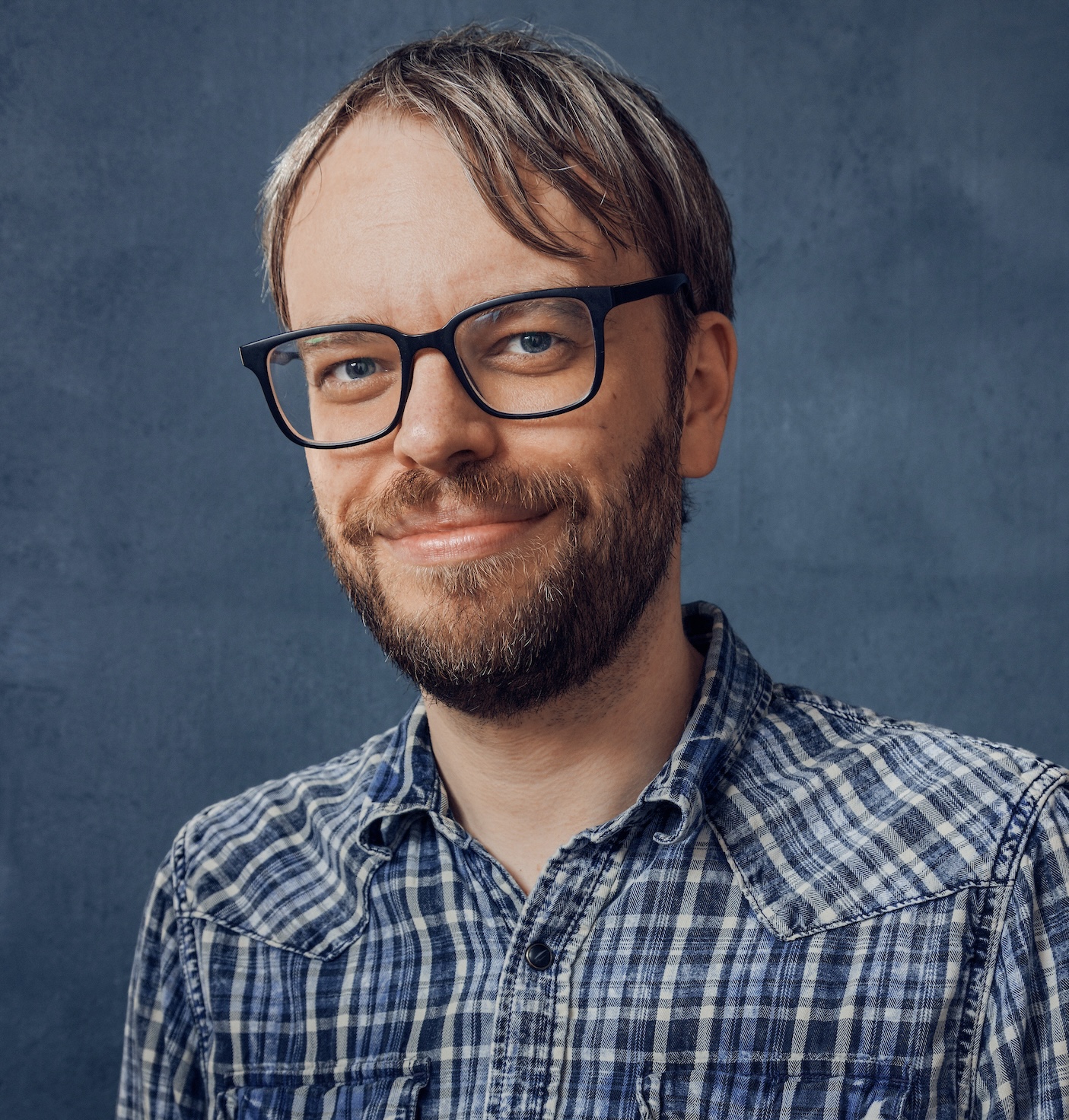
Dylan Matthews leaves Vox after 12 years Joins Open Philanthropy's Coefficient Giving Donated kidney to stranger in 2016 Founded Future Perfect newsletter at Vox Harriet McBryde Johnson Award winner Giving What We Can pledge-taker Autistic journalist, Harvard grad, policy nerd 72,000+ Twitter/X followers Dylan Matthews leaves Vox after 12 years Joins Open Philanthropy's Coefficient Giving Donated kidney to stranger in 2016 Founded Future Perfect newsletter at Vox Harriet McBryde Johnson Award winner Giving What We Can pledge-taker Autistic journalist, Harvard grad, policy nerd 72,000+ Twitter/X followers
Dylan Matthews, journalist and philanthropic fund manager
Policy - Welfare - Effective Altruism

Dylan
Matthews

The man who wrote "give away a kidney" - and then did. Now he's funding the ideas instead of just reporting them.

Journalist Kidney Donor Fund Manager Effective Altruist Autistic
Future Perfect Vox Open Philanthropy Global Health Animal Welfare

From Writing About Doing Good to Actually Doing It

Dylan Matthews spent a decade telling readers how to change the world. Then he went and changed it.

For nearly 12 years at Vox, Matthews was the policy world's conscience - the journalist who translated effective altruism from an Oxford philosophy seminar into something regular people could understand and argue about over coffee. He founded Future Perfect, Vox's EA-focused section, in 2018. He wrote about kidney donation - and then donated his own kidney to a stranger. He profiled effective charities - and pledged 10% of his income to them.

In December 2025, he left Vox entirely to join Coefficient Giving, the grant-making arm backed by Open Philanthropy, where he now manages the Abundance and Growth Fund - a $120M+ vehicle for investing in the kinds of policy ideas he spent years reporting on.

The career pivot sounds dramatic. It isn't, really. Matthews has always been the same person doing the same thing: finding the most effective way to reduce suffering and make the world incrementally less terrible. He just swapped a keyboard for a checkbook.

He blogs on Substack now, because once you've been writing publicly since age 14, you don't really stop.

12
Years at Vox
2014-2025, one of Vox's founding three employees
4
Kidneys Saved
His 2016 non-directed donation started a chain of 4 transplants
14
Age He Started
Launched political blog "minipundit" in 2004
$120M+
Fund Managed
Abundance and Growth Fund at Coefficient Giving
"Most charity in the US is not optimized for outcomes. We give based on emotional resonance, not evidence."
- Dylan Matthews
2004
Launched "minipundit" blog at age 14
Political commentary on Typepad, predating most of his future Vox colleagues' careers
2008
Enrolled at Harvard University
Studied social and political philosophy; wrote for The Harvard Crimson
2012
Joined The Washington Post
Policy blogger; co-created "Know More" with Ezra Klein; wrote at Wonkblog
2014
Co-founded Vox.com
Left WaPo with Ezra Klein and Matt Yglesias to build one of the defining policy media outlets of the decade
2016
Donated kidney to a stranger
Surgery at Johns Hopkins; the donation initiated a paired exchange benefiting 4 people total
2016
Won Harriet McBryde Johnson Award
Autistic Self Advocacy Network named him the year's outstanding autistic journalist
2018
Founded Future Perfect at Vox
Launched one of the first mainstream EA journalism sections; ran it for 7 years
2025
Left Vox; joined Coefficient Giving
Moved from writing about impactful giving to managing a $120M+ grantmaking fund at Open Philanthropy's Coefficient Giving
2014 - 2025

Senior Correspondent, Vox

Led Future Perfect. Wrote on global health, animal welfare, policy, and EA for 12 years. Helped define the genre of evidence-based policy journalism for a mass audience.

Dec 2025 - Present

Researcher & Fund Manager, Coefficient Giving

Manages the Abundance and Growth Fund, spanning state capacity, interdisciplinary research, and new policy areas. Open Philanthropy-backed. $120M+ in play.

One Kidney. Four Lives.

On August 22, 2016, Dylan Matthews walked into Johns Hopkins Hospital and donated a kidney to someone he had never met. He asked for nothing in return. He had done the math.

His non-directed (altruistic) donation initiated a paired exchange chain that ultimately allowed four people to receive new kidneys - people who had willing donors who weren't biological matches.

He then wrote about it and argued you should probably do the same thing.

Dylan donates Recipient #1 Chain donor Recipient #2 +2 more

Why He Did It

Matthews is a committed consequentialist. Not in the abstract, hand-wavy sense - in the "I have done the expected-value calculation and this is the correct action" sense.

Living kidney donation has well-documented risks, but they're small. The benefit to the recipient is enormous. The benefit to multiple recipients through a paired exchange chain is larger still. Given those numbers, Matthews concluded the decision was straightforward.

He wrote about the experience for Vox's Future Perfect. He did interviews. He gave talks. He argued, politely and persistently, that healthy people with two kidneys should think hard about giving one away.

It is one of the most direct applications of EA philosophy to a human body that exists in modern journalism.

Non-Directed Donor Paired Exchange Johns Hopkins, 2016
"Donating a kidney was the most effective altruist thing I've ever done - more than any check I've ever written."
- Dylan Matthews

"Autism gives me a superpower."

Dylan Matthews is one of the few openly autistic journalists in Washington, D.C. He doesn't frame it as a challenge to overcome. He frames it as a competitive advantage.

The ability to absorb enormous quantities of policy information, process it quickly, find patterns across disciplines, and then explain them clearly - those are the skills that made Future Perfect work. They're also, Matthews argues, downstream of how his brain is wired.

In 2016, the Autistic Self Advocacy Network agreed. They awarded him the Harriet McBryde Johnson Award for outstanding autistic journalist of the year - recognizing both his work and his willingness to be public about his neurodivergence in a profession not known for that kind of openness.

The Policy Polymath

Matthews's beat defies categorization. On any given week at Future Perfect, he might publish a deep dive on CRISPR-based malaria eradication, an explainer on the philosophy of animal consciousness, a cost-effectiveness analysis of global health interventions, and a reported piece on how the FTX collapse affected EA-adjacent philanthropy.

This range isn't random. It reflects a genuine intellectual conviction: that the most important questions for human and animal welfare don't respect disciplinary borders. The journalist who can move fluently between economics, biology, philosophy, and political science is worth ten specialists writing in silos.

That breadth is also what made Future Perfect genuinely unusual in media - not just a policy section with an EA angle, but a serious attempt to build a new kind of public interest journalism around evidence and impact.

The Effective Altruist Who Went to Work

Matthews has been affiliated with Giving What We Can for years, pledging at least 10% of his income to cost-effective charities. He covered effective altruism's rise - and its spectacular stumble with the Sam Bankman-Fried scandal - with more sustained attention than almost any other journalist.

His move to Coefficient Giving is therefore not a departure from his values. It's an intensification. As a journalist, he could influence how millions of people thought about where to give. As a grantmaker managing $120M+, he can actually direct resources to the interventions he thinks matter most.

The Abundance and Growth Fund covers state capacity, interdisciplinary policy research, and emerging areas. It is, in short, a direct expression of Matthews's intellectual agenda, translated into money.

The Writing That Doesn't Stop

Matthews launched a personal Substack in January 2026, around the same time he published an essay about leaving Vox and a collapsed book project. The newsletter is free. It is, by his own description, a place for writing outside institutional constraints.

He has been publishing opinions publicly since 2004. He will probably keep doing it until well after he has found something else to do with his daytime hours.

What Matthews Covers (and Cares About)

Global Health
95%
Effective Altruism
92%
Animal Welfare
85%
Policy Analysis
88%
Philanthropy
80%
Economic Policy
75%
AI & Technology
65%
Immigration Policy
60%
🌍

Evidence-Based Giving

Matthews has argued consistently that emotional giving - donating to causes that feel good rather than do the most good - is a failure mode. His Future Perfect coverage championed GiveWell-style evaluation as the standard for philanthropic decision-making.

🐄

Animal Welfare at Scale

Few mainstream journalists have taken factory farming and wild animal welfare as seriously as Matthews. He covered the Wild Animal Initiative's research into animal suffering in nature - territory most journalists won't touch for fear of sounding absurd.

🧬

Technological Solutions to Hard Problems

From CRISPR-based malaria eradication to plant-based meat, Matthews has consistently covered technological approaches to moral problems - not as techno-optimism, but as careful analysis of what interventions actually work.

🏛️

State Capacity

At Coefficient Giving, Matthews now funds work on building effective governments. The insight: good intentions don't scale without capable institutions. It's the systemic complement to effective altruism's individual-level analysis.

💡

Basic Income

One of his earliest beats and longest-running interests. Matthews has written extensively on universal basic income as both policy proposal and economic philosophy - tracking its evolution from fringe idea to serious political platform.

⚖️

Global Inequality

His essay "To Address Inequality, Think Global" captures a central conviction: domestic redistribution, however important, is arithmetically dwarfed by the gap between wealthy and poor countries. The most effective anti-poverty work crosses borders.

"The point of Future Perfect is to figure out how to do good in the world - and to take that question seriously as a journalistic enterprise."

"I think autism gives me a superpower for absorbing and processing information quickly."

"The best journalism about policy isn't just describing what is - it's helping readers understand what could be."

"Most charity in the US is not optimized for outcomes. We give based on emotional resonance, not evidence."

01 Blogger at 14

Launched "minipundit" on Typepad in 2004, writing political commentary before most of his future Vox colleagues were out of college.

02 The Chain Reaction

His 2016 kidney donation wasn't just one transplant. It triggered a paired exchange chain that resulted in four people receiving kidneys.

03 Harvard Philosophy

Studied social and political philosophy at Harvard - which explains both the intellectual range and the persistent utilitarian streak running through everything he writes.

04 Award-Winning Openly Autistic

One of the few openly autistic journalists in Washington D.C. - and one of even fewer who turned that identity into an explicit professional asset.

05 462+ Books Tracked

His GoodReads account shows 462+ books read. When he says he synthesizes across disciplines, he means it.

06 Twitter Since 2008

Joined Twitter in August 2008, before most journalists considered it professionally relevant. Still posting. Now at 72,000+ followers.