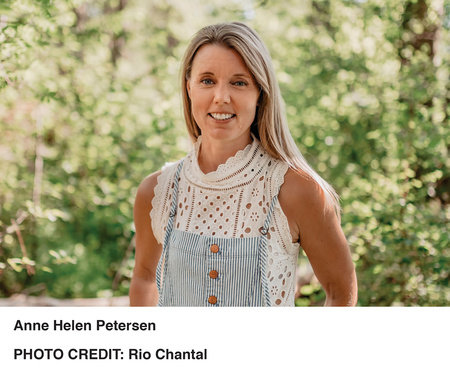
Burnout isn't a personal problem. It's a societal one - and it will not be cured by productivity apps, or a bullet journal, or face mask skin treatments, or overnight fucking oats.
Anne Helen Petersen - "Can't Even: How Millennials Became the Burnout Generation"One Essay. Seven Million People. One Word: Burnout.
On January 5, 2019, Petersen published "How Millennials Became The Burnout Generation." It was BuzzFeed News's most-read article of the year. It turned a personal feeling into a political diagnosis.
The argument was clean and devastating: millennials were the first generation raised explicitly as human capital - as subjects to be optimized for economic performance. Every extracurricular, every internship, every side hustle was part of a project. The project was themselves. The result was a generation that couldn't stop working even when they wanted to. Not because they were ambitious - but because they'd been trained to experience rest as failure.
The errand problem was the one that hit hardest. Millions of millennials recognized the phenomenon: the inability to do basic life tasks like calling the dentist or going to the DMV - not laziness, but a specific kind of exhaustion that makes low-stakes tasks feel insurmountable. She had a name for it. The internet went wild.
That essay became Can't Even: How Millennials Became the Burnout Generation, published by Houghton Mifflin Harcourt in September 2020 - right in the middle of a global pandemic that made every word of it feel more urgent.
"Millennials became the first generation to fully conceptualize themselves as walking college resumes - as 'human capital': subjects to be optimized for better performance in the economy."
Five Books That Refuse To Let You Off The Hook
Sex, deviance, and drama from the Golden Age of American cinema. Started as a Hairpin column. Ended as a book deal. Stars Elizabeth Taylor, Mae West, Clara Bow, and Fatty Arbuckle.
Plume / PenguinThe rise and reign of the unruly woman. Covers Serena Williams, Kim Kardashian, Nicki Minaj, Melissa McCarthy. Named NPR Best Books of 2017.
NPR Best Books 2017How Millennials Became the Burnout Generation. The book version of the 7M-view essay. Structural diagnosis. No self-help. Just truth.
Houghton Mifflin HarcourtCo-authored with Charlie Warzel. The big promise of remote work - and the bigger problems we have to fix first. Named book of the year by Fortune, TechCrunch, and Inc.
Fortune Book of the YearA survival guide for the loneliest century. On adult friendship, chosen community, and building human connection in an age that makes it harder every year.
Coming SoonFrom Academic to Internet's Favorite Culture Critic
A Newsletter That Thinks. Really Thinks.
An Island. 900 People. No Gas Station. A Fishing Cabin. This Is The Point.
Lummi Island sits off the coast of Washington state. You get there by ferry. The population is roughly 900 people. There is no gas station. There is a fishing cabin that Anne Helen Petersen renovated and now lives in with her partner Charlie Warzel and two dogs named Steve and Bev.
She moved there in 2021 specifically to be near her best friend. Her mother followed. A community formed. This is not an accident - it is the thesis she has been building toward her entire career, made visible in the choices she makes about where and how to live.
Everything Petersen writes about - burnout, overwork, loneliness, the collapse of community - has a physical counterpoint in that island. The decision to live somewhere that demands you be present, that cannot be optimized, that refuses to offer the frictionless convenience of suburban America, is itself a kind of argument. She grows dahlias. She runs. She writes from a place that is, by design, the opposite of hustle culture.
It would be easy to call this retreat. It is actually advance: toward the thing she argues we need - genuine community, genuine place, the slow work of building a life rather than performing one.
Population: ~900
Gas stations: 0
Ferry required: yes
Dogs: Steve and Bev
Dahlias in the garden: many
Charlie Warzel - Galaxy Brain newsletter, The Atlantic. Together they wrote "Out of Office." Together they live on a remote island and write about the world from the margins of it.
Celebrity Gossip as Academic Discipline (No, Really)
Before Culture Study. Before BuzzFeed News. Before burnout became a word everyone knew and used and recognized in themselves - there was a PhD dissertation.
Anne Helen Petersen wrote her dissertation at the University of Texas at Austin on the history of the celebrity gossip industry from 1910 to 2010. Her advisor was Janet Staiger, a media studies scholar. The subject sounds breezy. The scholarship was not.
The dissertation traced how celebrity images are produced, distributed, and consumed - how the "star system" works, how gossip functions as a form of social control and social knowledge, how the machinery of fame operates beneath the surface of the thing it creates. It became the foundation for everything she would write afterward.
Because once you understand how celebrity images are manufactured and sold, you start to see the same machinery everywhere: in how companies sell culture, in how millennials learned to sell themselves, in how social media turned everyone into their own PR department. The gossip lens turned out to be a structural one.
She started writing "Scandals of Classic Hollywood" for The Hairpin as a way of using that academic knowledge in a less academic voice. It worked. It became a column. The column became a book. The book became a career. The career became a newsletter. The newsletter became a movement.
She describes her PhD on Bluesky as "in celebrity gossip." The degree is real. The humor is how she wears it.
BA Rhetoric & Film Studies
Whitman College, 2003
MA English
University of Oregon, 2007
PhD Media Studies
UT Austin, 2011
Dissertation: The celebrity gossip industry, 1910-2010
The gossip lens turned out to be a structural one.
AHP on her academic backgroundSix Things Worth Knowing
Millennials became the first generation to fully conceptualize themselves as walking college resumes - as 'human capital': subjects to be optimized for better performance in the economy.
Anne Helen Petersen - "Can't Even"Why Her Writing Hits Different
Most journalism explains what happened. Anne Helen Petersen explains why you feel the way you feel about it - and then shows you the structure underneath.
She was trained in first-person nonfiction but carries her media studies background into every piece. So a celebrity profile is never just a celebrity profile: it is an analysis of how the star system works, what cultural anxieties that celebrity resolves or amplifies, how the image was constructed and why you received it the way you did. Her piece on Armie Hammer - "Ten Long Years of Trying to Make Armie Hammer Happen" (2017) - is a masterclass in this: using one career as a window into how Hollywood manufactures (and fails to manufacture) whiteness, privilege, and masculine stardom.
The same structural analysis runs through everything: the burnout work, the remote work book, the forthcoming book on loneliness. She never lets individual suffering remain individual. She always zooms out to the system producing it. But she never loses the human in the process. This is the combination that is genuinely rare: rigorous enough to convince you, personal enough to move you.
Her process is deliberate. She consumes everything, takes notes in Scrivener, waits for the argument to emerge. She does not chase virality. The viral essay in 2019 happened because she wrote something true, not because she engineered a hit. The internet noticed. It keeps noticing.
What People Remember
The Next Book Is About Loneliness. Of Course It Is.
Anne Helen Petersen's next book is called Friend Group: A Survival Guide for the Loneliest Century. She is working on it with longtime editor Kate Napolitano. The subject is adult friendship, chosen community, and the structural forces that make genuine human connection harder every year.
This is not a self-help book about how to make friends. It is an investigation into the conditions that make friendship difficult: urban design, work culture, digital sociality, the atomization of household structure, the collapse of third places. It features stories about unconventional housing arrangements, inter-generational community, single-parent networks, and pandemic-era mutual aid groups.
You can see the through-line: burnout (why we're exhausted), remote work (where we work and what it costs us), and now friendship (what we lose and what we could build instead). The books form a trilogy about how we got here and what here costs us. Friend Group is the answer - or at least the beginning of one.
She is writing it from an island where she moved to be near her best friend, where her mother followed, where a small community has formed. The book is already living the argument it is trying to make.