IMPRINT HITS UNICORN STATUS - $1.2B VALUATION $150M SERIES D LED BY KHOSLA VENTURES REVENUE UP FROM $15M TO $70M IN ONE YEAR PARTNERS: RAKUTEN · BOOKING.COM · TURKISH AIRLINES · H-E-B IRISH-FOUNDED, NEW YORK BUILT IMPRINT HITS UNICORN STATUS - $1.2B VALUATION $150M SERIES D LED BY KHOSLA VENTURES REVENUE UP FROM $15M TO $70M IN ONE YEAR PARTNERS: RAKUTEN · BOOKING.COM · TURKISH AIRLINES · H-E-B IRISH-FOUNDED, NEW YORK BUILT
Founder · Fintech · Profile

Daragh
Murphy

A corporate lawyer from Ireland who rebuilt the co-branded credit card and turned Imprint into a billion-dollar company.

Co-Founder & CEO, Imprint New York Duke Law · UCD
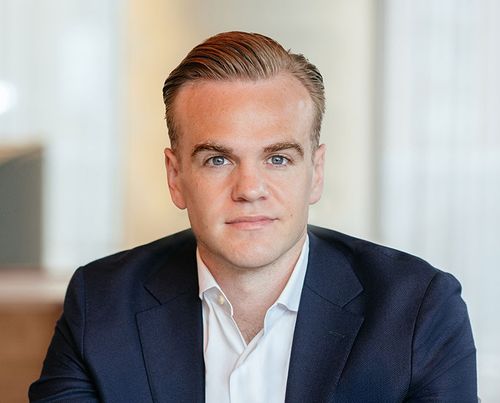
Daragh Murphy, co-founder and CEO of Imprint
The Story

Daragh Murphy came to the United States on a J-1 visa for what was meant to be a short summer in Chicago. He stayed, and years later he runs one of the few Irish-founded companies to cross a billion-dollar valuation.

The path was not the usual founder story. Before Imprint there was no engineering degree and no banking career. Murphy trained as a lawyer. He earned a Bachelor of Laws at University College Dublin, then a Master of Laws at Duke University, and practiced corporate law at WilmerHale in New York. He is admitted to the bar in New York, California and Massachusetts.

In 2015 he left law for McKinsey & Company, where he worked as a management consultant. From there he moved into an operating role at WeWork, focused on pricing, sales and strategy. He left in 2019, a few months before the company's IPO collapsed in public view. That timing turned out to matter. Murphy now talks about WeWork less as a resume line and more as a case study in what not to do - a lesson in the danger of building a company around a single personality instead of a shared mission.

The gap nobody was serving

Imprint started in 2020, co-founded with Gaurav Ahuja, a partner at Thrive Capital who now serves as chairman, and Michael Pechman. The first idea was infrastructure for credit unions. It was Ahuja who pushed the pivot toward co-branded credit cards after spotting a gap in the market: the biggest banks, Chase and Amex, dominated the top of the market, while mid-sized consumer brands were left with aging technology that was too slow and too limited for their customers.

Murphy and his co-founders tested the idea the direct way - by talking to the brands. What they heard was that executives had already considered launching a card and had walked away, because the existing options simply were not built for them. So Imprint set out to build a new tech stack from scratch: one that let a brand design, launch and run a card program that actually felt like the brand, rather than a generic card with a logo printed on it.

The customer profile surprised early assumptions. Murphy's team initially guessed direct-to-consumer e-commerce brands would be the natural fit. Instead it was large enterprises - grocery chains, airlines, hospitality names - that leaned in. When the Texas grocery chain H-E-B showed real interest, Imprint followed the signal rather than the plan.

"If we build a business that has great return on equity in the long term - profit divided by how much equity capital we're using - we'll be fine."
— DARAGH MURPHY, ON DISCIPLINE OVER HYPE
2020
Imprint founded in New York
$1.2B
Valuation after Series D
$70M
2024 revenue, up from $15M
200%
YoY cardholder growth
The Numbers

From seed to unicorn in five rounds

Imprint funding by round (USD)
Seed '21
$15M
Series A '21
$38M
Series B '23
$75M
Series C '24
$75M
Series D '25
$150M
Backers include Thrive Capital, Khosla Ventures, Kleiner Perkins, Ribbit Capital and Stripe. Total raised: more than $900M.

The December 2025 Series D of $150 million, led by Khosla Ventures, valued Imprint at $1.2 billion and pushed it into unicorn territory. It followed a $75 million Series C at a $600 million valuation just over a year earlier.

What sets Murphy apart from many fast-scaling fintech founders is where he points the attention. Instead of raw growth, he talks about return on equity and cost of capital. By keeping Imprint's credit portfolio prime - cardholders with FICO scores around 715 to 720 - the company drove its cost of capital down from roughly SOFR plus 1,200 basis points to around SOFR plus 250. That is the unglamorous engineering underneath the headline valuation.

In 2024, Forbes named Imprint to its Next Billion-Dollar Startups list. The valuation caught up a year later.

Career Timeline

Law, consulting, then a card company

pre-2015

Corporate lawyer, WilmerHale

Arrives in the US on a J-1 visa and practices corporate law in New York after law degrees from UCD and Duke.

2015

McKinsey & Company

Leaves law for management consulting.

2017–19

WeWork

Operating role in pricing, sales and strategy. Departs in 2019, months before the failed IPO.

2020

Founds Imprint

Co-founds the company with Gaurav Ahuja and Michael Pechman; pivots from credit-union infrastructure to co-branded cards.

2023

Scaling up

Raises a $75M Series B; revenue near $15M. H-E-B card launches.

2024

Breakout year

Revenue climbs to ~$70M; $75M Series C at a $600M valuation; named to Forbes Next Billion-Dollar Startups.

2025

Unicorn

$150M Series D at a $1.2B valuation led by Khosla Ventures.

How He Operates

Boring on purpose

The playbook

  • Amazon-style weekly business reviews with automated metrics dashboards
  • Return on equity as the north-star, not headline growth
  • Prime credit quality to keep the cost of capital low
  • Follow real market signals over founding assumptions

What he screens for

  • Tolerance for uncertainty
  • Genuine pride in the work
  • Forward momentum
  • Low entitlement, humble origins, hustle over pedigree

Imprint designs, launches and runs the card and loyalty programs behind consumer names customers already know:

Rakuten Booking.com Turkish Airlines H-E-B Brooks Brothers Eddie Bauer Westgate Resorts Holiday Inn Club Vacations
"Brands today face pressure to earn customer loyalty through authentic and genuinely rewarding experiences."
— DARAGH MURPHY, ON IMPRINT'S SERIES D
Fun & Insightful Facts

The details behind the headline

Admitted to the bar in three states - New York, California and Massachusetts - before ever launching a startup.
Holds law degrees from both University College Dublin and Duke University.
Joins a short list of Irish-founded billion-dollar companies, but built the whole thing in New York.
Credits the book When Breath Becomes Air with shaping how he balances ambition against living in the present.
Left WeWork months before its failed IPO and turned the experience into a leadership anti-model.
Imprint's ambition now runs beyond credit - into debit, secured cards and flexible financing.
FAQ

Questions people ask

Who is Daragh Murphy?

He is the Irish-born co-founder and CEO of Imprint, a New York fintech that builds co-branded credit card and loyalty programs for consumer brands.

What is Imprint?

A fintech founded in 2020 that designs, launches and operates co-branded credit cards and loyalty experiences for brands like Rakuten, Booking.com, Turkish Airlines and H-E-B.

How much has Imprint raised and what is it worth?

Imprint has raised more than $900 million in total. Its December 2025 Series D of $150 million valued the company at $1.2 billion, making it a unicorn.

What did Daragh Murphy do before Imprint?

He practiced corporate law at WilmerHale, worked as a consultant at McKinsey & Company, and held an operating role at WeWork.

Where is Daragh Murphy from?

He is originally from Ireland and studied law at University College Dublin before earning a master of laws at Duke and building his career in the US.