PHYSICAL INTELLIGENCE IN TALKS TO RAISE $1B AT $11B VALUATION LACHY GROOM: FROM PERTH DIAL-UP TO ROBOT BRAIN BILLIONAIRE TRACK STRIPE EMPLOYEE #30 - FIGMA EARLY BACKER - NOW CO-BUILDING ROBOTS 200+ INVESTMENTS - FIGMA - NOTION - RAMP - OPENAI - ANDURIL - DEEL PI MODEL PI*0.6 FOLDS LAUNDRY AT 90% SUCCESS RATE PHYSICAL INTELLIGENCE RAISES $600M SERIES C AT $5.6B VALUATION PHYSICAL INTELLIGENCE IN TALKS TO RAISE $1B AT $11B VALUATION LACHY GROOM: FROM PERTH DIAL-UP TO ROBOT BRAIN BILLIONAIRE TRACK STRIPE EMPLOYEE #30 - FIGMA EARLY BACKER - NOW CO-BUILDING ROBOTS 200+ INVESTMENTS - FIGMA - NOTION - RAMP - OPENAI - ANDURIL - DEEL PI MODEL PI*0.6 FOLDS LAUNDRY AT 90% SUCCESS RATE PHYSICAL INTELLIGENCE RAISES $600M SERIES C AT $5.6B VALUATION
Founder • Investor • Builder

Lachy
Groom

The boy from Perth who taught himself HTML at 10, sold his first company at 13, became Stripe's 30th hire, and is now building the robot brain that might run the physical world.

Co-Founder, Physical Intelligence @lachygroom 200+ investments
Lachy Groom - Co-Founder of Physical Intelligence
CO-FOUNDER
PHYSICAL
INTELLIGENCE
2024

By the Numbers
13
Age of first exit
Sold PSDtoWP.com within 9 months
#30
Stripe employee number
Joined 2012 after being initially rejected
200+
Angel investments
11+ unicorns in portfolio
~185x
Figma return
Backed at $94M valuation in 2018
$5.6B
Physical Intelligence val.
Series C, Nov 2025 (targeting $11B+)
$550M
LGF funds raised
Fund III ($250M) + Opportunity ($300M)

The Robot Whisperer Who Started With Gift Cards

Right now, somewhere in a San Francisco lab, a robot arm is picking up a crumpled shirt and folding it. Not because a human showed it every possible shirt in every possible crumple - but because a foundation model figured it out. That model has Lachy Groom's name on it.

Physical Intelligence, the robotics AI company Groom co-founded in March 2024, is trying to do for robots what GPT did for language. Build one brain. Put it in any body. Watch it learn. By November 2025, investors valued it at $5.6 billion. By early 2026, the company was reportedly in talks for another round that would put it past $11 billion. The product - their π0 and π*0.6 models - can make espresso, fold laundry, and assemble packaging at over 90% success rates. On tasks they were never explicitly taught.

The strange part is that Groom's co-founders - Karol Hausman (former Google DeepMind), Sergey Levine (UC Berkeley), Chelsea Finn (Stanford), Brian Ichter - are some of the world's foremost robotics researchers. Groom is the one who builds things, backs things, makes things move. He is the business brain alongside some of the sharpest academic minds in AI. This is not an accident. It is a pattern.

"I don't give investors answers on commercialization." - Lachy Groom, TechCrunch, January 2026

Before Physical Intelligence, Groom ran one of Silicon Valley's most unusual investment operations: a solo GP fund - no partners, no committee, just his own conviction - that deployed capital into companies the rest of the market had not yet understood. He wrote checks of $100K to $500K at the seed stage. He backed Figma when it was valued at $94 million. Notion when the skeptics were loudest. Ramp, Lattice, Deel. And OpenAI. And Anduril. More than 200 companies in total, 11 of which became unicorns.

The Figma bet alone, at its peak $20 billion valuation, would have returned approximately 185x. When Adobe announced its $20 billion acquisition attempt, the world learned what early believers had known for years.

That run did not come from a carried interest at a major fund. It came from a kid who sold his first internet business at 13, moved to San Francisco without a college degree at 18, and somehow talked his way into Stripe during its most critical growth phase.
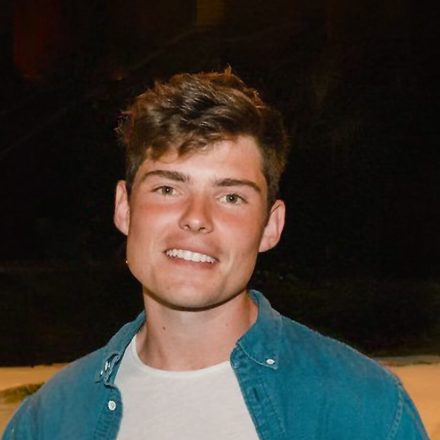
Quick Profile
Full Name
Lachlan Norman Groom
Origin
Perth, Western Australia
Based
San Francisco, CA
Current
Co-Founder, Physical Intelligence (π)
Previous
Head of Stripe Issuing; Solo GP (LGF)
Education
Self-taught. Skipped university by choice.
First exit
Age 13 (PSDtoWP.com)
Notable bets
Figma, Notion, Ramp, OpenAI, Anduril

Fun Fact
"My granddad actually taught me HTML when I was a kid, which got me pretty fascinated with the internet."

Perth, Australia. Age ~10. Dial-up modem.
The obsession that never stopped.


Origins

Three Exits Before He Could Vote

Perth, Western Australia. Dial-up internet. A grandfather patient enough to sit with a 10-year-old and explain HTML and CSS. That is how Lachy Groom's career began - not in a dorm room or a startup incubator, but at a family computer in a city that is more geographically isolated from Silicon Valley than almost anywhere on Earth.

By 13, he had built PSDtoWP.com - a service that converted Photoshop mockups into WordPress themes for freelance designers - and sold it nine months later. At the same time: PAGGStack.com, a nutritional supplements marketplace that moved product globally before he was old enough for high school exams.

At 15, he launched iPadCaseFinder.com. The timing was perfect - the iPad had just launched, the market for cases was exploding, and Groom had figured out search traffic before most adults in the industry had caught on. The site attracted 400,000 unique visitors in its opening weeks and was acquired shortly after.

Then CardNap: Australia's largest marketplace for second-hand gift cards. The concept came from watching Americans use Plastic Jungle and wondering why nothing similar existed in Australia. Groom built it. It became the market leader. He sold it before finishing high school.

"Starting my business back in Australia could have been so much simpler if something like Stripe had existed." - Lachy Groom, Jason & Scot Show Podcast

At 18, Australian business magazine Anthill put him on their 30under30 list. The same year, he finished high school, skipped university, bought a one-way ticket to San Francisco, and enrolled in a Ruby on Rails bootcamp. The bootcamp startup liked his work so much they hired him directly. His projects attracted major tech press coverage. One of those articles reached the inbox of someone at Stripe.

PSDtoWP.com Age 13
PAGGStack.com Age 13
iPadCaseFinder Age 15 - 400K visitors
CardNap Age 15 - Market leader
Stripe Issuing Employee #30, Head of Product
Physical Intelligence Co-Founder, $5.6B val.

Anthill 30under30, 2012

One of Australia's most promising entrepreneurs under 30. He was 18. He had already built and sold four companies. He had not yet set foot in Silicon Valley.


The Stripe Chapter

Employee #30 and the 30-Day Trial That Changed Everything

The Stripe interview did not go well. The hiring committee passed. The offer did not come. But before Groom could book a flight back to Australia, an employee named Ric Burton went to bat for him - pushed back on the committee, argued the case, and secured a 30-day trial. Groom took the job. Six years later, he was running Stripe Issuing.

Stripe Issuing is the product that lets companies create, distribute, and manage physical and virtual payment cards programmatically. It is how modern fintechs - expense management tools, spend management platforms, embedded finance products - generate the cards their users carry in their wallets. Building it required understanding financial partnerships at a depth most companies never develop: direct negotiations with Visa, Mastercard, First Data.

Before that, Groom was building out Stripe's global presence. He led international expansion into Singapore, Australia, New Zealand, Hong Kong, and across Europe - each market carrying its own regulatory complexity, partner negotiations, and go-to-market puzzle. He ran the global business development and operations team. He was, in the vocabulary of Stripe internally, someone who could be handed a problem that had no obvious owner and be trusted to own it.

Stripe during those years was one of the fastest-growing companies in Silicon Valley history. Groom was employee #30. He had a front-row seat to what company-building looks like when Patrick Collison and John Collison are pushing the throttle all the way down. He absorbed that education. He used it.

In 2018, he left. Not because Stripe was faltering - it was worth tens of billions - but because he saw an opportunity to do something with the pattern recognition he had built up, and that opportunity was investing. Full-time, solo, on conviction.

The Rejection That Wasn't: Groom was initially turned down after his Stripe interview. Employee Ric Burton overruled the hiring committee and secured him a 30-day trial. He stayed for 6+ years and became Head of Stripe Issuing. Burton's judgment was correct.
The Collison Effect: Watching the Collison brothers build Stripe gave Groom a template for what extraordinary founders look like. Years later, backing Meter - a networking infrastructure company founded by a pair of brothers - he would explicitly compare them to the Collisons. He and Sam Altman co-led the $35M round.
The Visa Deal: As Head of Stripe Issuing, Groom led financial partnerships with Visa, Mastercard, and First Data. Building Stripe Issuing meant negotiating with some of the most bureaucratic institutions in global finance. He did it anyway.

The Investing Chapter

Solo Capitalist: When Conviction Is the Strategy

Solo capitalist is a term that gets used loosely. What it actually means, at its best, is this: one person, writing checks from their own fund, making decisions without a committee, backing founders who fit a specific thesis so precisely that the check arrives before the pitch deck is finished. That is roughly how Groom operated from 2018 to 2024.

His thesis was not complicated to articulate but took real nerve to execute: back tools that developers and individual contributors fall in love with first, and let enterprises pay for it later. Bottom-up adoption. Products that spread through organizations because users pulled them in, not because a sales team pushed them down.

Figma fit the thesis. Notion fit the thesis. Ramp fit the thesis. These were not obvious bets when Groom made them. Figma had Sketch and Adobe. Notion had too many note-taking apps to count. Ramp was competing against entrenched corporate card programs. But in each case, the product-market fit signal was real, the founders were technical, and the adoption curve was starting from the bottom up.

$250M
LGF Fund III
Harvard Endowment & Horsley Bridge among LPs
$300M
LGF Opportunity Fund
Follow-on capital for breakout portfolio cos.
~$94M
Figma entry valuation
~$20B peak = ~185x return
$800M
Notion entry valuation
Company hit $10B+ by 2021

The LPs who backed his funds - Harvard University endowment, Horsley Bridge Partners, Michael & Susan Dell Foundation, Karsh Family Foundation - are not institutions that write checks to unproven managers. They are gatekeepers who spend years evaluating track records before committing capital. Groom earned them.

His portfolio ran wider than his headline names suggest. Zepto in quick commerce. Roboflow in computer vision. Doppler in secrets management. incident.io in incident response. Modern Health in mental health. Routable in B2B payments. Over 200 companies, writing $100K to $500K checks, staying involved enough to actually help without becoming a distraction.

He also maintained a GitHub account with personal side projects - a Swift app, a forked AI chat tool, a flight price scraper. The investing career did not kill the builder instinct. It just ran parallel to it.


Portfolio Highlights

200+ Bets. 11+ Unicorns.

Figma
Entry ~$94M val. Peak $20B. ~185x.
Design
Notion
Lead investor 2019 at $800M val.
Productivity
Ramp
Seed stage investment.
Fintech
Lattice
Early ~2016-2017.
HR
OpenAI
Portfolio company.
AI
Anduril
Defense technology.
Defense
Deel
Global payroll unicorn.
HR / Payroll
Roboflow
Computer vision platform.
AI / Vision
Doppler
Secrets management.
DevOps
incident.io
Incident response.
DevOps
Modern Health
Mental health benefits.
Health
Meter
$35M co-led with Sam Altman.
Infrastructure
Zepto
Quick commerce.
Commerce
Alt Carbon
Led $12M seed, 2025.
Climate
+ 186 more
And counting.
Various

Current Chapter

Physical Intelligence: ChatGPT, but for Robots

In March 2024, Groom co-founded Physical Intelligence alongside some of the most cited robotics researchers alive. The pitch: general-purpose AI for the physical world. Not a robot that can do one task in a controlled environment. A foundation model that can control any robot body to perform any physical task.

Their first model, π0, demonstrated it was possible. Their latest, π*0.6, went further: a robot arm, with no task-specific training, learned to fold laundry, make espresso, and assemble cardboard boxes - at over 90% success rates. The capability that matters here is the transfer - learning something new from a small amount of data, because the underlying model already understands how objects behave in the physical world.

The parallel to large language models is not an analogy. It is the actual architecture. Physical Intelligence is betting that the same recipe that cracked language - scale, data, transformers - will crack physical manipulation too. If they are right, the implications run from manufacturing to logistics to home robotics to healthcare.

Investors seem to agree. Jeff Bezos. Thrive Capital. Lux Capital. Khosla Ventures. Sequoia. And then CapitalG, Alphabet's growth fund, leading a $600M round at a $5.6 billion valuation in November 2025. By March 2026, the company was reportedly in talks for a billion more at a valuation north of $11 billion.

Groom's role here is the same role he has always played: the person who makes complex technical work land in the real world. Business, product, operations. The academic researchers understand the science. Groom understands how to build a company around it.

"Physical Intelligence is bringing general-purpose AI into the physical world." - CapitalG, Alphabet's growth fund, on leading the Series C
Physical Intelligence (pi)
Founded
March 2024
Valuation
$5.6B (Series C, Nov 2025)
Targeting $11B+ in 2026
Raised
~$1.1B+ total
Product
Foundation models for robots (π0, π*0.6)
Key backers
Jeff Bezos, Thrive, Sequoia, CapitalG, Lux, Khosla
Co-founders
Karol Hausman (CEO), Sergey Levine, Chelsea Finn, Brian Ichter + Groom
π*0.6 perf.
90%+ success rate on laundry, espresso, assembly tasks

What makes pi different
  • One model, any robot body
  • Learns new tasks from minimal data
  • Transfers knowledge across physical domains
  • Not task-specific - foundational

From Dial-up to $11B

~2004 - Age 10
Grandfather teaches him HTML and CSS. Perth, Australia, dial-up internet. The obsession begins.
2007 - Age 13
Founds PSDtoWP.com and PAGGStack.com. Sells both within a year. First taste of exit.
2009-2010 - Age 15
Launches iPadCaseFinder.com (400K visitors, acquired) and CardNap (Australia's largest gift card exchange).
2012 - Age 18
Wins Anthill 30under30. Skips university. Moves to San Francisco. Ruby on Rails bootcamp. Lands at Stripe as employee #30 - initially rejected, championed by Ric Burton.
2012-2018
Rises at Stripe: international expansion (SG, AU, NZ, HK, EU), Head of Stripe Issuing, financial partnerships with Visa, Mastercard, First Data.
2018-2024
Full-time solo GP. Builds LGF funds I, II, III ($250M), Scale, Opportunity ($300M). Backs Figma at $94M, Notion at $800M, Ramp, OpenAI, Anduril, Deel + 190 others.
2024
Co-founds Physical Intelligence. Raises $400M Series B at $2.4B valuation.
2025
Physical Intelligence raises $600M Series C at $5.6B (CapitalG/Alphabet lead). π0 and π*0.6 models launched.
2026
Physical Intelligence reportedly in talks to raise $1B at $11B+ valuation. π*0.6 performs unseen tasks at 90%+.

In His Own Words

"My granddad actually taught me HTML when I was a kid, which got me pretty fascinated with the internet."

Jason & Scot Show Podcast, Episode 140

"Starting my business back in Australia could have been so much simpler if something like Stripe had existed."

Jason & Scot Show Podcast

"Sam is the most supportive, generous, inspiring person I know."

Twitter/X, November 2023 - on Sam Altman's OpenAI reinstatement

"recently i've found it hard to keep up with the pace of developments in AI. i found myself wanting a curated source of all the most noteworthy developments. so i built it!"

Twitter/X, October 2022

The Details

Nine Things Worth Knowing

He learned to code from his grandfather at age 10 on a family computer in Perth, Australia. That one teaching moment set off the career.
Stripe initially rejected him after his interview. Employee Ric Burton overruled the committee, secured a 30-day trial, and changed the trajectory of the internet's payment infrastructure.
His Figma investment was made at a $94 million valuation in 2018. By the time Adobe announced a $20B acquisition, the return math was staggering.
He has an active GitHub account with personal side projects including a flight price scraper. The investing career did not kill the builder instinct.
Harvard University's endowment is an LP in his fund. Solo capitalist or not, institutional gatekeepers trusted his track record.
Physical Intelligence's π*0.6 model can fold laundry, make espresso, and assemble cardboard boxes at 90%+ success rates - on tasks it was never explicitly trained on.
He and Sam Altman co-led a $35M funding round for Meter in February 2024, comparing the founding brothers to the Collisons of Stripe.
He skipped university by choice, not circumstance, and moved to San Francisco at 18 with a bootcamp and a collection of sold internet businesses on his resume.
In November 2025, a suspect posing as a delivery person forced entry into Groom's San Francisco home and stole approximately $11-13M in cryptocurrency. The FBI opened an investigation.

The Person

Pattern: Builder First, Investor Second, Title Never

The thing that distinguishes Groom from a generation of people who left good tech jobs to write checks is that he never stopped building things. While running his investment funds, he built a personal AI news aggregator because he found himself overwhelmed by the pace of AI development and wanted a curated feed. He posted about it on Twitter with the same casual energy as someone describing a weekend project. Because that is what it was.

His Twitter presence - @lachygroom, 54,000+ followers - is not a polished brand play. It is a running commentary from someone who is genuinely obsessed with technology, occasionally self-deprecating, and not particularly interested in performing thought leadership. He tweets about consumer tech products. He tweets dry observations about how people use their phones. He tweets things that are funny because they are specific.

The arc from Perth dial-up to Physical Intelligence co-founder is consistent in one way: Groom has always been attracted to the moment before something becomes obvious. He built iPad accessories before the market understood the iPad. He backed Figma before the market understood browser-based design. He backed bottom-up SaaS before the industry had a word for it. And now he is betting that robots with general-purpose AI are that same moment - early, uncomfortable, and almost certainly correct.

The boy wonder tag that press applied to him early in his San Francisco career has not entirely worn off. TechCrunch described him as "fresh-faced" in a 2026 profile. At 31, having built or backed companies now worth tens of billions of dollars, he still shows up to meetings looking like the youngest person in the room. That, too, is a consistent detail.

Personality at a Glance
High conviction. Moves fast. Decisive.
Credential-skeptical. Skipped uni. Never looked back.
Builder instinct survives investing. GitHub is still active.
Self-deprecating humor. Dry Twitter presence.
Deeply networked: Stripe, YC, OpenAI, Sequoia orbit.
Early mover. Pre-obvious is his natural habitat.

Find Him

Profiles & Sources


Share X / Twitter LinkedIn Facebook