machine-vision
(37)
Oxford Metrics Knows How You Move. Now Comes the Harder Part.
Its cameras help animate game characters, study human gait and guide robot research. Oxford Metrics now wants the business of measuring the world to produce more predictable returns.

Outrider Put the Self-Driving Bet Where It Can Actually Work: The Yard
The highway stole the self-driving headlines. Outrider went behind the warehouse, taught an 80,000-pound robot to hitch trailers, dodge traffic and mind the brake lines - then built the safety and support machinery enterprises demand.
BinSentry Put a Fuel Gauge on the World’s Feed Bins - Then Walked Away From Farmers
A farmer asked a question that sounded like a quick Google search: how much feed is left in the bin? Nine years, tens of thousands of sensors and roughly $100 million in disclosed capital later, BinSentry has turned the answer into an enterprise logistics business.

The $1,699 Lens That Explains Tamron’s 76-Year Bet on Doing More With Less
Tamron built its name by squeezing more range into less bag space. Its newest ultra-wide lens shows how a 13-person polishing shop became the Americas’ quiet alternative to camera-brand glass - and what builders can copy from the journey.

The $5.4 Billion Company Behind Every Beep
Zebra Technologies turned the humble barcode into a bridge between physical work and digital intelligence. Now its scanners, printers, sensors, software and screens are becoming the control layer for the frontline.

Alan Murray
He spent thirty years building ad-tech and members clubs. Then he decided the real engineering problem worth solving was how a human embryo gets made.
Industrial Next
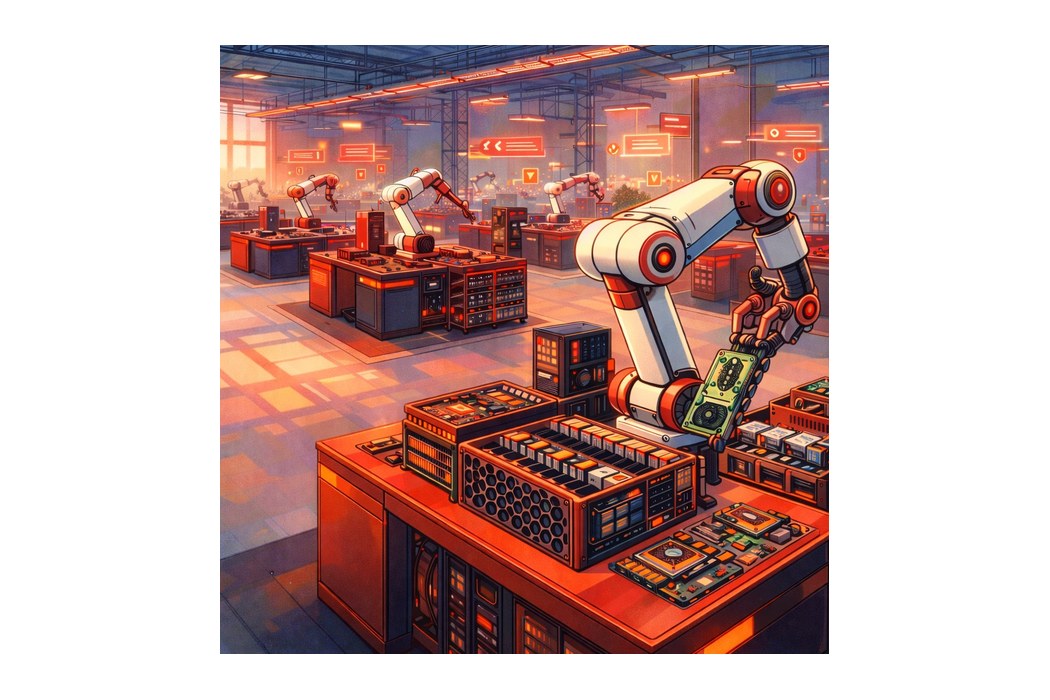
Industrial Next builds AI-defined factories: robotic work cells powered by proprietary foundation models that connect vision, task context, and motion so a production line can be retooled in minutes instead of weeks - no programming required. Founded in 2021 by former Tesla autonomous-manufacturing leads Allen Pan and Lukas Pankau, the San Francisco company aims to bring Tesla-grade autonomous factory capabilities to automakers and electronics manufacturers.

Galatek
Galatek is a Singapore-based automation and AI company building intelligent infrastructure for two sectors where precision and data integrity matter most: life sciences and advanced semiconductor manufacturing. It pairs robotics and machine vision with software - its Abio platform unifying ELN, LIMS, SDMS and lab automation, and its InteVega AI vision platform - to run smart labs and inspect chips. Led by CEO David Tian, Galatek raised roughly US$30 million in a Series A round announced in December 2025 to expand across Europe, North America and Southeast Asia.
Allen Control Systems
Allen Control Systems (ACS) is an Austin-based defense technology company building Bullfrog, an AI-powered autonomous robotic weapon station designed to detect, track and shoot down hostile drones. Founded in 2022 by three engineer-entrepreneurs, ACS uses passive machine vision and custom fire-control software to turn standard machine guns into precision counter-drone turrets, aiming to cut the cost-per-kill of a drone from expensive missiles down to a few dollars of ammunition. The company raised a $200M Series B in 2026 at a $2.2B valuation to scale manufacturing for the U.S. military and allied forces.
Clarapath
Clarapath is a Hawthorne, New York medical robotics company that automates one of the most manual steps in cancer diagnosis: cutting and transferring paper-thin tissue sections onto slides for pathologists to read. Its flagship system, SectionStar, combines robotics, machine vision and AI to standardize tissue sectioning, cut turnaround times and ease chronic staffing shortages in histology labs. Founded in 2014 out of neuroanatomy research at Cold Spring Harbor Laboratory, the company has raised roughly $75 million and works with partners including the Mayo Clinic and Northwell Health.

Conceivable Life Sciences
Conceivable Life Sciences is a New York-based reproductive-medicine company building AURA, described as the world's first AI-powered, automation-assisted IVF laboratory. Using robotics, machine vision, advanced optics and proprietary software, AURA standardizes the 200-plus intricate microscopic steps of in vitro fertilization - from sperm and egg preparation through robotic ICSI, embryo culture and vitrification - to reduce human variability, lower cost, and widen access to fertility care. Founded in 2022 by Joshua Abram, Alan Murray and Dr. Alejandro Chavez-Badiola, the company reported the first live birth from a digitally controlled, remotely operated ICSI system and raised a $50M Series A in 2025 to bring its lab to the U.S.

LiveControl
LiveControl is a Santa Monica-based company that turns any venue into a broadcast studio without an on-site crew. It combines proprietary PTZ camera hardware and an encoder with cloud software and a nationwide network of professional videographers who remotely pan, tilt, zoom, switch angles, and produce live events - for houses of worship, funeral homes, schools, theaters, conferences, and corporate clients. Founded in 2018 and backed by a $30M Series A led by Coatue, LiveControl produces tens of thousands of professionally streamed events each year at a fraction of the cost of hiring a traditional production team.

Nexar Inc.
Nexar is a New York-based mobility technology company that turns connected dashcams into a real-time sensing network for the physical world. Founded in 2015 by Eran Shir and Bruno Fernandez-Ruiz, it sells LTE-connected 4K dashcams to consumers while aggregating anonymized road imagery into CityStream, a platform that gives cities, mapmakers, insurers and autonomous-vehicle developers a minute-by-minute, ground-level view of streets. In July 2026 Nexar agreed to merge with Nauto to form an independent infrastructure platform for physical AI, backed by more than 10 billion historic miles of driving data across 50+ countries.
Oxipital AI
Oxipital AI is a Bedford, Massachusetts company building AI-enabled machine vision systems for food processing, agriculture and consumer-goods manufacturing. Emerging in 2024 from the rebrand of Soft Robotics after that company sold its gripper hardware line to Schmalz, Oxipital AI now centers on its V-CORTX vision platform and VX2 hardware, which use synthetic data and computer vision to handle quality inspection, foreign-object detection, yield optimization and vision-guided robotic picking in high-variability production lines.
ZeroMark, Inc.
ZeroMark is a New York-based defense technology company building an AI targeting layer that turns ordinary infantry weapons into precision counter-drone systems. Its flagship Apex is a rifle-mounted, software-defined fire control system that uses electro-optical cameras, LiDAR and machine-vision ballistics to physically adjust a soldier's aim in real time, letting a dismounted operator hit small, fast-moving drones without specialist training. Founded in 2022 by former U.S. Navy servicemember and ex-MongoDB executive Joel Anderson, ZeroMark has raised roughly $7M in seed funding led by Ground Up Ventures and Andreessen Horowitz, followed by a 2025 strategic round, and has demonstrated its system in a U.S. Marine Corps live-fire exercise.

Cogniac Corporation
Cogniac Corporation is a Silicon Valley company building an enterprise-grade, no-code computer vision platform that lets non-experts train and deploy AI models on visual data. Founded in 2015 by Ruckus Wireless veteran Bill Kish and Amy Wang, Cogniac turns cameras and images into operational insight - inspecting products, detecting defects, monitoring safety, and automating document handling across manufacturing, transportation, automotive, government, and logistics. Backed by roughly $46M from investors including National Grid Partners, Cisco Investments, and Autotech Ventures, it counts BNSF Railway, Ford, Georgia-Pacific, Doosan Bobcat, and Trimac among its customers.

GeoX
GeoX is an Israeli-founded geospatial AI company that turns aerial imagery, satellite data and ground-level images into detailed 3D models of individual buildings. Insurers, reinsurers, banks and public agencies use its property database - covering roughly 160 million US properties and expanding across Europe, Japan and Australia - to assess roof condition, elevation and exposure to fires, floods and storms without sending anyone into the field. The company raised a $19M Series A in 2024 (led by Flashpoint), bringing total funding to $23M.
Mark Chiappetta
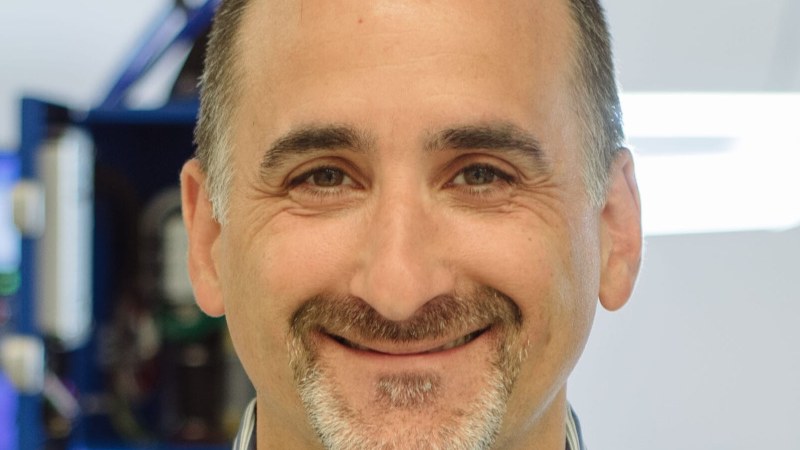
Mark Chiappetta is the president and CEO of Oxipital AI, a Bedford, Massachusetts company that builds AI-driven machine vision for factory lines that pick, count, and inspect food. He is an electrical engineer who spent 30-plus years in robotics, including a run as a corporate VP at iRobot and eight years growing Soft Robotics from an early gripper startup. In 2024 he took the top job at Soft Robotics, then engineered the pivot that spun the company's 3D vision and AI software into Oxipital AI while the gripper hardware business was sold off. His pitch is that food processors will not rip out human lines for robots overnight, so Oxipital sells the eyes and brains first and the hands later.

Zach Greenberger
Zach Greenberger is the CEO of Nexar, the New York-based real-world intelligence platform building the data backbone for the Physical AI era. A self-described non-engineer who taught himself the technology, he came up through IBM, Tesla, and Lyft (where he was Chief Business Officer) before taking the top job at Nexar in September 2024. Under his watch Nexar agreed to merge with Nauto in July 2026, uniting a dataset of more than 10 billion driving miles and creating an independent platform of record for how the physical world actually behaves.
Averroes.ai
Averroes.ai is a San Mateo-based startup building a no-code AI visual inspection platform that helps manufacturers automatically detect, classify, segment and monitor defects on their production lines. Founded in 2021 by Tareq Aljaber and Omar Altamimi, the company targets semiconductor, electronics, pharmaceutical, food and beverage, and oil and gas producers, promising 99%+ inspection accuracy, deployment in under five days, and models trained on as few as 20-40 images per defect class without writing code or buying new hardware.

Marilyn Matz
Marilyn Matz is the CEO and co-founder of Paradigm4, the Waltham, Massachusetts company behind SciDB, an array-native computational database built for the tangled, multi-dimensional data of genomics, clinical research, and imaging. She launched it in 2010 with database legend and Turing Award laureate Mike Stonebraker to move his MIT research into the hands of working scientists. Decades earlier she left MIT to co-found Cognex, now a global machine-vision powerhouse, where she ran worldwide engineering and later a business unit. A two-time technical founder who codes the deep infrastructure and still sells to the customer, Matz has spent a career making impossibly large scientific data explorable, reproducible, and fast.
Anthony Gangemi
Anthony Gangemi is a Long Island barcode and data-capture executive whose career runs straight through the heart of the auto-ID industry. He started at Symbol Technologies, the company that put laser scanners in the hands of cashiers worldwide, then went on to co-found Dolphin Data Capture and found ScanSata, two firms that specialize in integrating Zebra Technologies OEM scan engines, RFID, and machine-vision hardware into other companies' products. He currently lists himself as President and CEO of Pogo. Across three-plus decades he has been the person OEMs call when they need a barcode reader to disappear inside a medical device, a kiosk, or a self-checkout lane.

Schuyler Cullen
Schuyler Cullen is the co-founder and CEO of Summer Robotics, a Campbell, California machine-vision company building Kortx, a camera-free perception system that uses lasers and event sensors to give robots animal-like sight at 100Hz, 100-micron precision, and 20ms reaction time. A theoretical physicist by training with a Caltech double major and a Stanford PhD in string theory, Cullen spent two decades turning hard math into shipping technology - co-founding the video-recognition startup Keystream and leading AI and Robotics at Samsung, where he built the autonomous-mobility stack for the company's robots and cars. In 2025 Summer Robotics raised a Series A led by Applied Ventures, the venture arm of Applied Materials.
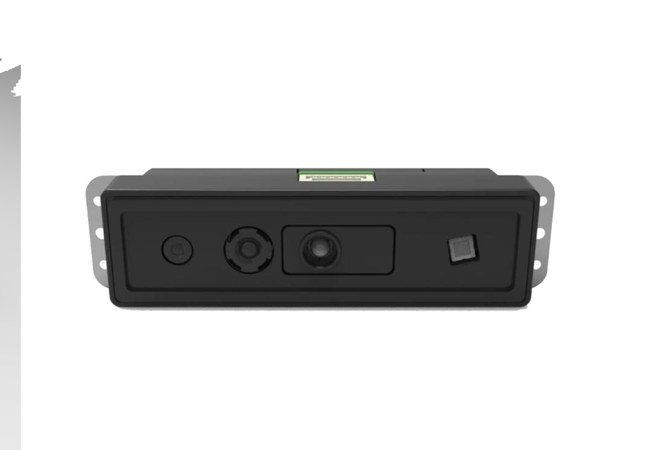
Deptrum
Deptrum (光鉴科技) is a Chinese 3D vision company founded in 2018 by three Silicon Valley scientists, including a former Apple depth-hardware lead. It builds full-stack 3D depth-sensing solutions - nanophotonic chips, structured-light and Time-of-Flight cameras, and AI perception algorithms - that let machines see and measure the physical world. Its hardware powers robots, smart cockpits, palm-payment terminals, smartphones and new-retail systems across finance, automotive and IoT.

Netradyne
Netradyne is a San Diego-based AI and edge-computing company that builds Driveri, a vision-based dashcam and analytics platform for commercial fleets. Founded in 2015 by two former Qualcomm engineers, it uses on-device computer vision to score driving in real time, recognize good behavior as well as risk, and turn raw road footage into coaching, compliance, and exoneration evidence. In January 2025 it raised a $90M Series D at a $1.34B valuation, becoming India's first unicorn of the year thanks to its large Bengaluru engineering base.
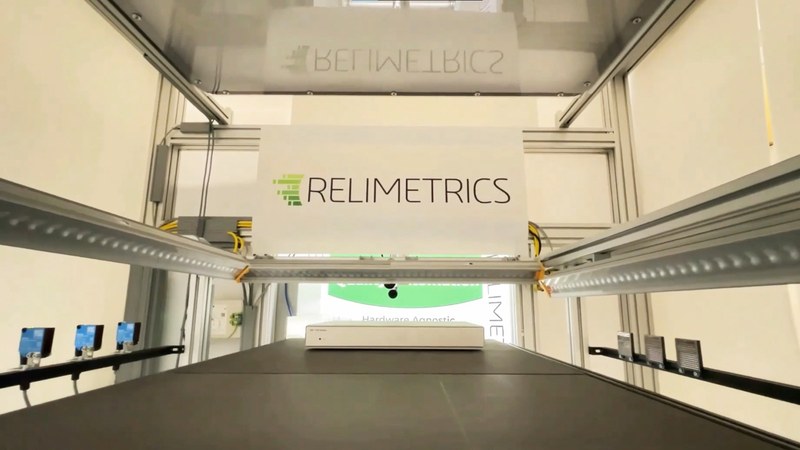
Relimetrics, Inc.
Relimetrics is an AI software company building ReliVision, a no-code visual inspection platform that lets manufacturers digitize quality assurance on the factory floor. Hardware-agnostic and self-installable, it puts model training, retraining and defect detection in the hands of plant engineers instead of data scientists - and its accuracy is unusual enough that reinsurer Munich Re will underwrite it. Founded in 2015 with offices in Silicon Valley and Berlin, the company counts HPE, Lockheed Martin, Foxconn and Siemens Gamesa among its users.
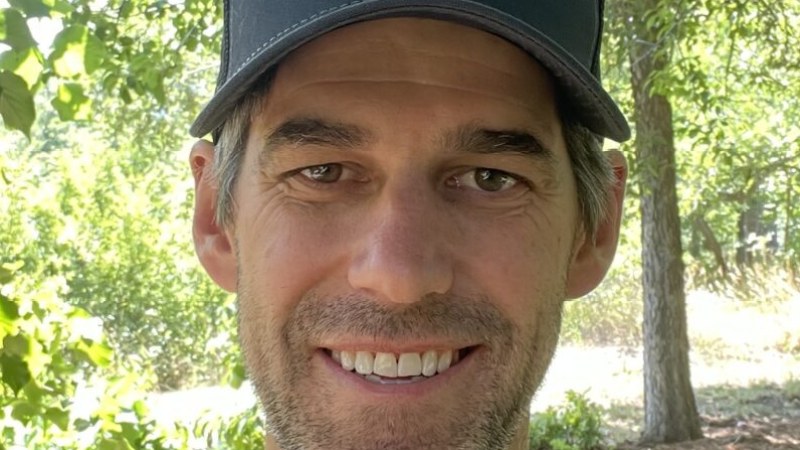
Devin Lammers
Devin Lammers is the CEO of TerraClear, the Issaquah, Washington agtech company building AI and robotics to pull rocks out of farm fields - and, increasingly, to scout entire fields for weeds, crop health, and more. He took the helm in August 2024 after seven years at Farmers Business Network, where he founded FBN Financial and Gradable and served as CRO/COO and interim CEO across a network of 50,000-plus members. A multi-generational South Dakota farm-and-ranch kid with a Dartmouth degree and an MIT Sloan MBA, he frames agtech as 'the intersection of technology meeting the physical world' and is steering TerraClear from a single hated chore toward a full-field autonomous intelligence platform.
Summer Robotics
Summer Robotics is a Campbell, California machine-vision company giving robots what it calls superhuman perception. Its patented Kortx platform fuses event-based sensors with continuous laser scanning - a category the company calls laser-event sensing - to deliver blur-free 3D tracking with sub-5ms latency, 100-micron precision and 100Hz tracking. The technology lets robots see and react in dynamic, unstructured, variably lit environments, including on metal, glossy and transparent surfaces that defeat conventional cameras, unlocking automation in manufacturing, logistics and humanoid applications.
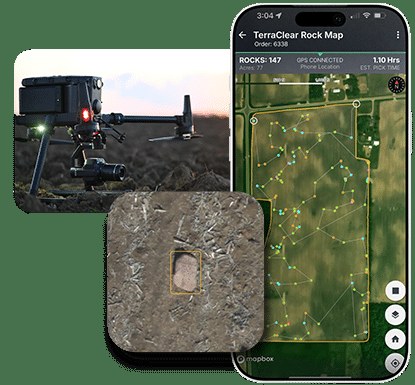
TerraClear Inc
TerraClear builds AI-powered machines that take one of farming's oldest, most miserable chores - picking rocks out of fields - and make it fast, precise, and increasingly autonomous. Founded in 2017 by serial entrepreneur and farm-raised Brent Frei, the Issaquah, Washington company pairs drone-based mapping, machine vision, and a robotic rock picker that clears hundreds of rocks an hour. In 2026 it launched TerraScout, a fully autonomous field-scouting robot that scans up to 1,000 acres a day for rocks, weeds, and more, turning images into real-time prescriptions for existing farm crews and equipment.

Kemal Levi
Kemal Levi is the founder and CEO of Relimetrics, an industrial AI company splitting its headquarters between Sunnyvale and Berlin. A Stanford-trained materials scientist who once measured how skin behaves under stress for the cosmetics industry, he now builds ReliVision, a no-code, GenAI-powered platform that lets factories teach machines to spot their own defects. He has spent more than fifteen years turning non-destructive testing and computer vision into shop-floor software, and counts NVIDIA's Inception program among Relimetrics' backers.