She builds the infrastructure most people never see - the database underneath the genome, the math underneath the answer. Twice, in two different centuries of computing.
Ask a genomics researcher a hard question and, not long ago, the honest answer was: come back in a few weeks. The data was too big, spread across too many files, shaped like matrices that ordinary big-data tools quietly gag on. Marilyn Matz spent the last stretch of her career deleting that answer. Her company, Paradigm4, built a computational database called SciDB that lets scientists interrogate enormous, multi-dimensional datasets and get a result while they are still thinking about the next question.
She is the CEO and co-founder, and she runs Paradigm4 out of Waltham, Massachusetts, a lean shop that for years she kept deliberately under twenty people. The point was never headcount. The point was to sit next to the people doing the science - the bioinformaticians, the quants, the clinical researchers - and hand them a tool that felt less like software and more like a research partner.
During the COVID-19 pandemic, that promise stopped being abstract. Researchers wanted to know which human tissues express the genes the SARS-CoV-2 virus uses to break into a cell. Paradigm4 ran the query across more than thirty datasets. The answer came back in thirty seconds or less. That is the whole thesis of her working life, compressed into one sentence: the distance between a scientific question and a trustworthy answer should be short.
Matz talks about Paradigm4 in a way most enterprise software founders do not. "We are partners, not vendors," she has said, "so we will help users to access and use their data intuitively and get answers, fast." It is a small phrase carrying a large opinion - that the bottleneck in modern research is rarely a lack of algorithms and almost always a mess of data that is not curated, versioned, or reproducible. Fix the plumbing, and the science flows.
She built the company in 2010 with Mike Stonebraker, the database pioneer behind Postgres, Vertica, and VoltDB, who would later win the Turing Award, computing's highest honor. A Boston venture capitalist introduced them. Stonebraker had the technology brewing in his MIT lab; Matz had already built and sold hard things before. The mission they wrote down was simple and stubborn: bring the lab work into the hands of working scientists and change the pace of daily research.
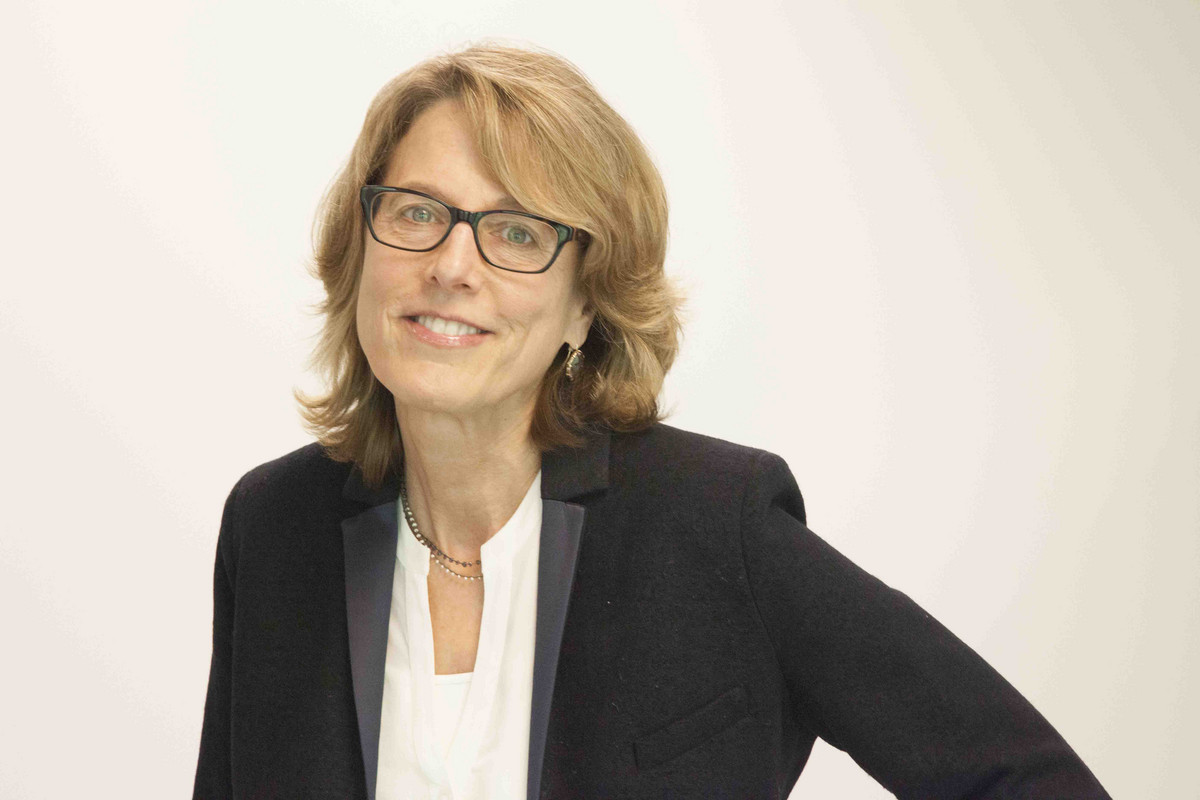
Today's big data types require fundamental matrix operations.Marilyn Matz, on why the old tools broke
Long before "big data" was a phrase anyone put on a slide, Matz was at MIT studying computer science in the AI Lab. She left the PhD program - a decision that, in the telling, sounds less like dropping out and more like trading a credential for a company. In 1981 she became one of three co-founders of Cognex Corporation, a machine-vision company teaching industrial cameras to see.
Cognex was not a side quest. It went public in 1989 and grew into a global company whose vision systems inspect semiconductors, electronics, solar panels, pharmaceuticals, medical devices, food, and cars. Matz ran worldwide PC vision engineering, then became senior vice president and business-unit manager for PC vision products. In 2005, she and her two co-founders received the SEMI industry award for outstanding technical contributions to the semiconductor industry.
Two founding stories, thirty years apart, in two entirely different corners of computing. Machines that see, and databases that answer. Look closer and the throughline is obvious: both are about data that is too large and too strange for the ordinary tools of its day. Matz keeps walking toward that data.
When Paradigm4 raised early money from Sigma Partners and Kepha Partners, Matz did not rush to scale. She kept the team small and hand-picked her earliest customers from pharma, life sciences, and healthcare analytics. It took trial and error - many pilots, a lot of listening, a willingness to be honest about what worked and what did not - before the company found its center of gravity in life sciences. Patience as strategy.
// Illustrative comparison of how different tools handle massive scientific matrices
Scientific data - genomes, images, sensor streams - is naturally shaped like giant multi-dimensional arrays. Ordinary big-data tools slice data into rows and struggle when a single matrix will not fit on one machine. SciDB is array-native, so the math the science actually needs is the math the database is built around. Conceptual illustration, not a benchmark.
We are partners, not vendors, so we will help users access and use their data intuitively and get answers, fast.
Scientific data must be curated, versioned, interpretable and accessible so that researchers can do collaborative and reproducible research.
Our key driver was to transform the pace of daily research and create a platform that provides a new way for researchers to work.
Having the wise but brutally honest counsel, the extensive network, and the strong support of deeply experienced women and men has proven to be invaluable.
She is the rare CEO who can explain the matrix operations under her own product and then walk into the room and sell it. Colleagues describe a builder who prizes usefulness over noise - a founder more interested in making "something really important that makes the world better" than in the theater around it.
She also gives the ladder back. Matz co-chaired a peer-mentoring program for women executives and co-chaired the Massachusetts Technology Leadership Council's Big Data cluster. The person who left a PhD to build companies now spends part of her time making the next founder's path a little less lonely.
She has founded companies in two different eras of computing - industrial machine vision in the 1980s, scientific big data in the 2010s.
Her co-founder Mike Stonebraker built Postgres, Vertica (sold to HP for $200M), and VoltDB - then won the Turing Award.
SciDB exists because tools like MapReduce choke on the giant matrices scientific data demands.
She left a PhD program at MIT to start a company - and never looked back.
She kept Paradigm4 under twenty people for years, on purpose, while chasing some of the world's largest datasets.
A VC introduction in Boston paired her with Stonebraker - one of the more storied founder duos in database history.