BREAKING James Lu wants your genome charted next to your blood pressure Helix philosophy in four words: sequence once, query often GenoSphere links 500,000+ clinico-genomic records Elected to the ACMG Foundation board, 2025 Dreamed of being an astronaut, mapped inner space instead BREAKING James Lu wants your genome charted next to your blood pressure Helix philosophy in four words: sequence once, query often GenoSphere links 500,000+ clinico-genomic records Elected to the ACMG Foundation board, 2025 Dreamed of being an astronaut, mapped inner space instead
Population Genomics • The Profile

James Lu

He runs one of the largest clinical sequencing operations in America. His pitch is stubbornly simple: your genome should be a vital sign - the one that never changes.

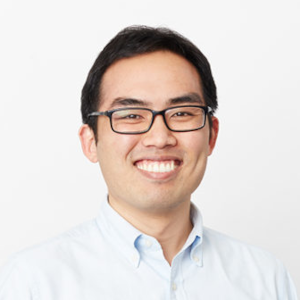
Portrait of James Lu, co-founder and CEO of Helix
JAMES LU. Chemical engineer, physician, scientist. The man betting that DNA belongs on every chart.
Co-Founder & CEO, Helix • MD/PhD, Baylor • BS+MS Chem-E, Stanford • San Mateo, California

The genome as the one vital sign that never moves

Everything a doctor measures drifts. Blood pressure climbs after a bad week. Cholesterol answers to last night's dinner. Heart rate spikes at the sight of a needle. James Lu, co-founder and CEO of Helix, spends his days pointing at the one number in the chart that holds perfectly still.

"Everything else in healthcare is dynamic - your cholesterol, your blood pressure - but your genome is fixed," he says. It is a strange thing to build a company on: a data point that refuses to change. But that stillness is the whole point. Sequence it once, and you can keep asking it questions for the rest of a patient's life.

That idea compresses into four words Helix repeats like a mantra - sequence once, query often. Draw the sample a single time. Then let clinicians return to the same file a decade later when a new drug, a new risk, or a new question arrives. The genome does not expire. Most of medicine has not caught up to that fact yet. Lu is trying to fix the lag.

The economics follow from the biology. If a result is permanent, the cost of generating it amortizes across a lifetime of care instead of getting re-billed at every visit. A pharmacogenomic answer collected at thirty can steer a prescription at sixty. That is why Lu talks about genomics less as a test and more as infrastructure - a foundation you pour once and then build on top of for decades. Under his leadership Helix runs one of the largest clinical sequencing lab operations in the country and the Helix Research Network, which the company calls the world's largest clinical precision-medicine research network.

Every clinical algorithm today starts with age, sex, and ethnicity. In the future, it'll start with your genome.

- James Lu, Helix
By The Numbers

A company measured in genomes

500K+
Linked clinico-genomic records in GenoSphere
$400M+
Total capital raised by Helix
2015
Year Helix was co-founded
#1
Largest clinical precision-medicine research network, per Helix

From a Palo Alto sidewalk to the human genome

Long before the MD, the PhD, and the sequencing lab, Lu was a teenager with a new toy called Netscape. He helped start a web-design shop and worked the oldest sales channel there is - walking up and down downtown Palo Alto, knocking on doors, asking anyone who would listen whether they wanted a website built.

The instinct never left: find the new technology, then go find the people it can serve. At Stanford he collected a BS and an MS in chemical engineering, and - in a moment that would matter for decades - sat in a class next to a student named Justin Kao.

Then the scenic route. A stint at Merck as a Lean Six Sigma Black Belt, learning how large systems actually break and get fixed. An associate seat at a healthcare venture fund, Devon Park Bioventures, learning how bets get made. An MD and a PhD in computational biology at Baylor, where he was inducted into the Alpha Omega Alpha honor society. A faculty post at Duke, welding electronic health records to genetics before that was a fashionable thing to do.

Read the list quickly and it looks like restlessness. Read it slowly and it looks like a single question asked from five different chairs: how does a promising piece of biology actually reach a patient? The engineer wanted to build the thing. The Six Sigma black belt wanted the process to hold. The investor wanted the model to pay for itself. The physician wanted it to help someone in front of him. The researcher wanted the evidence to survive peer review. Helix is the room where all five of those instincts finally sit at the same table.

"A disaster"

Ask Lu about his early machine-learning work and he does not reach for the resume. He reaches for the word "disaster." In the early 2010s he was hand-building neural networks before tools like TensorFlow existed - the equivalent of forging your own wrench before every repair.

The models flopped. The lesson stuck. That bruising apprenticeship is exactly why, years later, he is the one in the room demanding that medical AI be held to laboratory standards rather than launch-day hype.

Too often, AI is applied where simpler automation would suffice.

- James Lu
Nine moves to here

1990s
Netscape drops. A teenage Lu helps start a web-design company, selling door to door in Palo Alto.
Stanford
BS + MS in chemical engineering. Meets future co-founder Justin Kao in class.
Merck
Lean Six Sigma Black Belt at the global biopharma giant.
Devon Park
Associate at a Philadelphia healthcare venture capital firm.
Baylor
MD + PhD in computational biology. Alpha Omega Alpha honor society.
Duke
Faculty: translational genomics and machine learning for medical records.
2015
Co-founds Helix with Justin Kao and Scott Burke.
2025
Elected to the ACMG Foundation Board of Directors.
2025
Helix ships the GenoSphere connector inside Claude for genetics research.

One career, many rooms

Genomics
96
Machine Learning
88
Medicine (MD)
90
Engineering
85
Venture / Ops
72

Illustrative reading of Lu's public track record - degrees, roles, and published work. Not a formal metric.

// PUBLISHED IN

Nature. NEJM. JMLR.

Dozens of papers spanning population genetics, Mendelian genomics, and computational psychiatry - the range of someone who never picked just one field.

In His Own Words

Eight sentences that explain the mission

In a few years, starting care without genomic information will seem as outdated as using paper charts.

// On the near future

Genomics enables earlier intervention, which reduces cost and improves quality. It's a win-win for both patients and providers.

// On prevention

A genomics program should reduce health equity gaps, not increase them. Advances have been made largely on genomes of European ancestry, and we need to fix that.

// On equity

AI is one of the most important themes shaping the future of healthcare over the next decade.

// On artificial intelligence

It must be analytically valid, clinically meaningful, and repeatable.

// His bar for medical AI

Everything else in healthcare is dynamic - your cholesterol, your blood pressure - but your genome is fixed.

// The founding insight
// THE FRIENDSHIP

Fifteen years, one chemistry class

Lu and co-founder Justin Kao met in an undergraduate chemical engineering class at Stanford - roughly fifteen years before Helix scaled into a national network. Scott Burke, a physicist out of Harvey Mudd, completed the founding trio in 2015.

// THE MISSION

Empower every person to understand their DNA

Not a slogan bolted on afterward. It is the sentence the three founders started with, and the one Lu still points to when explaining why a genome sequenced today should still be answering questions in twenty years.

// THE EQUITY PROBLEM

Most reference genomes are European

Lu is blunt that genomics inherited a bias: the field was built largely on European ancestry. He frames fixing it not as charity but as a design requirement - a program that widens the gap is a broken program.

// 2025

Genomics, meet the AI stack

Helix connected GenoSphere - its half-million-record dataset - directly into Claude via an MCP connector, letting researchers query human genetics in plain language. Lu's caution about AI hype does not stop him from wiring it in where the evidence holds.

Hear him make the case

Lu is a frequent voice on precision-medicine stages and podcasts, from the Precision Medicine World Conference to Wharton's digital-health series. The through-line is always the same argument: the genome is infrastructure, not a novelty test.

Five things that don't fit on a business card

  • 1His first startup was a 1990s web-design shop pitched, literally, door to door in Palo Alto.
  • 2As a kid, he wanted to be an astronaut. He ended up mapping inner space instead.
  • 3He was a Lean Six Sigma Black Belt at Merck before he ever ran a lab.
  • 4He built neural networks by hand before TensorFlow existed - and calls the results a disaster.
  • 5MD, PhD, BS, MS - four degrees across medicine and engineering, and he still writes code-adjacent research.

The plan is to become boring

The endgame Lu describes is not a moonshot gadget. It is a clinic where genomic data is so ordinary that leaving it out feels reckless - as reckless as reaching for a paper chart. Prediction before treatment. Prevention before crisis. The genome, quietly, as backbone.

It is an odd ambition for a founder: to make his own product invisible. Most people building companies want to be noticed. Lu wants genomics to disappear into the plumbing of medicine the way electricity vanished into the wall. When he was elected to the board of the ACMG Foundation for Genetic and Genomic Medicine in 2025, it was recognition of exactly that patient, systems-level bet - not a flashy device, but a slow reordering of how care begins. The astronaut who once looked up at the stars now spends his days pointed inward, at the three billion base pairs each of us carries, arguing that the most useful map we own is the one we were born with.

Genomics enables earlier intervention, which reduces cost and improves quality.

- James Lu
The Rolodex

Find James Lu

in / Share X / Post f / Share IG