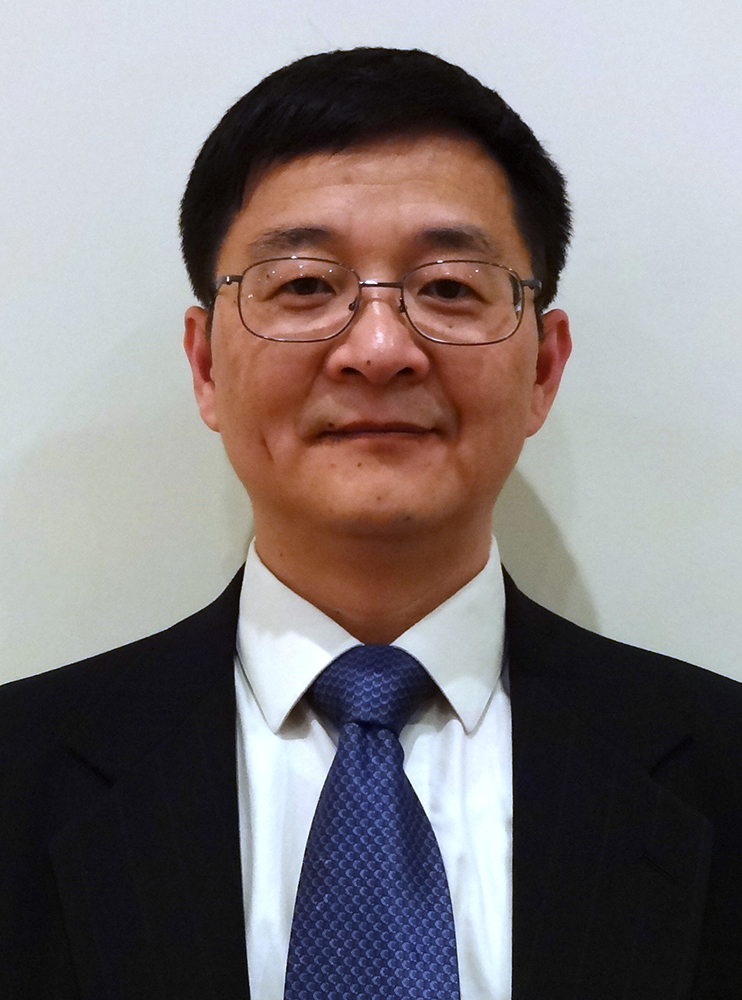
The fastest way to understand Jun Ye is to notice what he keeps doing: take a hard mathematical problem somebody else thinks is solved, find the residual error, and ship software that closes it.
Today the residual error is in your genome. Sentieon, the Mountain View company Ye co-founded in July 2014, makes secondary analysis software for DNA sequencing - the layer between a raw FASTQ file and a clinically meaningful variant call. It is not a glamorous layer. It is the layer where small accuracy gains decide whether a cancer mutation is caught or missed, and whether a research run takes an hour or a weekend. Sentieon has entered every precisionFDA accuracy challenge it could and walked out with awards, including a clean sweep of the 2016 Consistency Challenge and the most individual category wins in Truth Challenge V2.
Eleven employees. Six precisionFDA wins. The company runs lean on purpose.
Act OnePhotons
Before genes, there were chips. In 2002 Ye co-founded Brion Technologies with a thesis that was unfashionable at the time: as semiconductor feature sizes shrank below the wavelength of the light used to print them, lithography would become a computational problem more than an optical one. Computational lithography, the field now sometimes shortened to CL, did not yet have a confident commercial story.
Brion built it anyway. In December 2006, ASML - the Dutch giant that builds the machines every leading-edge fab depends on - acquired the company. Ye's CTO-and-co-founder fingerprints are still in the toolchain that today helps print sub-3-nanometer transistors. It is a strange thing to have on your resume in a bioinformatics company. He keeps it there.
Act TwoClicks
In 2011 he co-founded Founton Technologies, this time aimed at data mining and machine learning. The story is short and clean: a year later, Allyes Online Media bought it, and Allyes is now part of Alibaba Group. Ye had quietly become a serial founder operating in two completely unrelated industries before most people had picked one.
The throughline is not the industry. It is the math. Both lithography correction and ad-tech ranking are large-scale statistical optimization problems. So is variant calling.
Act ThreeBase pairs
In 2014, Sentieon. The pitch is technical and the demo is graphs: faster pipelines than the open-source standard GATK, with bit-for-bit reproducibility and (in the precisionFDA scoring) higher recall and precision on the same reference samples. The company licenses its tools to pharma, sequencing platforms, and clinical labs. It runs on Apache, Azure, AWS, Google Cloud, and on bare-metal CPUs in a data center - the workflow is the product, not the platform.
Source: precisionFDA results pages; Bio-IT World announcements. Sentieon has not lost a precisionFDA challenge it entered.
QuirksThe pattern
Notice the shape. Photons. Clicks. Genes. Three industries with no obvious crossover except that each one becomes a software problem the moment somebody insists. Ye keeps being the somebody. He has authored more than fifty U.S. patents that span algorithms, software, hardware, and system architecture - which is itself a tell, because most engineers stay in one of those lanes.
For fourteen years (2001 to 2015) he carried a second business card: Consulting Professor of Electrical Engineering at Stanford. He overlapped Brion, Founton, and the founding of Sentieon while supervising graduate work in microlithography. The teaching seems to have ended on the same calendar page that Sentieon got serious - a fair trade.
EducationThe unlikely line
B.S. in Electrical Engineering, Fudan University, 1987. M.S. in Physics, Iowa State University, 1991. Ph.D. in Electrical Engineering, Stanford University, 1996. The Iowa State year in the middle is the conversation starter - he is a Dean's Advisory Council member at the College of Liberal Arts and Sciences, a lifetime member of the Alumni Association, and a 2014 recipient of the John V. Atanasoff Discovery Award, named for the Iowa State professor whose work seeded the modern electronic computer. Atanasoff Discovery for a computational-biology CEO is the kind of poetic loop that universities like to underline.
Side questsThe boardroom
Ye also sits on the board of Cepton, a Silicon Valley LiDAR sensor company. It is a fitting outside seat - LiDAR is, in the end, another problem of inferring a clean signal from a messy physical measurement. The man builds two careers in parallel and then takes a board seat in a third domain that runs on the same kind of math. Of course he does.
Why it mattersSmall team, large surface
Genomics has spent a decade promising to become routine clinical infrastructure. The bottleneck has rarely been the sequencer; it has been the analysis layer underneath - the part that turns terabytes of reads into a list of variants a clinician can trust. Sentieon's pitch is uninflated: same answer as the open-source standard, often more accurate, much faster, fully reproducible. Companies that ship that quietly tend to end up inside everyone else's pipelines.
Eleven employees. Six precisionFDA sweeps. Two prior exits in the founder's pocket. The third act is still being written, and based on the first two, it is worth watching.
The receiptsCareer timeline
- 1987B.S., Electrical Engineering - Fudan University, Shanghai.
- 1991M.S., Physics - Iowa State University.
- 1996Ph.D., Electrical Engineering - Stanford University.
- 2001Begins 14-year run as Consulting Professor of EE at Stanford.
- 2002Co-founds Brion Technologies. Computational lithography becomes a real category.
- 2006ASML acquires Brion.
- 2011Co-founds Founton Technologies. Data mining and machine learning.
- 2012Allyes (now Alibaba Group) acquires Founton.
- 2014Co-founds Sentieon in Mountain View. Iowa State LAS Atanasoff Discovery Award.
- 2016Sentieon wins precisionFDA Consistency Challenge - top overall, highest reproducibility.
- 2020Sentieon takes most individual category wins in precisionFDA Truth Challenge V2.
- 2024Velsera + Sentieon's Pangenotyper named Bio-IT World Best-of-Show.